Overview
As the preceding chapters showed, numerical and statistical methods can be used to identify areas of vulnerability before the analyst is actually confronted by the hardware and its potential problems. A similar systematic reliability evaluation of major turbomachinery and centrifugal pump components, for example, can warn of potential problems in future or existing installations.
This chapter presents structured approaches to predicting the reliability of such major turbomachines as centrifugal compressors and steam turbines, as well as general purpose equipment such as centrifugal pumps. The major turbomachinery train shown in Figure 6-1 features a steam turbine driving a low-pressure (LP) and a high-pressure (HP) turbocompressor.
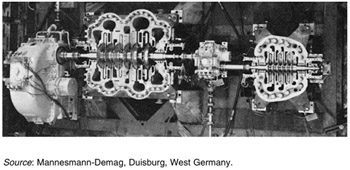 Figure 6-1: Two-casing oxygen compressor with main and intermediate gearing.
A procedure and a set of curves can be developed to coordinate the major factors influencing reliability of this type of equipment. These factors are type of machine, unit size, speed, pressures and temperatures, coupling effects, number of start stop cycles, starting cycle time, characteristics of supports, foundation, piping, and the effects of operating practices and maintenance provisions.
Reliability factors were established to improve the accuracy of equipment evaluations, and to make sure a maximum number of remedies can be considered quickly. Reliability factor curves presented in the following pages are based on personal experience and extensive use of references. Such curves can never be highly accurate, and they can never cover all possible types of installation. Common sense must be used in their application. The curves are given more to outline a systematic procedure...


 TABLE OF CONTENTS