Developing a network processor based system involves teams of many different professionals. System architects, software and hardware engineers, as well as marketing and sales personnel are all involved at some level in the project. Those closest to the network processor design are the system architects and design engineers. Others, like support engineers, managers, and those on the peripheral of the development, often need to better understand the inner functions of the network processor development. The goal of this chapter is to give these individuals a basic overview of the functions that a network processor performs as well as a system understanding of the context in which the IXP2XXX processors operate. Experienced system architects and design engineers may want to skip this chapter and move right to Chapter 3.
You can have almost as many data plane processing tasks as you have individual systems. With such a large variety of applications, it is close to impossible to narrowly define a fixed set of tasks that a network processor performs. However, you can identify enough common functions to describe the tasks that most applications demand of a network processor. In this Chapter, nine of these common tasks are summarized.
Typical Hardware Platform
Figure 2.1 shows the five basic subsystems in a typical hardware platform consisting of the following components:
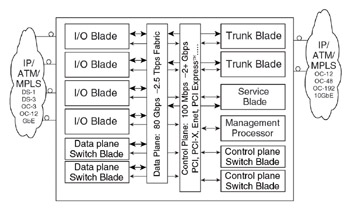 Figure 2.1: Typical Hardware Architecture
Switch...
Copyright Intel Corporation 2003 under license agreement with Books24x7


 TABLE OF CONTENTS