
Silicon Carbide Photodiodes
Description
Silicon Carbide (SiC) photodiodes are semiconductor devices that detect light and convert it into an electrical signal. They are specifically designed to be sensitive to ultraviolet (UV) light, making them suitable for environments where UV detection is critical.
Working Principle
Silicon Carbide photodiodes operate by absorbing photons in the UV spectrum, which generates electron-hole pairs in the SiC material. The built-in electric field of the photodiode separates these charge carriers, resulting in a photocurrent that is proportional to the intensity of the incident light. SiC photodiodes are particularly useful due to their ability to operate in high-temperature and high-radiation environments, where traditional silicon photodiodes might fail.
Applications
SiC photodiodes are used in a variety of applications that require UV detection. For example, they are employed in high-energy UV water treatment systems, where they monitor the intensity of UV light used to disinfect water. They are also used in flame detection systems, where their sensitivity to UV light allows them to detect the presence of flames in industrial settings.
Advantages over other Photodiodes
Silicon Carbide photodiodes offer several advantages over traditional silicon photodiodes. They have a higher sensitivity to UV light, making them ideal for applications that require UV detection. Additionally, SiC photodiodes can operate at higher temperatures and in more extreme environments than silicon photodiodes, which can degrade or fail under similar conditions.
Limitations
One limitation of SiC photodiodes is their cost, which can be higher than that of traditional silicon photodiodes. This is due to the more complex manufacturing processes required for SiC materials. Additionally, while they excel in UV detection, they may not be as effective for applications requiring sensitivity to visible or infrared light.
Considerations
When considering the use of SiC photodiodes, it is important to weigh the initial costs against the benefits of their durability and performance in harsh environments. While the upfront cost may be higher, the long-term savings in maintenance and replacement costs can be significant, especially in applications where reliability is critical. Additionally, their accuracy and stability in detecting UV light can lead to improved performance in applications such as UV water treatment and flame detection.

from Electro Optical Components, Inc.
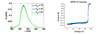
Silicon carbide SiC photodetectors / photodiodes have a spectral response of approximately 210 – 380 nm and are not sensitive to UV radiation outside this region. This makes them ideal detectors in certain applications for monitoring the UV spectrum without the need for solar rejection... [See More]
- Photodiode Material: Silicon Carbide
- Spectral Response Range: 205 to 395
- Photodiode Spectral Response: UV
- Active Area Diameter or Length: 0.1000 to 2.52
from Electro Optical Components, Inc.
The Silicon Carbide (SiC) UV APD has many of the properties of other APDs in that it is extremely sensitive and has high signal gain, but is only sensitive to UV (see wavelength response curve above). Because the substrate is tougher SiC, the bias voltage is higher than silicon based devices, around... [See More]
- Photodiode Material: Silicon Carbide
- Photodiode Spectral Response: UV
- Photodiode Type: Avalanche Photodiode
- Active Area Diameter or Length: 0.0044