
Monochrome CCD Image Sensors
Last Updated: April 1, 2025
Description
Monochrome CCD image sensors are designed to capture images in black and white, or greyscale, rather than in color. These sensors are capable of detecting variations in light intensity across their array of pixels, providing a detailed and high-resolution representation of the scene without the need for color differentiation.
Working Principle
Monochrome CCD image sensors operate by capturing light intensity at each pixel without the use of color filters. This allows each pixel to measure the full spectrum of light, resulting in sharper and more accurate greyscale images. The absence of color filters means that monochrome sensors have higher sensitivity to light, making them particularly useful in low-light conditions. The high dynamic range and low noise levels of CCD sensors further enhance their ability to capture detailed images with a wide range of brightness levels, which is crucial for applications requiring precise measurements .
Applications
Monochrome CCD image sensors are widely used in scientific and industrial applications where color information is not necessary, but high resolution and sensitivity are critical. Specific examples include:
- Astronomy: Capturing detailed images of celestial bodies where color is less important than light intensity and detail.
- Medical Imaging: Used in devices like X-ray machines where the focus is on detecting variations in tissue density.
- Machine Vision: In manufacturing, for quality control and inspection processes where detecting defects or variations in products is essential.
Advantages over other CCD Image Sensors
Monochrome CCD sensors have several advantages over their color counterparts. They provide sharper images with higher resolution because they do not rely on color interpolation, which can reduce image clarity. Additionally, monochrome sensors have a larger bandwidth and faster processing times, which can result in higher frame rates. This makes them particularly advantageous in applications requiring rapid image capture and processing .
Limitations
Despite their advantages, monochrome CCD image sensors have some limitations. They typically have slower readout speeds compared to other sensor types like CMOS or sCMOS, which can be a drawback in applications requiring rapid data processing. Additionally, they consume more power and are generally more expensive than other sensor technologies. The resolution of CCD sensors is also limited compared to newer technologies like sCMOS .
Considerations
When considering the use of monochrome CCD image sensors, several factors should be taken into account:
- Initial Costs: CCD sensors are generally more expensive than other types of sensors, which can impact the initial investment required.
- Operating Expense: The higher power consumption of CCD sensors can lead to increased operating costs over time.
- Durability and Maintenance: While CCD sensors are known for their durability, the cost of replacement and maintenance should be considered, especially in high-use environments.
- Accuracy: The high dynamic range and low noise levels of CCD sensors make them highly accurate, which is a significant advantage in precision applications .

from Toshiba America, Inc.
A linear image sensor is a solid-state device that converts an optical image into an analog signal in a line-by-line fashion. There are two types of linear image sensors with distinct circuit configurations: CMOS image sensors and CCD image sensors. Linear image sensors are suitable for applications... [See More]
- Image Sensor Type: monochrome, black and white; Color
- Data Rate: 140
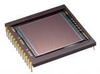
from Utmel Electronic Limited
Image Sensor Monochrome CCD 1024x1024Pixels 26-Pin CDIP [See More]
- Image Sensor Type: monochrome, black and white
- Operating Temperature: -50

from Sharp Microelectronics of the Americas
If your camera application demands the utmost in low-light performance, you've come to the right place. Sharp's new CCD II Image Sensors provide clear, viewable images down to 0 Lux. They also deliver nearly distortion-free detail, even when viewing moving objects. Learn more about CCD II... [See More]
- Image Sensor Type: monochrome, black and white; Color
- Pixel Size: 9.6
- Optical Format: 1/4"; 1/3"; 1/2"; 2/3"; 1"; 1/1.8, 2/3, 4/3

from Baumer Ltd.
Reliable. Variable. Convenient.". Vision sensors for Check & Sort applications. The VeriSens ® CS series is probably the most convenient solution for Check- and Sort applications. It provides the right feature check capabilities which are needed for any stringent, image-based, quality... [See More]
- Image Sensor Type: monochrome, black and white
- Horizontal Pixels: 752
- Optical Format: 1/3"
- Vertical Pixels: 480
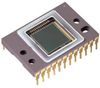
from Utmel Electronic Limited
Image Sensor Monochrome CCD 1536x1024Pixels 24-Pin CDIP [See More]
- Image Sensor Type: monochrome, black and white
- Operating Temperature: -60

from Baumer Ltd.
Reliable. Variable. Convenient.". Vision sensors for Check & Sort applications. The VeriSens ® CS series is probably the most convenient solution for Check- and Sort applications. It provides the right feature check capabilities which are needed for any stringent, image-based, quality... [See More]
- Image Sensor Type: monochrome, black and white
- Horizontal Pixels: 752
- Optical Format: 1/3"
- Vertical Pixels: 480
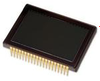
from Utmel Electronic Limited
Image Sensor Monochrome CCD 4008x2672Pixels 40-Pin CDIP [See More]
- Image Sensor Type: monochrome, black and white
- Operating Temperature: -50

from Baumer Ltd.
As flexible as a modular system though tailored to your needs.". The vision sensor platform with an integrated flash controller. The VeriSens ® XC series offers the full functionality of the XF series and in addition strong adaptability to complex applications. This makes it versatile and... [See More]
- Image Sensor Type: monochrome, black and white
- Horizontal Pixels: 1600
- Optical Format: 1/1.8"
- Vertical Pixels: 1200