
Frequency Time of Flight Optical Sensors
Last Updated: April 1, 2025
Description
Frequency Time of Flight Optical Sensors are devices designed to measure depth and distance by utilizing the time it takes for light to travel to an object and back to the sensor. These sensors are integral in capturing precise distance measurements by emitting a modulated light source and detecting the time delay of the reflected light.
Working Principle
Frequency Time of Flight Optical Sensors operate by emitting a modulated light source, such as a laser or LED, towards a target object. The sensor then captures the reflected light and measures the time delay between emission and reception. This time delay is directly proportional to the distance between the sensor and the object, allowing for accurate depth measurement. The fundamental equation used is:
latex
d = \frac{c \Delta T}{2}
where ( d ) is the distance, ( c ) is the speed of light, and ( \Delta T ) is the time delay. These sensors are particularly useful in applications requiring precise distance measurements, as they provide non-contact measurement capabilities.
Applications
Frequency Time of Flight Optical Sensors are used in a variety of applications. For instance, they are employed in automotive systems for obstacle detection and collision avoidance. In industrial settings, they are used for material handling and logistics to measure distances and ensure precise placement of objects. Additionally, these sensors are utilized in consumer electronics for gesture recognition and augmented reality applications.
Advantages over other Time of Flight Optical Sensors
One of the key advantages of Frequency Time of Flight Optical Sensors is their ability to provide high accuracy in distance measurement even in challenging ambient conditions. They can operate effectively in environments with varying light levels and temperatures, making them suitable for outdoor and industrial applications. Additionally, their non-contact measurement capability reduces wear and tear, enhancing durability and longevity compared to other sensor types.
Limitations
Despite their advantages, Frequency Time of Flight Optical Sensors have limitations. They can be affected by ambient light interference, which may reduce measurement accuracy. High temperatures can also impact the performance of the infrared emitters used in these sensors, potentially limiting their range and accuracy.
Considerations
When considering the implementation of Frequency Time of Flight Optical Sensors, several factors should be taken into account. Initial costs can be significant due to the advanced technology involved. Operating expenses may include power consumption and potential calibration needs. Durability is generally high due to the non-contact nature of the sensors, but accuracy can be affected by environmental conditions. Replacement and maintenance costs are typically low, as these sensors have fewer moving parts compared to mechanical alternatives.
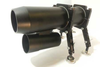
from RIFTEK EUROPE Sp. z.o.o.
The sensors are intended for contactless measurement of speed and length of moving surfaces and objects, for example, wires, strips, tubes, fibers, films, paper, hot steel, vehicles. The Series includes two models: ISD-3, based on Raster Spatial Filtration of an object image and ISD-5, based on... [See More]
- Output: Voltage; Frequency
- Operating Temperature: -4 to 122
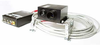
from RIFTEK EUROPE Sp. z.o.o.
Laser Doppler Interferometry. Industrial application in metallurgy, cable production, textile fabrics. The sensors are intended for contactless measurement of speed and length of moving surfaces and objects, for example, wires, strips, tubes, fibers, films, paper, hot steel, vehicles. The Series... [See More]
- Output: Voltage; Frequency
- Source: Laser
- Operating Temperature: 59 to 122
- Laser Safety: Class 3R; Class 3B