
Alarming Remote Terminal Units (RTUs)
Description
Alarming Remote Terminal Units (RTUs) are microprocessor-based devices designed for remote monitoring and control of field devices. They are equipped with alarms, buzzers, or visual indicators such as blinking lights to alert operators about various conditions. These RTUs collect data automatically and connect directly to sensors, meters, loggers, or process equipment, serving as slave units to supervisory controllers or SCADA masters.
Working Principle
Alarming RTUs function by interfacing with distributed control systems and SCADA systems, sending telemetry data from the field to these systems. They are capable of controlling multiple processes without requiring user intervention, thanks to their sophisticated and intelligent design. These units often include integral software, data logging capabilities, a real-time clock, and a battery backup, which enhance their reliability and functionality. The alarms and indicators are crucial for notifying operators of any anomalies, allowing for timely interventions.
Applications
Alarming RTUs are used in various applications, including oil field exploration, where they enable remote operators to monitor and control oil field activity by tracking parameters such as pump motor currents and pumping unit loads . In water and wastewater applications, they monitor tank levels and pump flow, transmitting data back to a facility’s central SCADA system and alerting operators of equipment malfunctions via emails or phone alerts .
Advantages over other Remote Terminal Units (RTUs)
Alarming RTUs offer the advantage of proactive monitoring and control, which can significantly improve operational efficiency and prevent hazards. For instance, in the petroleum industry, they allow operators to make real-time adjustments to keep systems within ideal operating parameters, enhancing pump efficiency and productivity .
Limitations
Specific limitations of alarming RTUs are not detailed in the provided documents. However, general limitations of RTUs can include issues related to power consumption, physical size, and environmental conditions such as operating temperature and relative humidity .
Considerations
When considering alarming RTUs, factors such as initial costs, operating expenses, durability, accuracy, and maintenance costs should be evaluated. The choice of RTU should align with the specific environmental conditions and operational requirements of the application. Additionally, the integration with existing SCADA systems and the ability to provide reliable and timely alerts are crucial for ensuring effective monitoring and control.

from Willowglen Systems Inc.
Designed for small to medium sized sites. Up to 4 I/O cards are supported in standard configuration, and is expandable. [See More]
- Features: Alarming; Battery Back Up (optional feature); Real Time Clock; Software (optional feature)
- Analog I/O Points: 32
- Serial Ports: 6
- Digital I/O Points: 32

from CAS DataLoggers
Infinite iLOGPlus-GSM Data Logger is internet enabled devices, especially suited for remote data acquisition, distributed telemetry, and remote control. The units act as master devices and send alerts and data files on their own via FTP, email, and SMS. All types carry a built-in TCP/IP webserver... [See More]
- Features: Alarming; Battery Back Up; Data Logging
- Analog I/O Points: 4
- Serial Ports: 1
- Digital I/O Points: 4
from Global Detection Systems Corp.
Accepts up to 16 inputs, 3 independent alarm levels, SPDT common alarm [See More]
- Features: Alarming; Data Logging; Environmental Monitoring; Expansion Card; Intrinsically Safe; Process Monitoring; Rack Mountable (optional feature); Weather Tight Enclosure (optional feature)
- Analog I/O Points: 8 to 16
- Serial Ports: 2
- Communications: Serial Comm.; 4-20 mA (optional feature); Ethernet (optional feature); LCD; Tele / Radio (optional feature)

from Willowglen Systems Inc.
Designed for medium sized sites. Up to 8 I/O modules are supported in standard configuration, and is expandable. [See More]
- Features: Alarming; Battery Back Up (optional feature); Real Time Clock; Software (optional feature)
- Analog I/O Points: 64
- Serial Ports: 6
- Digital I/O Points: 64

from CAS DataLoggers
The RTR-500MBS-A Mobile Base Station collects recorded data from up to 20 RTR-500 Series Remote Units via wireless communication and sends data to the specified E-mail address or FTP server over mobile networks. It can be used anywhere that is within the coverage of a mobile network; expanding... [See More]
- Features: Alarming; Battery Back Up
- Communications: Radio; Web Enabled; 3G/2G Cell Phone

from Willowglen Systems Inc.
Designed for medium to large sized sites. Up to 16 I/O modules are supported in standard configuration, and is expandable. [See More]
- Features: Alarming; Battery Back Up (optional feature); Rack Mountable; Real Time Clock; Redundant (optional feature); Software (optional feature)
- Analog I/O Points: 256
- Serial Ports: 6
- Digital I/O Points: 256
from CAS DataLoggers
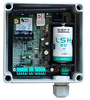
The BSC-50E Remote Alarming System is an ultra low power, wireless RTU with data logging and alarming capabilities. The battery-powered RTU incorporates a quad-band GSM/GPRS modem, four digital inputs, two analog inputs, one pulse counter input and multiple excitation options for powering measuring... [See More]
- Features: Alarming; Battery Back Up; Data Logging; Weather Tight Enclosure (optional feature)
- Analog I/O Points: 2
- Serial Ports: 1
- Digital I/O Points: 4