
Scanning Probe / Atomic Force (SPM / AFM) Digital and Video Microscopes
Description
Scanning Probe Microscopes (SPM) and Atomic Force Microscopes (AFM) are advanced imaging tools used to study surface features at the nanoscale. These microscopes provide detailed three-dimensional images of surfaces by moving a sharp probe over the sample. They are capable of imaging a wide variety of surfaces, including polymers, ceramics, composites, glass, and biological samples.
Working Principle
SPM and AFM operate by scanning a sharp probe across the surface of a sample. In AFM, a laser is reflected from the back of a reflective lever onto a position-sensitive detector. The forces between the probe tip and the sample are measured by the deflection of the lever, which is calculated using Hook's law:
latex
F = -kz
where ( F ) is the force, ( k ) is the stiffness of the lever, and ( z ) is the distance the lever is bent. This interaction allows the AFM to image the topography of a sample and monitor ultrasonic surface vibrations.
Applications
AFM is utilized in a variety of fields, including biophysics, virology, molecular biology, surface science, condensed matter physics, quantum computing, and photonics. It is particularly useful for quantifying nanomagnetic fields and spring constants of materials, and it complements optical microscopy techniques such as fluorescence and super-resolution microscopy.
Advantages over other Digital and Video Microscopes
AFM offers several advantages over traditional digital and video microscopes. It provides high-resolution imaging at the atomic scale, which is not possible with conventional optical microscopes. Additionally, AFM can measure mechanical properties and surface forces, offering more than just imaging capabilities.
Limitations
One limitation of AFM is that it can be challenging to image soft or sticky samples due to the interaction forces between the probe and the sample. Additionally, the scanning process can be time-consuming, and the equipment requires careful calibration and maintenance to ensure accurate results.
Considerations
When considering the use of SPM/AFM, it is important to account for the initial costs, which can be significant due to the advanced technology involved. Operating expenses include maintenance and potential replacement of probes, which can wear out over time. The durability and accuracy of the equipment depend on proper handling and regular calibration. Users should also consider the specific requirements of their applications to ensure that the capabilities of SPM/AFM align with their research needs.
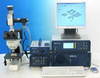
from Polytec, Inc.
The MSV-400 Microscope Scanning Vibrometer is the successor to the award-winning MSV-300 for full-field vibration analysis of very small objects such as MEMS optical switches. Based on the laser Doppler principle, a HeNe laser maps the vibrational response of the structure with a lateral resolution... [See More]
- Microscope Type: Scanning Probe / Atomic Force
- Grade: Benchtop; Research
- Application: Measuring / Toolmaker / Inspection; Semiconductor; Microscope Scanning Vibrometer
- Resolution: 1000

from Park Systems, Inc.
The XE-100 is our flagship AFM with reduced drift rate and the Step-and-Scan Automation that provides the ultimate AFM/SPM performance in Non-Contact nanoscale metrology. It is a mid-priced system for materials science, polymers, electrochemistry and other applications in nanoscience and... [See More]
- Microscope Type: Scanning Probe / Atomic Force
- Grade: Benchtop; Research
- Application: Biological / Life Sciences
- Magnification: 160 to 1500
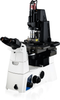
from Park Systems, Inc.
Take the award-winning XE-100, shrink it such that it can be placed on top of the many popular inverted optical microscopes, and you have the versatile XE-120, an exceptional AFM with expanded sample and interactivity flexibility. The XE-120 is the research grade AFM with industry ’s only True... [See More]
- Microscope Type: Scanning Probe / Atomic Force
- Grade: Benchtop; Research
- Application: Biological / Life Sciences
- Field of View: 0.1000
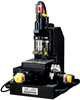
from Park Systems, Inc.
With the arrival of the XE-150, Park Systems ’ large sample AFM, Non-Contact AFM imaging has become the most feasible and practical way to scan your large samples with ultimate AFM resolution and reliability. The XY motorized sample stage is optimized for both small and large sample placement,... [See More]
- Microscope Type: Scanning Probe / Atomic Force
- Grade: Benchtop; Research
- Application: Biological / Life Sciences
- Magnification: 160 to 1500
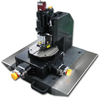
from Park Systems, Inc.
The XE-200 is an AFM with increased capacity that supports 200 mm wafer investigation. In addition to the precise scan performance provided by True Non-Contact mode, the XE-200 offers users an encoded XY stage that travels over the entire 200 mm x 200 mm sample area, an XY scan range of 100 µm... [See More]
- Microscope Type: Scanning Probe / Atomic Force
- Grade: Benchtop; Research
- Application: Biological / Life Sciences
- Field of View: 0.1000
from Park Systems, Inc.
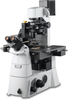
XE-Bio is a powerful 3-in-1 nanoscience research tool that uniquely combines industry ’s only True Non-Contact AFM with Ion Conductance Microscopy (ICM) and inverted optical microscope on the same platform. The modular design of the XE-Bio allows easy exchange between non-contact AFM and ICM. [See More]
- Microscope Type: Scanning Probe / Atomic Force
- Grade: Benchtop
- Application: Biological / Life Sciences
- Optical Technique: Inverted Optical Microscope

from Park Systems, Inc.
XE-HDM is an automatic defect review AFM which revolutionizes the way defects in HDD substrates and media are searched, scanned, and analyzed. The new XE-HDM significantly increases throughput for the defect review process; test runs with real defects demonstrate over 500 - 800% gain in throughput... [See More]
- Microscope Type: Scanning Probe / Atomic Force
- Grade: Benchtop
- Application: Semiconductor
- Resolution: 1.5