
Syringe Filter Laboratory Filters
Last Updated: April 1, 2025
Description
Syringe filter laboratory filters are devices used to remove particulate impurities from liquid samples. They are typically small, disposable, and designed to be attached to the end of a syringe. The primary function of these filters is to ensure that the liquid passing through is free from contaminants that could interfere with subsequent analysis or processing.
Working Principle
Syringe filters operate by forcing a liquid sample through a membrane with a specific pore size, which acts as a barrier to particles larger than the pores. This filtration process is crucial for achieving high purity in samples, as it effectively removes unwanted particulates and microorganisms. The usefulness of syringe filters lies in their ability to provide consistent and reliable filtration, which is essential for maintaining the integrity of analytical results.
Applications
Syringe filters are used in a variety of specific applications. For instance, they are employed in beverage stabilization processes using membranes like MCE or Nylon with pore sizes ranging from 0.45 to 1.2 µm. In the field of fuel testing, MCE membranes with pore sizes of 0.45 and 0.8 µm are used to ensure the purity of fuel samples. Additionally, they are utilized in serum filtration to achieve the absolute removal of microorganisms, using MCE or Nylon membranes with pore sizes of 0.1 and 0.22 µm.
Advantages over other Laboratory Filters
One of the key advantages of syringe filters over other laboratory filters is their ability to provide absolute filtration, which is crucial for applications requiring high levels of purity, such as sterilizing filtration and serum filtration. They also offer high dirt loading capacity, which means they can handle a larger volume of particulates before needing replacement, making them more efficient for certain applications.
Limitations
Syringe filters have specific limitations, such as media migration or shedding, which can occur during the filtration process. This can potentially introduce contaminants into the filtered sample. Additionally, the normal pore size of the filters may not be suitable for all applications, limiting their versatility in certain scenarios.
Considerations
When selecting syringe filters, several considerations should be taken into account. Initial costs and operating expenses can vary depending on the type of membrane and pore size required for specific applications. Durability is generally not a primary concern as these filters are typically disposable. However, accuracy in filtration is crucial, and users must ensure that the selected filter meets the necessary specifications for their application. Replacement and maintenance costs are minimal due to the disposable nature of syringe filters, but users should consider the frequency of use and the volume of samples to determine the most cost-effective option.

from diaago
CA Membrane Syringe Filters from CELLTREAT are molded in the polypropylene housings, providing a reliable seal without the use of adhesives. Features. Female luer-lock inlet and male luer slip outlet. Color coded by membrane type for easy identification. CA (Cellulose Acetate). Low protein binding,... [See More]
- Filter Type: Syringe; Pre-Filter
- Filter Medium Material: Cellulose Acetate
- Configuration: Filter and Housing
- Housing Material: Polypropylene
from Sartorius Lab Instruments GmbH & Co. KG
Syringe Filters. Reliable removal of microorganisms and particles from liquids with Minisart ® syringe filters. Typical applications are clarification, sterile filtration, sample preparation and medical applications. The syringe filters are available in many different pore sizes and with... [See More]
- Filter Type: Syringe
- Sample Type: Liquid
- Configuration: Filter and Housing
- Filter Medium Material: Glass Fiber
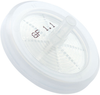
from diaago
GF Membrane Syringe Filters from CELLTREAT are molded in a polypropylene housing, providing a reliable seal without the use of adhesives. Features. Female luer-lock inlet and male luer slip outlet. Color coded by membrane type for easy identification. GF (Glass Fiber). Can be used as a preliminary... [See More]
- Filter Type: Syringe
- Filter Medium Material: Glass Fiber
- Configuration: Filter and Housing
- Housing Material: Polypropylene

from diaago
MCE Membrane Syringe Filters from CELLTREAT are molded in the polypropylene housings, providing a reliable seal without the use of adhesives. Features. Female luer-lock inlet and male luer slip outlet. Color coded by membrane type for easy identification. MCE (Mixed Cellulose Ester). Filtration of... [See More]
- Filter Type: Syringe
- Filter Medium Material: Mixed cellulose ester (MCE)
- Configuration: Filter and Housing
- Housing Material: Polypropylene

from diaago
Nylon Membrane Syringe Filters from CELLTREAT are molded in the polypropylene housings, providing a reliable seal without the use of adhesives. Features. Female luer-lock inlet and male luer slip outlet. Color coded by membrane type for easy identification. Nylon. Universal application for... [See More]
- Filter Type: Syringe
- Filter Medium Material: Nylon
- Configuration: Filter and Housing
- Housing Material: Polypropylene

from diaago
Syringe Filters from CELLTREAT are molded in the polypropylene housings, providing a reliable seal without the use of adhesives. Features. Female luer-lock inlet and male luer slip outlet. Color coded by membrane type for easy identification. Convenient bulk packaging. PES (Polyethersulfone)-Most... [See More]
- Filter Type: Syringe
- Housing Material: Polypropylene
- Configuration: Filter and Housing
- Filter Shape: Disc

from diaago
PES Membrane Syringe Filters from CELLTREAT are molded in the polypropylene housings, providing a reliable seal without the use of adhesives. Features. Female luer-lock inlet and male luer slip outlet. Color coded by membrane type for easy identification. PES (Polyethersulfone)-Most Popular... [See More]
- Filter Type: Syringe
- Filter Medium Material: Polyethersulfone
- Configuration: Filter and Housing
- Housing Material: Polypropylene
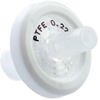
from diaago
PTFE Membrane Syringe Filters from CELLTREAT are molded in the polypropylene housings, providing a reliable seal without the use of adhesives. Features. Female luer-lock inlet and male luer slip outlet. Color coded by membrane type for easy identification. PTFE (Polytetrafluoroethylene). Hydrophobic... [See More]
- Filter Type: Syringe
- Filter Medium Material: PTFE
- Configuration: Filter and Housing
- Housing Material: Polypropylene

from diaago
PVDF Membrane Syringe Filters from CELLTREAT are molded in the polypropylene housings, providing a reliable seal without the use of adhesives. Features. Female luer-lock inlet and male luer slip outlet. Color coded by membrane type for easy identification. PVDF (Polyvinylidene Fluoride). Low... [See More]
- Filter Type: Syringe
- Filter Medium Material: PVDF
- Configuration: Filter and Housing
- Housing Material: Polypropylene

from diaago
SFCA Membrane Syringe Filters from CELLTREAT are molded in polypropylene housings, providing a reliable seal without the use of adhesives. Features. Female luer-lock inlet and male luer slip outlet. Color coded by membrane type for easy identification. SFCA (Surfactant Free Cellulose Acetate). Low... [See More]
- Filter Type: Syringe
- Filter Medium Material: Cellulose Acetate
- Configuration: Filter and Housing
- Housing Material: Polypropylene