
Glass Fiber Laboratory Filters
Last Updated: April 1, 2025
Description
Glass fiber laboratory filters are specialized filtration products designed to separate particles from liquids or gases. These filters are made from fine glass fibers that are woven or bonded together to create a porous medium. The primary function of these filters is to capture and retain particulate matter while allowing the fluid to pass through.
Working Principle
Glass fiber laboratory filters operate on the principle of mechanical filtration. As a fluid passes through the filter, particles larger than the pore size of the glass fiber matrix are trapped within the fibers. This process effectively removes contaminants from the fluid, making it cleaner and suitable for further analysis or use. The utility of glass fiber filters lies in their ability to handle high flow rates and retain a wide range of particle sizes, making them versatile for various laboratory applications.
Applications
Glass fiber laboratory filters are commonly used in a variety of scientific and industrial settings. Specific examples include their use in environmental monitoring to filter air or water samples for particulate analysis, in pharmaceutical laboratories for the clarification of solutions, and in food and beverage industries to ensure product purity by removing unwanted particulates.
Advantages over other Laboratory Filters
One of the key advantages of glass fiber filters over other types of laboratory filters is their high dirt-holding capacity, which allows them to process larger volumes of fluid before needing replacement. Additionally, they can withstand higher temperatures and chemical exposure compared to some other filter materials, making them suitable for more demanding applications.
Limitations
Despite their advantages, glass fiber laboratory filters have certain limitations. They may experience media migration, where fibers shed into the filtrate, potentially contaminating the sample. Additionally, their normal pore size may not be suitable for filtering extremely fine particles, limiting their use in applications requiring ultra-fine filtration.
Considerations
When selecting glass fiber laboratory filters, several factors should be considered. Initial costs can vary depending on the quality and specifications of the filter. Operating expenses may include the cost of frequent replacements if the filters are used in high-volume applications. Durability is generally high, but the filters may degrade over time with exposure to harsh chemicals or extreme temperatures. Accuracy in filtration is dependent on the consistency of the pore size and the integrity of the filter material. Replacement and maintenance costs should also be factored in, as regular monitoring and replacement are necessary to ensure optimal performance.
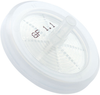
from diaago
GF Membrane Syringe Filters from CELLTREAT are molded in a polypropylene housing, providing a reliable seal without the use of adhesives. Features. Female luer-lock inlet and male luer slip outlet. Color coded by membrane type for easy identification. GF (Glass Fiber). Can be used as a preliminary... [See More]
- Filter Medium Material: Glass Fiber
- Configuration: Filter and Housing
- Filter Type: Syringe
- Housing Material: Polypropylene
from Sartorius Lab Instruments GmbH & Co. KG
Glass Microfibre Filters with Binder. Glass microfibre filters with binder for air and gas monitoring, emission testing and smoke measurement. They can also be used as pre-filter. The glass microfibre filters with binder are produced with synthetic binders to make them chemically and mechanically... [See More]
- Filter Medium Material: Glass Fiber
- Configuration: Filter
- Filter Type: Paper
- Sample Type: Liquid

from diaago
CELLTREAT's Glass Fiber Filter Disks are an ideal pre-filter to prevent clogging when filtering viscous or particulate-laden solutions when used alongside with CELLTREAT Scientific Products vacuum Filter Systems and Bottle Top Filters. Features. Increase filtration speed by removing larger particles... [See More]
- Filter Medium Material: Glass Fiber
- Filter Shape: Disc
- Filter Type: Pre-Filter
- Disc Diameter, Sheet Width: 50