
Single Throw (ST) Volumetric Gas Flow Switches
Last Updated: April 1, 2025
Description
Single Throw (ST) Volumetric Gas Flow Switches are devices designed to monitor and control the flow of gas within a system. They operate by detecting the presence or absence of gas flow and triggering a switch action based on the flow status. These switches are typically used to ensure that gas flow is maintained within specified parameters, providing a critical safety and operational function in various systems.
Working Principle
ST Volumetric Gas Flow Switches work by utilizing either solid-state or electromechanical switch mechanisms to detect changes in gas flow. The switch is activated when the flow reaches a predetermined threshold, either opening or closing the circuit to signal a change in flow status. This mechanism is useful because it provides a reliable method for monitoring gas flow, ensuring that systems operate safely and efficiently by preventing conditions such as leaks or blockages that could lead to system failures or hazards.
Applications
Specific applications of ST Volumetric Gas Flow Switches include their use in natural gas fractionation process facilities, where they are employed for relief valve leak monitoring. In these settings, the switches help detect low velocity gas leaks that other technologies, such as differential pressure or vane type switches, may not effectively identify. This capability is crucial for maintaining safety and operational efficiency in environments where gas leaks could pose significant risks.
Advantages over other Volumetric Gas Flow Switches
ST Volumetric Gas Flow Switches offer advantages over other types of flow switches, particularly in their ability to detect low velocity gas leaks that may not be captured by differential pressure or vane type technologies. This makes them particularly valuable in applications where precise leak detection is critical, such as in natural gas processing facilities.
Limitations
One limitation of ST Volumetric Gas Flow Switches is their potential to cause nuisance false alarms if not properly calibrated or if used in unsuitable applications. This can lead to unnecessary operational disruptions and increased maintenance efforts.
Considerations
When considering the use of ST Volumetric Gas Flow Switches, it is important to evaluate factors such as initial costs, operating expenses, and maintenance requirements. These switches may have higher initial costs due to their specialized detection capabilities, but they can offer long-term savings by preventing costly leaks and system failures. Durability and accuracy are also key considerations, as these factors will influence the overall reliability and effectiveness of the switch in its intended application. Regular maintenance and calibration may be necessary to ensure optimal performance and to minimize the risk of false alarms.
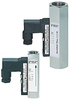
from Clark Solutions
The flow meter and switch model DS02 works according to a modified variable area principle. The float is guided in a cylindrical measuring tube by means of a spring. The flowing medium moves the float in the flow direction. A Reed contact is mounted outside the meter in a sealed housing. When the... [See More]
- Throws: Single Throw; Double Throw (optional feature)
- Pipe Diameter: 0.25 to 1.00
- Meter Technology: Rotameter; Variable Area
- Mounting: In-line
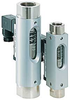
from Clark Solutions
The flow meter and switch model DS01 works according to a modified variable area principle. The float is guided in a cylindrical measuring glass by means of a spring. The flowing medium moves the float in the flow direction. The upper edge of the float shows the momentary flow via a burnt-in scale... [See More]
- Throws: Single Throw; Double Throw (optional feature)
- Pipe Diameter: 0.25 to 1.00
- Meter Technology: Rotameter; Variable Area
- Mounting: In-line

from Clark Solutions
The flow meter and switch model DS03 works according to a modified variable area principle. The float is guided in a cylindrical measuring glass. The upper edge of the float shows the momentary flow via a burnt-in scale on the measuring glass. A Reed contact is mounted outside the meter in a sealed... [See More]
- Throws: Single Throw; Double Throw (optional feature)
- Pipe Diameter: 0.25 to 1.25
- Meter Technology: Rotameter; Variable Area
- Mounting: In-line

from Clark Solutions
The flow meter and switch model DS04 works according to a modified variable area principle. The float is guided in a cylindrical measuring tube by means of a slotted nozzle. The flowing medium moves the float in the flow direction. An externally mounted pointer indicator is magnetically coupled to... [See More]
- Throws: Single Throw; Double Throw (optional feature)
- Pipe Diameter: 0.25 to 1.25
- Meter Technology: Rotameter; Variable Area
- Mounting: In-line

from Clark Solutions
The flow meter and switch model DS08 works according to a modified variable area principle. The float is guided in a cylindrical measuring tube by means of a spring. The flowing medium moves the float in the flow direction. An externally mounted pointer indicator is magnetically coupled to the float... [See More]
- Throws: Single Throw; Double Throw (optional feature)
- Pipe Diameter: 0.50 to 1.00
- Meter Technology: Rotameter; Variable Area
- Mounting: In-line

from Clark Solutions
The flow meter and switch model DS07 works according to a modified variable area principle. The float is guided in a cylindrical measuring glass by means of a spring. The flowing medium moves the float in the flow direction. The upper edge of the float shows the momentary flow via a burnt-in scale... [See More]
- Throws: Single Throw; Double Throw (optional feature)
- Pipe Diameter: 0.50 to 1.00
- Meter Technology: Rotameter; Variable Area
- Mounting: In-line