
Natural Gas Metering Pumps
Description
Natural gas metering pumps are devices designed to accurately measure and control the flow of natural gas. These pumps ensure precise delivery of gas by maintaining a consistent flow rate, which is crucial for various industrial processes and applications.
Working Principle
Natural gas metering pumps operate by utilizing mechanisms such as pistons or diaphragms to move gas through a chamber. For example, piston pumps use reciprocating pistons driven by a crankshaft to create a controlled flow of gas. Diaphragm pumps, on the other hand, use a flexible diaphragm that moves back and forth to pump the gas. These pumps are essential for maintaining accurate flow rates, which is critical for billing, process control, and ensuring safety in gas distribution systems.
Applications
Natural gas metering pumps are commonly used in residential and small commercial installations to measure gas flow for billing purposes. They are also employed in industrial settings, such as in compressor stations along natural gas pipelines, where accurate flow measurement is necessary to fuel the compressors and monitor the health of dry gas seals.
Advantages over other Manufacturing - Abrasives, Grinding and Finishing
Natural gas metering pumps offer high accuracy and reliability, which are crucial in applications where precise flow measurement is necessary. Unlike abrasive processes, these pumps do not wear down materials, ensuring longevity and consistent performance. Additionally, they require less maintenance compared to some abrasive and grinding equipment, which can lead to reduced operational costs.
Limitations
One limitation of natural gas metering pumps is their sensitivity to abrasive media. For instance, piston pumps require seals to prevent leaks and are not suitable for handling abrasive substances, which can lead to wear and tear. This limitation necessitates careful selection of pump types based on the specific characteristics of the gas being measured.
Considerations
When selecting natural gas metering pumps, several factors should be considered:
- Initial Costs: The choice of pump type can significantly affect initial investment costs. For example, diaphragm pumps may have higher upfront costs due to their complex design.
- Operating Expense: Pumps that require frequent maintenance or replacement of parts can increase operating expenses.
- Durability: The materials used in the construction of the pump and its ability to handle specific gas compositions will impact its durability.
- Accuracy: High-accuracy pumps, such as Coriolis flow meters, may be preferred in applications where precise measurement is critical.
- Replacement and Maintenance Costs: Consideration should be given to the ease of maintenance and the availability of replacement parts to minimize downtime and costs.
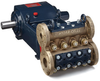
from Wanner Engineering, Inc.
Versatile, Reliable Pumps for a Wide Range of Applications. Hydra-Cell positive displacement diaphragm pumps feature a seal-less pumping chamber so there are no seals, packing or cups to leak or replace. The seal-less design and check valves enable Hydra-Cell to handle abrasives and particulates... [See More]
- Power Source: NoSourceIncluded; Gasoline or Diesel Engine; Natural Gas; 230V to 460V, Three Phase, 480V to 690V, Three Phase; AC
- Discharge Pressure: 500.0 to 1500.0
- Liquid Flow: 96.0000
- Discharge Size: 2.000
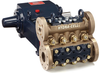
from Wanner Engineering, Inc.
Versatile, Reliable Pumps for a Wide Range of Applications. Hydra-Cell positive displacement diaphragm pumps feature a seal-less pumping chamber so there are no seals, packing or cups to leak or replace. The seal-less design and check valves enable Hydra-Cell to handle abrasives and particulates... [See More]
- Power Source: NoSourceIncluded; Gasoline or Diesel Engine; Natural Gas; 230V to 460V, Three Phase, 480V to 690V, Three Phase; AC
- Discharge Pressure: 500.0 to 3000.0
- Liquid Flow: 45.0000
- Discharge Size: 1.500
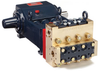
from Wanner Engineering, Inc.
Versatile, Reliable Pumps for a Wide Range of Applications. Hydra-Cell positive displacement diaphragm pumps feature a seal-less pumping chamber so there are no seals, packing or cups to leak or replace. The seal-less design and check valves enable Hydra-Cell to handle abrasives and particulates... [See More]
- Power Source: NoSourceIncluded; Gasoline or Diesel Engine; Natural Gas; 230V to 460V, Three Phase, 480V to 690V, Three Phase; AC
- Discharge Pressure: 500.0 to 5000.0
- Liquid Flow: 26.0000
- Discharge Size: 1.250