
Analog Voltage Liquid Leak Detectors
Last Updated: April 1, 2025
Description
Analog Voltage Liquid Leak Detectors are devices designed to detect the presence of liquid leaks by converting the physical presence of a liquid into an analog voltage signal. These detectors are typically used to monitor and alert users to the presence of unwanted liquid in a specific area, providing a crucial early warning to prevent damage or system failure.
Working Principle
Analog Voltage Liquid Leak Detectors operate by using sensors that detect changes in the environment, such as the presence of a liquid. When a leak occurs, the sensor detects the liquid and converts this detection into an analog voltage signal. This signal can then be processed to determine the presence and possibly the extent of the leak. These detectors are useful because they provide real-time monitoring and can be integrated into larger systems for automated responses, ensuring quick action to mitigate potential damage.
Applications
Analog Voltage Liquid Leak Detectors are used in a variety of specific applications. For instance, they are employed in electric vehicle battery packs to detect coolant leaks, which are critical for maintaining the safety and efficiency of the vehicle . They are also used in HVAC systems as condensate overflow sensors, and in sump pumps to detect water presence, preventing potential flooding or equipment damage .
Advantages over other Liquid Leak Detectors
One of the advantages of Analog Voltage Liquid Leak Detectors is their ability to provide continuous monitoring and immediate feedback through voltage signals, which can be more precise and quicker than some other detection methods. For example, compared to computerized test systems that can be costly and time-consuming, analog voltage comparators can achieve accurate results rapidly and at a lower cost .
Limitations
A limitation of Analog Voltage Liquid Leak Detectors is that they may require specific calibration and compatibility with the type of liquid being detected. This means that they might not be universally applicable to all types of liquids without proper configuration .
Considerations
When considering the use of Analog Voltage Liquid Leak Detectors, several factors should be taken into account. Initial costs can vary depending on the complexity and sensitivity of the sensors required. Operating expenses might include regular calibration and maintenance to ensure accuracy and reliability. Durability is another consideration, as the sensors need to withstand the environmental conditions of their application. Additionally, replacement and maintenance costs should be factored in, as these can impact the long-term cost-effectiveness of the system.
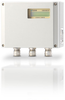
from FLEXIM AMERICAS Corp.
Designed for the needs of the Water and Wastewater Industry. The flow meter's transducers are small and practical, watertight and equipped with rugged integrated cables. Thanks to the clamp-on technology, no cutting or welding work is needed to mount the transducers on the pipe. Thus, they are... [See More]
- Output Options: Analog Voltage; Analog Current
- Specific Detectable Liquid Types: Water
- Leak Detection Method: Ultrasonic Leak Detector
- Liquid Temperature Range: -40 to 210

from OPW Engineered Systems
A unique, pulsed — and intrinsically safe — electrical signal is generated by the control monitor and is transmitted to the sensors via a coiled cord and optic format plug.When sensors on the transport are dry a signal is returned to the monitor. If the signal meets pre-determined... [See More]
- Output Options: Analog Voltage
- Minimum Response Time: 0.5000
- Leak Detection Method: Optical Leak Detector
- Detector Features: Built in Alarm Indicator; Intrinsically Safe