
Petroleum Based Products / Fuels Liquid Leak Detectors
Last Updated: April 1, 2025
Description
Petroleum-based products and fuels liquid leak detectors are specialized devices designed to identify and alert users to the presence of leaks in systems containing petroleum-based liquids. These detectors are crucial for maintaining safety and environmental standards by ensuring that leaks are detected promptly to prevent potential hazards and environmental contamination.
Working Principle
These detectors operate by employing various methods to identify the presence of petroleum-based liquids. Internal methods monitor the inside of tanks to measure volume loss over time, while interstitial methods focus on the area between the tank and a containment barrier. External methods utilize sensors to detect leaked products in the environment outside the tank. The sensors output data in the form of voltage, current, or frequency, which is then processed to determine the presence and extent of a leak .
Applications
Petroleum-based liquid leak detectors are widely used in industries where the storage and transportation of fuels and oils are critical. For example, they are employed in oil refineries to monitor storage tanks, in pipelines to detect leaks that could lead to environmental disasters, and in fuel storage facilities to ensure compliance with safety regulations. These detectors are also used in aircraft fuel systems to detect leaks, as specified by standards like MIL-PRF-81298 .
Advantages over other Liquid Leak Detectors
Petroleum-based liquid leak detectors are specifically designed to handle the unique properties of petroleum products, making them more effective in detecting leaks in such environments compared to general-purpose leak detectors. They are tailored to detect leaks in foamy, dirty, or opaque liquids, which can be challenging for other types of detectors .
Limitations
One limitation of petroleum-based liquid leak detectors is that they may require specific configurations to effectively detect leaks in various types of petroleum products. Additionally, they might not be as effective in detecting leaks in non-petroleum-based liquids, limiting their versatility in mixed-use environments .
Considerations
When selecting petroleum-based liquid leak detectors, several factors should be considered. Initial costs can vary depending on the complexity and technology of the detector. Operating expenses may include regular calibration and maintenance to ensure accuracy and reliability. Durability is crucial, as these detectors often operate in harsh environments. Accuracy is paramount to prevent false alarms or missed detections. Replacement and maintenance costs should also be factored into the overall cost of ownership, as regular upkeep is necessary to maintain optimal performance .

from Arjay Engineering
Reliable monitoring of liquid leaks in containments and floor spaces. The Leak Pad Sensor (Area Leak Alarm) can be placed on containment floors and pans to alert on a dry vs. wet condition. These can be placed around a tank, in electrical and computer vaults, and in pump stations. The 2852-LPS... [See More]
- Specific Detectable Liquid Types: Water; Corrosive Fluids; Petroleum Based Products/Fuels
- Liquid Temperature Range: -76 to 131
- Leak Detection Method: Capacitance
- Output Options: Analog Current; Switch or Alarm Signal
from ClampOn, Inc.
Intelligent DSP electronics with signal processing [See More]
- Specific Detectable Liquid Types: Petroleum Based Products/Fuels
- Detectable Liquid Features: Dirty Liquids; Opaque Liquids; Gases/Vapors
- Leak Detection Method: Ultrasonic Leak Detector
- Liquid Temperature Range: -40 to 437
from Gems Sensors & Controls
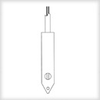
Designed for use in the annular space of double wall fiberglass tanks to detect hydrocarbon liquids. When hydrocarbons are present, a hydrocarbon wax pellet dissolves and closes a springloaded switch to signal a leak. This sensor is not reusable after exposure to hydrocarbons. [See More]
- Specific Detectable Liquid Types: Petroleum Based Products/Fuels
- Output Options: Switch or Alarm Signal
- Leak Detection Method: Spring Loaded Switch, Wax Pellet

from KROHNE Messtechnik
PipePatrol is a leading edge solution for safe and efficient pipeline management. It offers a comprehensive suite of modules for leak, theft and line break detection as well as batch tracking and monitoring of tightness and lifetime stress. Pipeline operators can select single software applications... [See More]
- Specific Detectable Liquid Types: Water; Petroleum Based Products/Fuels
- Leak Detection Method: Leak Pattern Recognition

from Gems Sensors & Controls
Designed to monitor hydrocarbon vapors in wells or sumps by absorbing the vapors and triggering a switch. Should not be used where vapors are continuously present. Fits in standard 2" pipe with cover. [See More]
- Specific Detectable Liquid Types: Petroleum Based Products/Fuels
- Output Options: Switch or Alarm Signal
- Leak Detection Method: Vapor Absorption

from Gems Sensors & Controls
Dependable Long Service Life. Fits Small, Interstitial Spaces. Easy Maintenance. The Gems ™ LS-10 liquid sensor accurately detects the presence of liquid in fiberglass double-wall tanks, containment sumps and double-wall pipes. Dry contact switching ensures dependability throughout its long... [See More]
- Specific Detectable Liquid Types: Water; Petroleum Based Products/Fuels
- Output Options: Switch or Alarm Signal
- Leak Detection Method: Mechanical Float Switch (Relay Contact)
- Operating Temp: -40 to 176