
Clamp Meter Power Meters
Description
Clamp meter power meters are devices designed to measure levels of alternating current (AC) and direct current (DC) without the need for direct contact or leads. They typically include a current sensor built into the clamp that surrounds the wire, allowing for the measurement of current flow. Some models can also measure root mean square (RMS) power, which is the square root of the time average of the square of the instantaneous power. These meters can be handheld and portable or designed for benchtop or shop floor use, with some models being battery-powered for outdoor use .
Working Principle
Clamp meters operate by using a current transformer principle, where the clamp acts as a transformer core and the wire as a primary winding. When the clamp is placed around a conductor, it measures the magnetic field generated by the current flowing through the wire. This allows the meter to calculate the current without needing to make direct contact with the conductor. This non-invasive method is particularly useful for measuring high currents or in situations where breaking into the circuit is not feasible .
Applications
Clamp meters are used in a variety of applications across different industries. For example, they are employed in smart metering for energy management systems, where they continuously feed data into the system to track energy production, storage, and consumption patterns. This application is particularly beneficial in household photovoltaic energy storage systems, helping to identify problems early and allowing for data-driven decisions about system performance and energy savings .
Advantages over other Process - Solids Processing Equipment
One of the key advantages of clamp meters over other process equipment is their ability to measure current without direct contact, which eliminates the need to interrupt the circuit. This feature is particularly advantageous in high-current applications or where safety is a concern. Additionally, their portability and ease of use make them suitable for a wide range of environments, from industrial settings to outdoor applications .
Limitations
Clamp meters have limitations, such as their dependency on the accuracy of the instrument to which they are connected. The accuracy of RMS measurements, for instance, can be limited by the instrument rather than the probe itself. Furthermore, clamp meters may not be suitable for measuring very low currents due to their design and operational principles .
Considerations
When selecting a clamp meter, several factors should be considered. Initial costs can vary depending on the features and specifications of the device. Operating expenses are generally low, especially for battery-powered models that do not require plug-in power. Durability is an important consideration, particularly for outdoor-rated models. Accuracy is crucial, and users should ensure that the meter's specifications meet their measurement needs. Replacement and maintenance costs are typically minimal, but users should be aware of the need for periodic calibration to maintain accuracy .
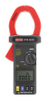
from RS Components, Ltd.
RS PRO PROVA 6600-G Clamp Meter [See More]
- Form Factor: Clamp Meter
- Standards and Certifications: RoHS
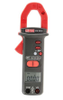
from RS Components, Ltd.
RS PRO TES-3091N Clamp Meter [See More]
- Form Factor: Clamp Meter
- Standards and Certifications: RoHS
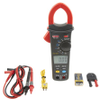
from RS Components, Ltd.
RS PRO APPA A18PLUS Clamp Meter [See More]
- Form Factor: Clamp Meter
- Standards and Certifications: RoHS
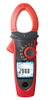
from RS Components, Ltd.
RS PRO IPM245F Clamp Meter [See More]
- Form Factor: Clamp Meter
- Standards and Certifications: RoHS
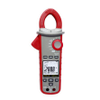
from RS Components, Ltd.
RS PRO FG-156B001-1 Clamp Meter [See More]
- Form Factor: Clamp Meter
- Standards and Certifications: RoHS
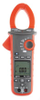
from RS Components, Ltd.
RS PRO FG-157B001-1 Clamp Meter [See More]
- Form Factor: Clamp Meter
- Standards and Certifications: RoHS
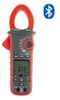
from RS Components, Ltd.
RS PRO FG-158B001-1 Clamp Meter [See More]
- Form Factor: Clamp Meter
- Standards and Certifications: RoHS

from OMEGA Engineering, Inc.
The HHM98P multifunction clamp-on meter provides high accuracy and reliability in a low-cost, portable package. The built-in AC clamp makes this meter ideal for troubleshooting electric resistance heaters and other plant electrical systems. In addition, the HHM98P effectively measures current from 3... [See More]
- Form Factor: Clamp Meter; Handheld
- Apparent Power: 0.0 to 60000
- Display Type: Digital
- Reactive Power: 0.0 to 60