
Bracket (Flange) Mount Relay Boards
Last Updated: April 1, 2025
Description
Bracket (Flange) Mount Relay Boards are designed to facilitate the mounting of relays using a flange. This mounting method involves bolting the relay to a matching flange, which is then welded to a corresponding wall. These relay boards are equipped with multiple channels, each containing a relay switch capable of handling specific voltage and current ratings. They often include features such as opto-isolators for signal isolation, visual indicators like LEDs, and sockets for power pack connections.
Working Principle
Bracket (Flange) Mount Relay Boards operate by using relay switches to control the flow of electricity in a circuit. Each channel on the board can toggle between an on and off state, allowing for the control of connected devices. The inclusion of opto-isolators provides electrical isolation between the control signals and the output, enhancing safety and reliability. These boards are useful because they allow for centralized control of multiple devices, reducing the complexity of wiring and improving system organization.
Applications
Bracket (Flange) Mount Relay Boards are used in various industrial and commercial applications. They can control lights, motors, and other electronic devices. For example, they may be used in industrial automation systems to manage the operation of machinery or in commercial buildings to control lighting systems.
Advantages over other Relay Boards
One advantage of Bracket (Flange) Mount Relay Boards is their robust mounting method, which provides a secure and stable installation. This can be particularly beneficial in environments where vibrations or physical disturbances are common. Additionally, the use of opto-isolators enhances safety by preventing electrical interference between control and output signals.
Limitations
A limitation of Bracket (Flange) Mount Relay Boards is the potential complexity and cost associated with installation, as the flange must be precisely aligned and securely welded to a wall. This can increase the initial setup time and require specialized skills or equipment.
Considerations
When considering Bracket (Flange) Mount Relay Boards, it is important to evaluate the initial costs, which may be higher due to the need for precise installation. Operating expenses can vary depending on the specific application and usage patterns. Durability is generally high due to the secure mounting method, but regular maintenance may be required to ensure optimal performance. Replacement and maintenance costs should also be considered, as the need for specialized installation can impact these expenses.

from Measurement Computing
USB-based 24-channel electromechanical relay interface device. KEY HIGHLIGHTS. The USB-ERB Series relay interface devices provide support for Form C electromechanical relays. Each device is designed with a heavy-duty chassis for rugged DAQ applications. [See More]
- Mounting: Bracket (Flange) Mount
- Channels: 24
- Switch Configuration: FormC
- Ourtput Current: 6
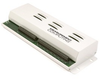
from Measurement Computing
USB-based eight Form C relay and eight isolated high-voltage input interface device. KEY HIGHLIGHTS. The USB-PDISO8 Series relay interface devices are designed for high voltage applications. Each device provides isolated Form C electromechanical SPDT relays and a heavy-duty chassis for rugged DAQ... [See More]
- Mounting: Bracket (Flange) Mount
- Ourtput Current: 6
- Switch Configuration: FormC
- Operating Temp: 32 to 158