
DC Relay Boards
Last Updated: April 1, 2025
Description
DC Relay Boards are electronic devices that facilitate the control of high-power circuits using low-power signals. They consist of multiple channels, each equipped with a relay switch that can handle specific voltage and current ratings. These boards often include features such as opto-isolators for signal isolation, visual indicators like LEDs, and sockets for power pack connections. They can be controlled manually, remotely, or via radio frequency, making them versatile components in various electronic systems.
Working Principle
DC Relay Boards operate by using a small input current to activate an electromagnet within the relay. This electromagnet pulls a switch, allowing a larger current to flow through the circuit on the opposite side of the relay. This mechanism provides electrical isolation between the control and output circuits, enabling the safe management of high-power loads with low-power control signals. The use of relays is particularly advantageous when interfacing microcontrollers, such as Raspberry Pi or Arduino, with high-power devices, as these microcontrollers can only output low electrical power.
Applications
DC Relay Boards are employed in a wide range of applications. They are commonly used to control lights, motors, and other electronic devices in industrial and commercial settings. Specific examples include controlling heater temperatures and managing power switching applications. Additionally, they are used in automotive systems to control components like cooling fans and fuel pumps, where they toggle between on and off states to regulate operation.
Advantages over other Relay Boards
One of the primary advantages of DC Relay Boards is their ability to provide electrical isolation between control and output circuits, which enhances safety and reliability. They also allow for the control of high-power devices using low-power signals, making them ideal for use with microcontrollers that have limited output capabilities. Furthermore, the inclusion of features like opto-isolators and RF control options adds to their versatility and security, particularly in preventing unauthorized signal interception.
Limitations
DC Relay Boards have certain limitations, such as the potential for back electromotive force (EMF) generated by the electromagnet when the relay is turned off. This back EMF can cause circuit malfunctions or damage if not properly managed, typically requiring the use of diodes for protection. Additionally, the physical size and channel limitations of relay boards may restrict their use in compact or highly integrated systems.
Considerations
When selecting and using DC Relay Boards, several factors should be considered. Initial costs can vary depending on the number of channels and additional features like RF control. Operating expenses are generally low, but durability and accuracy can be affected by factors such as the quality of the components and the environmental conditions in which they operate. Maintenance and replacement costs should also be considered, as relays may wear out over time due to mechanical movement and electrical arcing. Proper design and implementation can mitigate some of these issues, ensuring reliable and long-lasting performance.

from WINSYSTEMS, INC.
WinSystems ’ industrial ISM-TRM-RELAY provides 16 independent relays that are Single Pole Double Throw (SPDT) Form C devices. The contacts can handle 6A @ 250VAC /24VDC for applications requiring medium current capacity plus isolation between an embedded computer and monitoring/control points. [See More]
- Signal Type: DC
- Mounting: PCBoard
- Switch Configuration: FormC
- Channels: 16

from Opto 22
The SNAP-SCM-SSI module provides two individually isolated serial synchronous interface (SSI) inputs for acquiring data from linear or rotary transducers used in motion control. The module can decode both binary and Gray Code, and is software configurable to set clock speed, frame length, delay time... [See More]
- Signal Type: DC
- Channels: 2
- Mounting: Rack-Mounted
- Input Voltage: 5

from American Portwell Technology Inc.
Independent Common Reed Relay Contact-point Digital Output Board for PCI [See More]
- Signal Type: AC; DC
- Channels: 16
- Mounting: PCBoard
- Input Voltage: 5
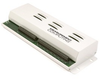
from Measurement Computing
USB-based eight Form C Relay and eight isolated high-voltage input interface device with 40-pin connector. KEY HIGHLIGHTS. The USB-PDISO8 Series relay interface devices are designed for high voltage applications. Each device provides isolated Form C electromechanical SPDT relays and a heavy-duty... [See More]
- Signal Type: AC; DC
- Mounting: Bracket (Flange) Mount
- Switch Configuration: FormC
- Ourtput Current: 6

from Honeywell Analytics, Inc.
The 301R acts as an output to the 301C. The Relay Module provides 8 relays (DPDT 5A, 30 VDC or 250 VAC resistive load) for the indirect activation of fans, louvers, etc at programmable alarm levels. Since the relay module is an output to the controller it can be located at any point within the gas... [See More]
- Signal Type: AC; DC
- Mounting: Panel
- Switch Configuration: DPDT
- Channels: 2 to 8

from Progressive Automations
The LC-200 is a 2 channel interface board for controlling our actuators. Combine it with one of our Arduino microcontrollers for even more control options. · Voltage - 5V. · High Current Relay - AC250V 10A, DC30V 10A. · LEDs for relay output status [See More]
- Signal Type: AC; DC
- Input Voltage: 5
- Channels: 2
- Ourtput Current: 10

from American Portwell Technology Inc.
32 individual, optically isolated differential outputs. These cards are ideal for use in control and instrumentation applications that require high-speed switching and/or long-life expectancy which precludes using traditional electro-mechanical relays. Individual channel-to-channel isolation allows... [See More]
- Signal Type: DC
- Mounting: PCBoard
- Switch Configuration: P-Channel FET
- Channels: 32
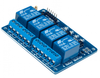
from Progressive Automations
The LC-201 is a 4 channel relay interface board for controlling our actuators. Combine it with one of our Arduino microcontrollers for even more control options. · Voltage - 5V. · High Current Relay - AC250V 10A, DC30V 10A. · LEDs for relay output status. · Opto-isolated... [See More]
- Signal Type: AC; DC
- Input Voltage: 5
- Channels: 4
- Ourtput Current: 10