
Form C Relay Boards
Last Updated: April 1, 2025
Description
Form C Relay Boards are electronic devices that incorporate multiple relay switches, each capable of controlling electrical circuits. These boards typically feature multiple channels, allowing for the management of several circuits simultaneously. Each channel on the board is equipped with a relay switch that can handle a specific voltage and current rating, such as 250 VAC and 5 amps. The boards may also include additional features like opto-isolators for signal isolation and LED indicators for visual status updates.
Working Principle
Form C Relay Boards operate by using an input current to activate an electromagnet within the relay. This electromagnet pulls a switch, allowing a higher current to flow through the opposite side of the relay. This mechanism enables the control of high-power circuits with low-power signals, making them particularly useful in applications where microcontrollers or computers are involved. The isolation provided by the relay ensures that the control circuit remains electrically separate from the high-power circuit, enhancing safety and reliability.
Applications
Form C Relay Boards are used in a variety of applications. They are commonly employed in industrial and commercial settings to control lights, motors, and other electronic devices. Specific examples include controlling heater temperatures and managing power switching applications. These boards are also integral in the operation of cooling fans in engines and fuel pumps, where they toggle between on and off states to regulate performance.
Advantages over other Relay Boards
One of the primary advantages of Form C Relay Boards is their ability to provide electrical isolation between control and power circuits, which enhances safety and prevents interference. They also allow for the control of high-power circuits with low-power signals, making them ideal for use with microcontrollers like Raspberry Pi or Arduino, which have limited electrical output capabilities. Additionally, the presence of multiple channels on a single board allows for the simultaneous management of several circuits, increasing efficiency and reducing the need for multiple devices.
Limitations
Despite their advantages, Form C Relay Boards have limitations. Being primarily mechanical devices, they are subject to wear and tear, which can lead to failure over time. The mechanical nature of the relays also means they may not be suitable for applications requiring rapid switching or high-frequency operations. Furthermore, the back electromotive force (EMF) generated when the relay is turned off can cause circuit malfunctions if not properly managed with protective components like diodes.
Considerations
When considering the use of Form C Relay Boards, several factors should be taken into account. Initial costs can vary depending on the number of channels and additional features like opto-isolators or RF control capabilities. Operating expenses are generally low, but the mechanical nature of the relays means that maintenance and replacement costs should be anticipated over time. Durability is a concern, as mechanical components are prone to wear. Accuracy in switching is generally reliable, but the potential for back EMF-induced malfunctions should be considered in the design phase.

from WINSYSTEMS, INC.
WinSystems ’ industrial ISM-TRM-RELAY provides 16 independent relays that are Single Pole Double Throw (SPDT) Form C devices. The contacts can handle 6A @ 250VAC /24VDC for applications requiring medium current capacity plus isolation between an embedded computer and monitoring/control points. [See More]
- Switch Configuration: FormC
- Signal Type: DC
- Mounting: PCBoard
- Channels: 16

from American Portwell Technology Inc.
Half-size Low-Profile PCI bus compatible card that provides isolated digital input and output interface for PCI-Bus computers. The card has eight optically-isolated digital inputs for AC or DC control signals and eight electromechanical relay outputs. [See More]
- Switch Configuration: FormC
- Signal Type: AC
- Mounting: PCBoard
- Channels: 8

from Measurement Computing
PCI-based 16 electromechanical relays, 16 isolated (500 V) digital input board. KEY HIGHLIGHTS. The PCI-PDISO8 Series relay interface boards are designed for high voltage applications. Each device provides isolated Form C and Form A electromechanical relay output and high current output. [See More]
- Switch Configuration: FormC
- Channels: 16
- Mounting: PCBoard
- Ourtput Current: 6

from WINSYSTEMS, INC.
WinSystems ’ ISM-TRM-COMBO is a signal conditioning board that provides eight independent SPDT relays, eight isolated outputs, and eight isolated inputs for applications requiring medium current capacity plus I/O isolation between an embedded computer and monitoring/control points. Features. [See More]
- Switch Configuration: FormC
- Signal Type: AC (optional feature); DC (optional feature)
- Mounting: PCBoard
- Channels: 8

from American Portwell Technology Inc.
Low-cost, half-size cards that provide isolated input and output for PCI-Bus computers. The cards have sixteen optically-isolated digital inputs for AC or DC control signals and sixteen electro-mechanical relay outputs. [See More]
- Switch Configuration: FormA; FormC
- Signal Type: AC; DC
- Mounting: PCBoard
- Channels: 16

from Measurement Computing
USB-based 24-channel electromechanical relay interface device. KEY HIGHLIGHTS. The USB-ERB Series relay interface devices provide support for Form C electromechanical relays. Each device is designed with a heavy-duty chassis for rugged DAQ applications. [See More]
- Switch Configuration: FormC
- Channels: 24
- Mounting: Bracket (Flange) Mount
- Ourtput Current: 6

from American Portwell Technology Inc.
Low-cost, half-size cards that provide isolated input and output for PCI-Bus computers. The cards have eight optically-isolated digital inputs for AC or DC control signals and eight electro-mechanical relay outputs. [See More]
- Switch Configuration: FormA; FormC
- Signal Type: AC; DC
- Mounting: PCBoard
- Channels: 8

from Measurement Computing
32-channel electromechanical relay board, Form C. KEY HIGHLIGHTS. ISA data acquisition (DAQ) boards are available in a variety of configurations to meet the needs of most applications. Features include analog I/O, digital I/O, and counter/timer functions. Available with simultaneous operation, high... [See More]
- Switch Configuration: FormC
- Channels: 32
- Mounting: PCBoard
- Ourtput Current: 6

from American Portwell Technology Inc.
Featuring 16 Form C (SPDT) electromechanical relays and 16 optically isolated digital inputs, PC/104 sized board and mounting holes installed in a small rugged enclosure with screw termination connections for status monitoring and digital control using USB. [See More]
- Switch Configuration: FormC
- Signal Type: AC; DC
- Mounting: DIN (optional feature); PCBoard (optional feature)
- Channels: 16

from Measurement Computing
4-relay output module (2 Form A NO, 2 Form C) with four digital inputs. KEY HIGHLIGHTS. Serial interface data acquisition (DAQ) devices with up to eight temperature/ voltage inputs, up to four voltage/current outputs, two 32-bit counters, up to 16 digital input, open collector outputs, and up to 7... [See More]
- Switch Configuration: FormA; FormC
- Channels: 4
- Mounting: Module
- Ourtput Current: 2

from American Portwell Technology Inc.
Featuring 4 Form C (SPDT) electromechanical relays and 4 optically isolated digital inputs, PC/104 sized board and mounting holes installed in a small rugged enclosure with screw termination connections for status monitoring and digital control using USB. [See More]
- Switch Configuration: FormC
- Signal Type: AC; DC
- Mounting: DIN (optional feature); PCBoard (optional feature)
- Channels: 4
from Measurement Computing
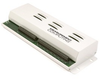
USB-based eight Form C relay and eight isolated high-voltage input interface device. KEY HIGHLIGHTS. The USB-PDISO8 Series relay interface devices are designed for high voltage applications. Each device provides isolated Form C electromechanical SPDT relays and a heavy-duty chassis for rugged DAQ... [See More]
- Switch Configuration: FormC
- Ourtput Current: 6
- Mounting: Bracket (Flange) Mount
- Operating Temp: 32 to 158

from American Portwell Technology Inc.
Featuring 8 Form C (SPDT) electromechanical relays and 8 optically isolated digital inputs, PC/104 sized board and mounting holes installed in a small rugged enclosure with screw termination connections for status monitoring and digital control using USB. [See More]
- Switch Configuration: FormC
- Signal Type: AC; DC
- Mounting: DIN (optional feature); PCBoard (optional feature)
- Channels: 16