
Stirring Water Baths
Last Updated: April 1, 2025
Description
Stirring water baths are laboratory devices designed to maintain a consistent temperature for samples by using a fluid medium, typically water, which is continuously stirred to ensure uniform heat distribution. These baths are equipped with a stirring mechanism that keeps the fluid in constant motion, preventing temperature gradients and ensuring that the entire sample is exposed to the same temperature conditions.
Working Principle
Stirring water baths operate on the principle of indirect heating, where a heating element warms the fluid medium, which in turn transfers heat to the samples immersed in the bath. The stirring mechanism, often a magnetic stirrer or a mechanical paddle, ensures that the fluid is in constant motion, which helps in maintaining a uniform temperature throughout the bath. This uniformity is crucial for experiments requiring precise temperature control, as it minimizes the risk of hotspots and ensures that all parts of the sample are heated evenly. The baths are equipped with temperature control systems, including sensors and controllers, to maintain the desired temperature accurately.
Applications
Stirring water baths are widely used in various laboratory settings, including biological, chemical, and pharmaceutical laboratories. Specific applications include:
- Biological Research: Incubating cell cultures at precise temperatures to ensure optimal growth conditions.
- Chemical Reactions: Maintaining reaction mixtures at a constant temperature to ensure consistent reaction rates.
- Pharmaceutical Testing: Dissolution testing of tablets, where maintaining a uniform temperature is critical for accurate results.
Advantages over other Water Baths
Stirring water baths offer several advantages over non-stirring water baths:
- Uniform Temperature Distribution: The stirring mechanism ensures that the temperature is consistent throughout the bath, reducing the risk of temperature gradients that can affect experimental outcomes.
- Improved Accuracy: With precise temperature control systems, stirring water baths can maintain the desired temperature more accurately than static baths.
- Versatility: They can accommodate a wide range of applications due to their ability to maintain uniform conditions.
Limitations
Despite their advantages, stirring water baths have some limitations:
- Complexity: The inclusion of stirring mechanisms and advanced temperature controls can make these baths more complex to operate and maintain.
- Potential for Mechanical Failure: The moving parts in the stirring mechanism may be prone to wear and require regular maintenance or replacement.
Considerations
When selecting a stirring water bath, several factors should be considered:
- Initial Costs: Stirring water baths tend to be more expensive than static baths due to their additional features and capabilities.
- Operating Expenses: The energy consumption of the stirring mechanism and heating elements can contribute to higher operating costs.
- Durability and Maintenance: Regular maintenance of the stirring mechanism is necessary to ensure longevity and prevent mechanical failures.
- Accuracy: The precision of the temperature control system is crucial for applications requiring exact temperature conditions.
- Replacement Costs: Consider the cost and availability of replacement parts, particularly for the stirring mechanism, which may require periodic replacement.
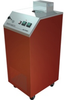
from Isotech North America
Deep Immersion Calibration Baths Available in Three Ranges Covering -80 °C to 300 °C. Stability of ±0.007 °C. Deep immersion depth (470mm or 18.5 ”) with low filling costs. Capable of calibrating liquid in glass thermometers, no level adapters required. Variable Speed... [See More]
- Configuration: Controlled Bath
- Termperature Range: 40 to 300
- Temperature Control: Heating; Cooling
- Temperautre Stability: 0.0126
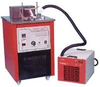
from Isotech North America
The 915 is, no question, the finest stirred liquid parallel tube bath produced. Typical uncertainties of measurement are less than ±0.0005 °C over the complete temperature range of -65 °C to +300 °C. The Isotech Parallel Tube Liquid Bath is a development of the previous 815 model... [See More]
- Configuration: Controlled Bath
- Termperature Range: -65 to 300
- Temperature Control: Heating; Cooling
- Temperature Accuracy: 5.00E-4