
Boiler Feed Pumps Injection Pumps
Last Updated: April 1, 2025
Description
Boiler feed pumps are critical components in power plants and other industrial settings, designed to transfer feedwater from feedwater heaters to the economizer or the boiler steam drum. These pumps are essential for maintaining the flow of water necessary for steam generation in boilers, ensuring that the system operates efficiently and effectively .
Working Principle
Boiler feed pumps typically operate using either positive displacement or kinetic energy principles. In positive displacement pumps, energy is periodically added by applying force to movable boundaries, displacing the fluid volume directly. Kinetic pumps, such as centrifugal pumps, develop pressure through centrifugal force, continuously transmitting energy to the fluid, which results in radial, mixed, or axial flow .
Applications
Boiler feed pumps are primarily used in power plants to supply water to boilers, ensuring the continuous production of steam for electricity generation. They are also utilized in various industrial processes where steam generation is required, such as in chemical manufacturing and refineries .
Advantages over other Injection Pumps
Boiler feed pumps, particularly those driven by steam turbines, offer several advantages over other types of injection pumps. These include decreased electric power consumption and the ability to operate at ideal speeds without the need for hydraulic couplings. Additionally, the exhaust steam from these pumps can be used to improve the station's heat balance, enhancing overall efficiency .
Limitations
One limitation of boiler feed pumps is their reliance on steam-turbine drives, which may not be suitable for all applications due to the need for a consistent steam supply. Additionally, the complexity of these systems can lead to higher initial costs and maintenance requirements compared to simpler pump designs .
Considerations
When selecting boiler feed pumps, several factors should be considered, including initial costs, operating expenses, and maintenance requirements. Steam-turbine-driven pumps may have higher initial costs but can offer long-term savings through reduced electricity consumption. Durability and accuracy are also important, as these pumps must withstand high pressures and temperatures while maintaining precise control over water flow. Regular maintenance is crucial to ensure reliability and prevent costly downtime .
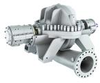
from Sulzer Ltd.
Sulzer offers a wide range of double suction axially split pumps, which includes both single and multistage designs. Each product range has special design features for targeted industry applications. Applications. Crude oil pipeline. Boiler feed boosting. Hydraulic Power Recovery Turbine (HPRT). [See More]
- Pump Type: Axial Flow Pump; Boiler Feed Pump; Centrifugal Pump; Injection Pump; Split Case Pump
- Discharge Pressure: 4152.0
- Liquid Flow: 5200.0 to 132000.0
- Discharge Size: 6.000 to 32.000

from Sulzer Ltd.
Sulzer offers five models of barrel casing pumps: The GSG and CP are for high-temperature hydrocarbon processes, oil production, and offshore crude oil services, the HPcp and HPcpV for water injection to 1000 bar and offshore high energy services, and the HPT for electric utility boiler feed duties. [See More]
- Pump Type: Boiler Feed Pump; Injection Pump
- Discharge Pressure: 60665.1
- Liquid Flow: 285.0 to 20000.0
- Discharge Size: 1.500 to 20.000