
0.01 Conductivity Electrodes
Reviewed by: Jon Lowy, consulting engineer
Description
0.01 Conductivity Electrodes are specialized sensors designed to measure the electrical conductivity of electrolytic solutions. These electrodes are capable of detecting very low levels of conductivity, making them suitable for precise measurements in various liquid mediums.
Working Principle
Conductivity electrodes operate by applying an alternating current (AC) voltage across two electrodes and measuring the resistance between them. This resistance is inversely proportional to the conductivity of the solution. The presence of ions or dissolved inorganic particles in the solution facilitates the flow of electric current, which is detected by the electrodes. The built-in temperature sensor ensures accurate measurements by compensating for temperature variations, which can affect conductivity readings. These electrodes are particularly useful for monitoring water purity and detecting impurities in ultrapure water due to their high sensitivity and precision .
Applications
Conductivity electrodes are widely used in industrial settings to measure the conductivity of various electrolytic solutions. Specific applications include monitoring water quality by measuring ionization or total dissolved solids (TDS) in water. They are also employed in the analysis of chemical process streams, where they help ensure the correct concentration of solutions. For example, in water quality applications, dissolved solids in parts-per-million (ppm) can be determined by dividing the conductivity in mhos/cm by 2 .
Advantages over other Electronics - Passive Components
Conductivity electrodes, particularly those with a 0.01 range, offer advantages over other passive components due to their ability to provide precise and accurate measurements of low conductivity levels. This precision is crucial in applications such as ultrapure water analysis, where detecting minute levels of impurities is essential. The use of a built-in temperature sensor further enhances their accuracy by compensating for temperature fluctuations, which can affect conductivity readings .
Limitations
One of the limitations of conductivity electrodes is their reduced accuracy when measuring weakly conductive fluids, such as demineralized water. Additionally, deposits inside the measuring tube or on the electrodes can cause errors in the readings, necessitating regular maintenance and cleaning to ensure accurate measurements .
Considerations
When considering the use of 0.01 Conductivity Electrodes, several factors should be taken into account. Initial costs may vary depending on the specific design and features of the electrodes. Operating expenses include regular maintenance and cleaning to prevent contamination and ensure accurate readings. Durability is a consideration, as electrodes must withstand the conditions of the solutions they measure. Accuracy is a key factor, with these electrodes providing precise measurements essential for applications like ultrapure water analysis. Replacement and maintenance costs should also be considered, as electrodes require periodic calibration and cleaning to maintain their performance .

from ABB Measurement & Analytics
The TB27 conductivity cell can be inserted or removed from process lines or vessels via a ball valve without disturbing the process. The TB27 sensor is designed for applications that exceed standard hot-tap sensor pressure ratings and for operator safety. An extraction housing isolates the operator... [See More]
- Cell Constant (k): 0.01; 0
- Mounting Options: In-Line (Insertion); Hot Tap
- Conductivity Range: 0.0 to 200
- Maximum Diameter / Width: 1.5

from ABB Measurement & Analytics
The TB264 conductivity cell can be installed either in-line using a 25 mm fitting or used for flow cell applications. In-line applications use either an existing 25 mm port or a bushing and holder nut must be purchased. Flow cell installations enable users to calibrate and isolate the sensor for... [See More]
- Cell Constant (k): 0.01; 0
- Mounting Options: In-Line (Insertion) (optional feature); Flow Thru (Pipeline)
- Conductivity Range: 0.0 to 200
- Maximum Diameter / Width: 0.9843

from ABB Measurement & Analytics
The TB26 conductivity cell is easily installed into process lines and vessels via the integral 3/4 in. NPT threads, submersed directly into lines and vessels via the 1/2 in. NPT backthreads, or inserted into a process line or vessel through a ball valve. A ball valve provides isolation between the... [See More]
- Cell Constant (k): 0.01
- Mounting Options: In-Line (Insertion); Hot Tap
- Conductivity Range: 0.0 to 200
- Maximum Diameter / Width: 1.5
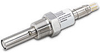
from Emerson Automation Solutions – Rosemount
The Model 400 is a screw-in type conductivity sensor available in three cell constants covering a broad range of conductivity. It has titanium electrodes and is available with both integral and quick-disconnect cable. SCREW-IN process connection. RUGGED CONSTRUCTION: titanium electrodes with 316... [See More]
- Cell Constant (k): 0.01; 0.1; 1; 10
- Mounting Options: In-Line (Insertion)
- Conductivity Range: 500 to 200000
- Maximum Diameter / Width: 0.2500 to 1.25

from SWAN Analytical USA, INC.
Sensor for the measurement of the specific conductivity and specific resistivity in high purity water, e.g. in power plants and semiconductor manufacturing plants. Sensor with certificate: The cell constant is defined with a precision of 5 digits after the decimal point. The temperature correction... [See More]
- Cell Constant (k): 0.01
- Electrode Accuracy: 0.5000
- Conductivity Range: 0.0050 to 1000
- Mounting Options: In-Line (Insertion)
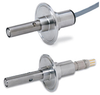
from Emerson Automation Solutions – Rosemount
CONTACTING SENSOR DESIGNED TO MEET USP REQUIREMENTS for water for injection. PRE-CALIBRATED SENSORS with 0.01. 0.1, and 1.0/cm cell constants. ALL WETTED PLASTICS AND ELASTOMERS are compliant with 21CFR177. ALL WETTED SURFACES have 0.4 micrometer Ra finish. AVAILABLE WITH VARIOPOL (VP) quick... [See More]
- Cell Constant (k): 0.01; 0.1; 1
- Mounting Options: In-Line (Insertion)
- Conductivity Range: 0.0 to 20000
- Maximum Diameter / Width: 0.6200 to 0.7500

from SWAN Analytical USA, INC.
Sensor for the measurement of the specific conductivity and specific resistivity in high purity water applications in the pharmaceutical industry. With sanitary flange. Polished surface, no dead volume. Sensor with certificate: The cell constant is defined with a precision of 5 digits after the... [See More]
- Cell Constant (k): 0.01
- Electrode Accuracy: 0.5000
- Conductivity Range: 0.0100 to 100
- Mounting Options: In-Line (Insertion)
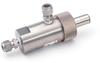
from Emerson Automation Solutions – Rosemount
SENSOR AND FLOW CELL combined in a single body. FAST RESPONSE to changes in conductivity and temperature. INITIAL CALIBRATION NOT REQUIRED. Pre-determined cell constant ensures out-of-the-box accuracy. CELL CONSTANTS: 0.01, 0.10/cm. The Model 404 sensor is intended for the determination of... [See More]
- Cell Constant (k): 0.01; 0.1
- Maximum Diameter / Width: 2
- Mounting Options: In-Line (Insertion)
- Maximum Length: 5.51 to 6.29