
10 Conductivity Electrodes
Description
Conductivity electrodes are devices used to measure the electrical conductivity of a solution. They sense ions within a solution and return either a measured voltage or a potential difference to a corresponding meter. These electrodes are essential for determining the conductivity level, which is a key indicator of the ionic content in a solution.
Working Principle
Conductivity electrodes operate by applying an AC voltage across electrodes and measuring the resistance or potential difference between them. In a two-electrode design, the resistance between the electrodes is measured, while a four-electrode design measures the voltage drop across the inner electrodes to eliminate polarization errors. Inductive or electrodeless sensors use two toroidal coils to generate a current loop proportional to the solution's conductivity. This method is particularly useful for high conductivity measurements and aggressive applications where contact with the solution is not desirable .
Applications
Conductivity electrodes are used in various applications, including ion-exchange chromatography, monitoring water quality in public water systems, hospitals, and brewing applications, and detecting ionic impurities in boiler water . They are also employed in industrial processes for concentration measurement of acids, alkalis, and salt process streams .
Advantages over other Conductivity Electrodes
The four-electrode design offers advantages over other types by eliminating polarization errors, allowing for more accurate measurements. This design also facilitates easier in-line cleaning and can be installed in smaller piping compared to inductive sensors .
Limitations
One significant limitation of conductivity electrodes is their inability to distinguish between different types of ions, as they are not ion-specific. This means they must be paired with other methods for specific ion measurement . Toroidal electrodes, while useful for avoiding contact with the sample solution, are typically less sensitive than contact types .
Considerations
When considering conductivity electrodes, factors such as initial costs, operating expenses, durability, accuracy, and maintenance costs should be evaluated. Proper cleaning and storage are crucial to avoid contamination and polarization errors. Electrodes should be rinsed with deionized water after use and stored in deionized water to maintain their functionality .
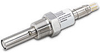
from Emerson Automation Solutions – Rosemount
The Model 400 is a screw-in type conductivity sensor available in three cell constants covering a broad range of conductivity. It has titanium electrodes and is available with both integral and quick-disconnect cable. SCREW-IN process connection. RUGGED CONSTRUCTION: titanium electrodes with 316... [See More]
- Cell Constant (k): 0.01; 0.1; 1; 10
- Mounting Options: In-Line (Insertion)
- Conductivity Range: 500 to 200000
- Maximum Diameter / Width: 0.2500 to 1.25
from Sartorius Lab Instruments GmbH & Co. KG
Temperature measurement and automatic temperature compensation. For use with all electrodes without a built-in temperature sensor [See More]
- Cell Constant (k): 10
- Mounting Options: Hand Held (Dip) or Portable
- Conductivity Range: 1000 to 200000
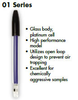
from Analytical Sensors & Instruments, Ltd. (ASI)
ASI conductivity sensors are available in several standard models to fita variety of needs. We offer glass, epoxy, plastic (polycarbonate), Kynar ®, CPVC and ABS body construction types for platinum, titanium and graphite cells. We offer platinum cells in plate, pin and band styles for two-cell... [See More]
- Cell Constant (k): 0.1; 1; 10
- Maximum Length: 0.4724
- Maximum Diameter / Width: 0.4724
- Operating Temp: ? to 100
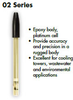
from Analytical Sensors & Instruments, Ltd. (ASI)
ASI conductivity sensors are available in several standard models to fita variety of needs. We offer glass, epoxy, plastic (polycarbonate), Kynar ®, CPVC and ABS body construction types for platinum, titanium and graphite cells. We offer platinum cells in plate, pin and band styles for two-cell... [See More]
- Cell Constant (k): 0.1; 1; 10
- Maximum Length: 0.4724
- Maximum Diameter / Width: 0.4724
- Operating Temp: ? to 80