
Specialty/Other Laser Engraving and Laser Marking Machines
Last Updated: February 12, 2025
Description
Specialty laser engraving and laser marking machines are designed to mark or scribe materials with text, images, patterns, and graduations. These machines utilize high-powered lasers to create precise and permanent marks on a variety of materials, including metals, plastics, glass, ceramics, and composites. They are capable of producing high-resolution markings with specific tolerances, making them suitable for detailed and intricate designs.
Working Principle
Laser engraving and marking machines operate by directing a focused laser beam onto the surface of a material. The laser beam vaporizes or ablates the material, creating a mark or engraving. The process involves the laser light wave making contact with the material, which is ideal for sensitive materials that might be damaged by other technologies. Different types of lasers, such as CO2, fiber, and Nd:YAG, are used depending on the material and desired outcome. These machines are useful because they provide a non-contact method of marking, ensuring minimal mechanical stress and high precision.
Applications
Specialty laser engraving and marking machines are used in a wide range of applications. For example, they are employed in the medical industry to mark surgical instruments and implants with identification codes. In the aerospace sector, they are used to engrave parts with serial numbers and other critical information. Additionally, these machines are utilized in the electronics industry for marking printed circuit boards (PCBs) and integrated circuit (IC) chips.
Advantages over other Laser Engraving and Laser Marking Machines
One of the key advantages of specialty laser engraving and marking machines is their ability to work with a wide variety of materials, including metals, plastics, and ceramics. Fiber lasers, for instance, are particularly effective for marking uncoated metals with high contrast. These machines also offer high-speed marking capabilities, especially when using galvo systems, which are efficient for deep metal engraving. Furthermore, they provide a non-contact marking solution, reducing the risk of damage to sensitive materials.
Limitations
Despite their advantages, specialty laser engraving and marking machines have certain limitations. For instance, CO2 lasers are not ideal for direct metal marking due to reflection issues. Additionally, while fiber lasers are effective for metals, they are not suitable for materials like wood, glass, and textiles. The choice of laser type and operating conditions must be carefully optimized for each specific application to achieve the best results.
Considerations
When considering the purchase and operation of specialty laser engraving and marking machines, several factors should be taken into account. Initial costs can vary significantly depending on the type and capabilities of the machine. Operating expenses include energy consumption and maintenance costs, which can be influenced by the machine's power requirements and usage frequency. Durability and accuracy are critical factors, as these machines need to withstand continuous operation while maintaining precision. Replacement and maintenance costs should also be considered, as components like laser tubes and lenses may require periodic replacement to ensure optimal performance.

from MECCO
SMARTmark Systems - our configurable laser equipment focused on delivering "Simplified Marking And Real-time Traceability" - are most often chosen by customers because of the product's capabilities and quality, as well as the quality of the mark it produces. Providing an industrial solution for... [See More]
- Unit Type: Specialty/Other
- Power: 10 to 200
- Workpiece Material: Electronics / Wafers; Conductive / Metals; Plastic, Wood, Composites or Other Non-Conductive Materials
- Laser Type: Fiber Laser

from KEYENCE
The MD-X Series is equipped with a unique laser oscillation technology developed by KEYENCE that combines the characteristics of both YVO4 and FIBER lasers to delivery a fine quality, high speed mark unlike any other laser system. In addition to its unparalleled combination of high peak power and... [See More]
- Unit Type: Specialty/Other
- Power: 13
- Workpiece Material: Conductive / Metals; Plastic, Wood, Composites or Other Non-Conductive Materials
- Laser Type: CO2; Pulsed

from Videojet Technologies, Inc.
Videojet 3430 Laser Marking Systems - Exceptional Speed for Complex Tasks. The Videojet 3430 is ideally suited for applications demanding fast and flexible data transfer and marking processes, such as beverage, brewing, food, packaging and extrusion applications. Moderate-speed lines, such as those... [See More]
- Unit Type: Benchtop; Specialty/Other
- Laser Type: CO2
- Workpiece Material: Plastic, Wood, Composites or Other Non-Conductive Materials

from MECCO
The CO2 Laser's marking and engraving capabilities include marking date codes, serial numbers, and other product identification on wood, glass, rubber, plastics, cardboard, and product packaging. For product identification and traceability, the MECCOmark CO2 Laser offers the most cost-effective... [See More]
- Unit Type: Specialty/Other
- Power: 10 to 100
- Workpiece Material: Plastic, Wood, Composites or Other Non-Conductive Materials; Soft or Fibrous Materials (Textiles, Foams, Paper); Wood, Rubber, Glass
- Laser Type: CO2
from MECCO
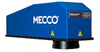
Laser engraving highly reflective or thermal-sensitive materials can be challenging. These materials include glass, silicone, ceramic, and thin plastics and metals. Moreover, most "cold" laser solutions lack the power needed for fast marking. MECCO's 20W SmartMark® Green Laser marking machine... [See More]
- Unit Type: Specialty/Other
- Power: 20
- Workpiece Material: Conductive / Metals; Plastic, Wood, Composites or Other Non-Conductive Materials
- Laser Type: Pulsed Green Fiber Laser