
Products & Services
See also: Categories | Featured Products | Technical Articles | More Information-
Supplier: HF scientific
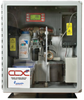
Description: User selectable features and innovative design sets the new CLX Online Residual Chlorine Monitor apart from the competition. Cycle times that are adjustable from 110 seconds to 10 minutes, 4-20mA and Modbus outputs that can control feed pumps and user settable alarms equates to low
- Operating Temperature: 32 to 104 F
- Output Options: Analog current signal, Switch or alarm signal
- Computer Interface: Computer Interface
- Local Interface: Digital Front Panel
-
Supplier: Analytical Technology, Inc.
Description: Providing permanent chlorine residual records normally means purchasing a residual chlorine monitor and connecting the output of the monitor to a separate recorder. ATI’s B20 provides an integrated solution to this problem, combining both the analyzer and recorder
-
Supplier: HF scientific
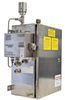
Description: CLX-Ex Chlorine Monitor is a rugged, safe, and low maintenance instrument for shipboard ballast water require continuous monitoring and control of residual Total Chlorine levels in hazardous environments. User selectable cycle times, 4-20mA and RS-485 with Modbus output that can
- Operating Temperature: 32 to 131 F
- Output Options: Analog current signal, Switch or alarm signal
- Computer Interface: Computer Interface
- Instrument Type: Fixtured or Permanent
-
-
Supplier: Inorganic Ventures
Description: 10mL size, potable water standard
- Form & Features: Inorganic Chemical / Salt, Liquid / Solution
-
Supplier: Analytical Technology, Inc.
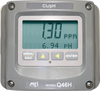
Description: ATIs Model Q46H/62-63 Residual Chlorine Monitor is an upgraded version of our proven Q45H system for continuous monitoring of free or combined chlorine. Monitor capabilities have been expanded to include options for a third analog output or additional low power relays. Digital
-
Supplier: Analytical Technology, Inc.
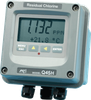
Description: ATIs Models Q45H62 and Q45H63 are reagentless and designed for on-line monitoring and control of chlorination systems. It is available in two versions: a free chlorine monitor for drinking water and cooling water, and a combined chlorine monitor ideally suited for “chloraminated”
-
Supplier: Accuris
Description: Standard Test Method for Residual Chlorine in Water
-
Supplier: Accuris
Description: Methods of Test for Residual Chlorine in Waste Water
-
Standards and Technical Documents - STANDARD METHODS OF TEST FOR RESIDUAL CHLORINE IN WATER -- D1253Supplier: Accuris
Description: STANDARD METHODS OF TEST FOR RESIDUAL CHLORINE IN WATER
-
Supplier: Accuris
Description: COMPARATOR SET, COLOR RESIDUAL CHLORINE AND PH DETERMINATION
-
Supplier: HF scientific
Description: CLX-XT Extended Reagent Life Chlorine Monitor is an economical and low maintenance instrument for shipboard ballast water, potable water or wastewater applications that require continuous monitoring and control of residual Total Chlorine levels. User selectable cycle times,
- Operating Temperature: 32 to 131 F
- Output Options: Analog current signal, Switch or alarm signal
- Computer Interface: Computer Interface
- Local Interface: Digital Front Panel
-
Supplier: HF scientific
Description: The HF scientific Dry Chlorine Reagent Kits have been specifically formulated for use in the CLX Chlorine Monitor. Specific advantages of the Dry kits over current pre-mixed reagents are savings on shipping weight, no chance of freezing making storage more convenient and an extended
- Form & Features: Powder
- Function: Reagent, Reference / Chemical Standard
- Applications: Water Treatment
-
Supplier: ASTM International
Description: 1.1 This test method covers the determination of residual chlorine in water by direct amperometric titration. 1.2 Within the constraints specified in Section 6, this test method is not subject to commonly encountered interferences and is applicable to most waters. Some waters, however,
-
Supplier: ASTM International
Description: Methods of Test for Residual Chlorine in Waste Water (Withdrawn 1981)
-
Supplier: Hach
Description: Do you need reliable, real-time chlorine analysis to optimize your disinfection process or to report to regulatory agencies? The industry standard Hach CL17 Chlorine Analyzer uses colorimetric DPD chemistry to continuously monitor water for free or total chlorine. For typical
- Display: Digital Readouts
- Instrument Type: Fixtured or Permanent
- Measured Parameter: Free Chlorine, Total Chlorine
-
Supplier: Analytical Technology, Inc.
Description: Dechlorination of wastewater effluent is common practice in many treatment facilities throughout the US. Strongly reducing sulfur compounds are used to eliminate chlorine residuals that might prove toxic to fish in the receiving stream. Because residual chlorine discharge
-
Supplier: CSA Group
Description: The principle consists in sampling of a known volume of chlorine (about 100 ml) obtained by gasification of liquid chlorine. Absorption of the chlorine by a 2% zinc amalgam in the presence of 1 ml of saturated sodium chlorine solution. Measurement of the residual,
-
Description: The principle consists in sampling of a known volume of chlorine (about 100 ml) obtained by gasification of liquid chlorine. Absorption of the chlorine by a 2% zinc amalgam in the presence of 1 ml of saturated sodium chlorine solution. Measurement of the residual,
-
Supplier: ASTM International
Description: 1.1 This practice provides a means of estimating the quantity of chlorine required to be added to a unit volume of water to accomplish a predetermined treatment objective or to completely react with all chlorine reactable substances in the water, or both. 1.2 Temperature, pH, and
-
Supplier: ASTM International
Description: 1.1 This practice provides a means of estimating the quantity of chlorine required to be added to a unit volume of water to accomplish a predetermined treatment objective or to completely react with all chlorine reactable substances in the water, or both. 1.2 Temperature, pH, and
-
Supplier: DigiKey
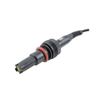
Description: SENSOR RESIDUAL CHLORINE SENSOR
-
Supplier: SWAN Analytical USA, INC.
Description: Colorimetric process analyzer (DPD-method) for measurement and dosing control of disinfectants such as free chlorine, monochloramine, total residual chlorine and combined chlorine. Features For the continuous online determination of disinfectants based on the DPD
- pH Range: 2 to 12 pH
- Control Relays: 2
- Process Media Temperature: -22 to 212 F
- Operating Temperature: -13 to 149 F
-
Supplier: Mueller Company
Description: Designed to increase chlorine residual consistency in potable water systems, Mueller has added the HG-8 In-Ground model to our expanding line of Hydro-Guard® Automatic Flushing Systems. This new direct discharge model is installed below grade with all flushing and metering components
-
Supplier: DeZURIK, Inc.
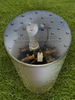
Description: prevents bird/rodent intrusion, increases tank security, and also removes chlorine and chloramine residual during overflow discharges. The Dechlorinating Overflow Security Assembly, or DOSA, is constructed of dual Tideflex® Nozzles and an internal adjustable dechlorination tube
- Valve Type: Mixing Valves
- Media: Water
-
Supplier: Watts
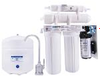
Description: water quality for residential applications. Features • 4-Stage System of Filtration Stage 1: Sediment Filter removes particulates down to 1 micron Stage 2: Carbon Block Filter removes chlorine taste and odors Stage 3: Advanced TFC Membrane rejects impurities down to 1/10,000th of a micron
- Configuration: System
- Features: Water
-
Supplier: Cole-Parmer
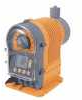
Description: 4.5 to 25 VDC at a 20 mA maximum.| Programmable Large Volume Pumps feature flow capacities typically requiring motor-driven pumps. Onboard controls allow proportional flow rate, pH and residual chlorine control by direct analog connection, eliminating the PID controller and
- Maximum Discharge Flow: 0.089818497 GPM
- Maximum Discharge Pressure: 140 psi
- Power Source: AC Powered
- Pump Type: Diaphragm Pumps, Metering Pumps
-
Supplier: Cole-Parmer
Description: 4.5 to 25 VDC at a 20 mA maximum.| Programmable Large Volume Pumps feature flow capacities typically requiring motor-driven pumps. Onboard controls allow proportional flow rate, pH and residual chlorine control by direct analog connection, eliminating the PID controller and
- Maximum Discharge Flow: 0.089818497 GPM
- Maximum Discharge Pressure: 140 psi
- Power Source: AC Powered
- Pump Type: Diaphragm Pumps, Metering Pumps
-
Supplier: Cole-Parmer
Description: 4.5 to 25 VDC at a 20 mA maximum.| Programmable Large Volume Pumps feature flow capacities typically requiring motor-driven pumps. Onboard controls allow proportional flow rate, pH and residual chlorine control by direct analog connection, eliminating the PID controller and
- Maximum Discharge Flow: 0.200770758 GPM
- Maximum Discharge Pressure: 60 psi
- Power Source: AC Powered
- Pump Type: Diaphragm Pumps, Metering Pumps
-
Supplier: Cole-Parmer
Description: 4.5 to 25 VDC at a 20 mA maximum.| Programmable Large Volume Pumps feature flow capacities typically requiring motor-driven pumps. Onboard controls allow proportional flow rate, pH and residual chlorine control by direct analog connection, eliminating the PID controller and
- Maximum Discharge Flow: 0.14001118650000002 GPM
- Maximum Discharge Pressure: 100 psi
- Power Source: AC Powered
- Pump Type: Diaphragm Pumps, Metering Pumps
-
Supplier: Mueller Company
Description: system is the latest offering in the Intelligent Water Technology™ portfolio of products and services. The device can continuously monitor pressure, chlorine residual, temperature, pH, and turbidity using third-party sensors from installation points located throughout the water
-
Supplier: Myron L Company
Description: DIALYSATE METER also measures parameters critical in water quality monitoring and control at every stage of hemodialysis water treatment. Test Conductivity, Resistivity, TDS, pH, ORP, Free Chlorine and Temperature of feed and product water in unit processes. Use measurements as independent
- pH Range: 0 to 14 pH
- Accuracy: 0.01 ±pH
- ORP / Redox Range: -999 to 999 millivolts
- Operating Temperature: 32 to 132 F









Find Suppliers by Category Top
Featured Products Top
-
 Chlorine and Temperature of feed and product water in unit processes. Use measurements as independent checks against automatic systems of control and to check residual levels of sanitizers in water treatment and hemodialysis systems after system maintenance. Powerful, portable D-6 features (read more)
Browse Conductivity Electrodes Datasheets for Myron L Company
Conduct Research Top
-
Controlling The Addition Of Chlorine Into A Process
There are several methods for controlling the addition of chlorine into a process. These methods include flow proportional injection, ORP (oxidation reduction potential) or a residual chlorine analyzer. Each method measures a different process characteristic.
-
FCE TM: Groundbreaking Measurement of Free Chlorine Disinfecting Power in a Handheld Instrument
The most popular germicide used in water treatment. is chlorine, which kills bacteria by way of its power. as an oxidizing agent. Chlorine is used not only as a. primary disinfectant at the beginning of the. treatment process, but also at the end to establish a. residual level of disinfection
-
Effects of Chlorinated Water on Plastic-Based Water Delivery Systems (.pdf)
% of all water treatment facilities in the U.S. disinfect water with chlorine and chlorine-based products. This type of disinfectant offers numerous advantages over other systems, including high germicidal potency, economy, and efficiency. Chlorine also has a lasting residual effect throughout
More Information Top
 Indicates content that may require registration and/or purchase.

-
White's Handbook of Chlorination and Alternative Disinfectants 5th Edition Complete Document
… 191 Operating Characteristics 193 Chemistry of the Amperometric Method 194 Preparation and Procedures for Titration 195 Precision and Detection Limits 200 Low-Level Amperometric Titrations 200 Free Chlorine Residuals at Short Contact Times 201 Determination of Residual Chlorine in Wastewater Effluents DPD …
-
AWWA M56 - Nitrification Prevention and Control in Drinking Water
For example, the oxidation of arsenic (III) by free chlorine and subsequent removal from water may be reduced as a result of the formation of chloramines that are less effective at oxidizing arsenic than is free residual chlorine (Lytle et al. 2007).
-
AWWA M20 - Water Chlorination/Chloramination Practices and Principles
Dilution table for various strengths of residual chlorine , 150 .
-
Environmental Engineering 5th Edition Complete Document
… 362 Household Treatment Units (Point-of-Use and Point-of-Entry) 365 Desalination 368 TREATMENT OF WATER — DESIGN AND OPERATION CONTROL 373 Surface Water 373 Treatment Required 374 Disinfection 375 Gas Chlorinator 377 Testing for Residual Chlorine 378 Chlorine Treatment for …
-
AWWA M20 - Water Chlorination Principles and Practices
Residual Chlorine ...
-
Heterotrophic bacteria in drinking water distribution system: a review
Free residual chlorine and/or chloramines are typically used to minimize bacterial recontamination and/or regrowth in WDS.
-
MWH's Water Treatment: Principles and Design 3rd Edition Complete Document
Total chlorine Sum of the concentrations of free and combined residual chlorine .
-
Handbook of Water and Wastewater Systems Protection
ABB AW400 Residual Chlorine Monitoring System.
-
Environmental Engineering: Water Wastewater Soil and Groundwater Treatment and Remediation 6th Edition Complete Document
Treatment of Water — Design and Operation Control / 133 Introduction / 133 Surface Water / 134 Treatment Required / 135 Disinfection / 136 Gas Chlorinator / 137 Testing for Residual Chlorine / 138 Chlorine Treatment for Operation and Microbiological Control / …
-
Water Reuse: Issues, Technologies, and Applications > Disinfection Processes for Water Reuse Applications
The removal of residual chlorine and chlorine compounds from solution by a reducing agent such as sulfur dioxide or by reacting it with activated carbon.