
Products & Services
See also: Categories | Featured Products | Technical Articles | More Information-
Supplier: Accuris
Description: Definitions and Nomenclature for Carbon Brushes, Brush-Holders, Commutators and Slip-Rings
-
Supplier: Accuris
Description: Carbon brushes, brush holders, commutators and slip-rings Definitions and nomenclature
-
Supplier: Accuris
Description: Definitions and nomenclature for carbon brushes, brush-holders, commutators and slip-rings
-
-
Supplier: CSA Group
Description: IEC 60276:2018 applies to carbon brushes for electrical machinery. This edition applies only to carbon brushes for commutators and slip-rings in rotating machines. Terms and definitions are relative to the brush construction (references 100’s to 500’s and parts of 900’s)
-
Supplier: Accuris
Description: Carbon brushes, brush holders, commutators and slip-rings \x97 Definitions and nomenclature
-
Description: IEC 60276:2018 applies to carbon brushes for electrical machinery. This edition applies only to carbon brushes for commutators and slip-rings in rotating machines. Terms and definitions are relative to the brush construction (references 100’s to 500’s and parts of 900’s)
-
Description: Establishes a vocabulary of definitions and terms for classes of brush grades, brushes, tops, flexibles (shunts) and connections, terminals, commutators and slip-rings, commutator marking and other miscellaneous details. Contains illustrations for each term. Gives the terms in
-
Supplier: JiuJiang Ingiant Technology Co., Ltd.
Description: Carbon brush slip rings are key components in rotating equipment used for continuously transmitting energy and signals, primarily composed of carbon brushes and slip rings (collecting rings), and widely applied in devices such as motors and generators. Structure and Function
-
Supplier: JiuJiang Ingiant Technology Co., Ltd.
Description: Carbon brush slip rings are key components in rotating equipment designed for the continuous transmission of energy and signals, primarily composed of carbon brushes and slip rings (collecting rings). Carbon brushes are typically fabricated from graphite, impregnated
-
Supplier: Pelonis Technologies, Inc.
Description: Carbon Brushed DC Motors ensure that the commutation process remains free from sparks and helps conduct electric current between the moving parts of the motor. This prevents the motor, or commutator, from wearing out. These motors are commonly used in consumer goods, small appliances,
- Other DC Voltage: 10 to 15 VDC
- Other Output Power: 0.006714504128363128 HP
- Continuous Current: 0.1 amps
- Continuous Torque: 0.03946017699115046 In-lbs
-
Supplier: Pelonis Technologies, Inc.
Description: Carbon Brushed DC Motors ensure that the commutation process remains free from sparks and helps conduct electric current between the moving parts of the motor. This prevents the motor, or commutator, from wearing out. These motors are commonly used in consumer goods, small appliances,
- Other DC Voltage: 10 to 18 VDC
- Other Output Power: 0.01400530302223447 HP
- Continuous Current: 0.16 amps
- Continuous Torque: 0.18177699115044257 In-lbs
-
Supplier: Pelonis Technologies, Inc.
Description: Carbon Brushed DC Motors ensure that the commutation process remains free from sparks and helps conduct electric current between the moving parts of the motor. This prevents the motor, or commutator, from wearing out. These motors are commonly used in consumer goods, small appliances,
- Other DC Voltage: 2 to 6 VDC
- Other Output Power: 0.0003484573000747332 HP
- Continuous Current: 0.048 amps
- Continuous Torque: 0.005723893805309737 In-lbs
-
Supplier: Pelonis Technologies, Inc.
Description: Carbon Brushed DC Motors ensure that the commutation process remains free from sparks and helps conduct electric current between the moving parts of the motor. This prevents the motor, or commutator, from wearing out. These motors are commonly used in consumer goods, small appliances,
- Other DC Voltage: 9 to 15 VDC
- Other Output Power: 0.0013804269964499045 HP
- Continuous Current: 0.047 amps
- Continuous Torque: 0.013182300884955759 In-lbs
-
Description: IEC 60136:2024 applies primarily to brushes and brush-holders for cylindrical commutators and slip rings for electrical rotating machines. Some clauses of this document may cover other configurations, such as flat commutators or plain disks. It defines the dimensions of brushes
-
Supplier: AENOR
Description: Definitions and nomenclature for carbon brushes, brush-holders, commutators and slip-rings
-
Supplier: CSA Group
Description: French, German, Italian, Polish, Russian, Spanish and Swedish. Note: -For definitions and nomenclature for carbon brushes, brush-holders, commutators and slip-rings, see IEC 60276.
-
Supplier: AENOR
Description: ROTATING ELECTRICAL MACHINES. DEFINITIONS AND NOMENCLATURE FOR CARBON BRUSHES, BRUSH-HOLDERS, COMMUTATORS AND SILIP-RINGS.
-
Supplier: AENOR
Description: ROTATING ELECTRICAL MACHINES. DEFINITIONS AND NOMENCLATURE FOR CARBON BRUSHES, BRUSH-HOLDERS, COMMUTATORS AND SILIP-RINGS
-
Supplier: Autotrol Corporation
Description: The 200 motor is a permanent magnet gearmotor utilizing a cylindrical barium ferrite 2 pole field magnet. A three bar commutator and a choice of carbon brushes or bifurcated silver alloy brushes provide long life, quiet operation and low starting voltage. The three slot rotor is
- Other DC Voltage: 24 VDC
- Continuous Current: 0.015 to 0.035 amps
- Continuous Torque: 9.375 In-lbs
- Shaft Size: 0.1245 to 0.469 inch
-
Supplier: C.I. Takiron Corporation
Description: strength lies in our ability to convert electrical energy into mechanical energy in a space-saving and highly efficient manner. ・Precious metal brushes and carbon brushes C.I. TAKIRON uses many precious metal brushes because they are highly conductive and can operate at low voltages.
- Other DC Voltage: 4.5 VDC
- Other Output Power: 0.001005165288677115 HP
- Continuous Current: 0.02 amps
- Continuous Torque: 0.024513274336283176 In-lbs
-
Supplier: Constar Motion Co., Ltd
Description: 16mm 12Volt Carbon Brush Coreless Motor Diameter: 16mm Lengh : 25mm Voltage: 12V Max. Output Power : 2.6W Speed: 15000rpm Applications: Medical equipment and devices, healthcare products, automotive, robotics, and industrial automation Options: Lead wires length, Shaft length, Special
- Other DC Voltage: 12 VDC
- Other Output Power: 0.00348457300074733 HP
- Continuous Current: 25 amps
- Continuous Torque: 0.0292035398230088 In-lbs
-
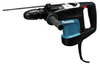
Supplier: Makita USA, Inc.
Description: with field core interlocking steel laminations, dual ball bearing armature and more copper commutator bars, increasing energy transfer efficiency for more power and longer tool life Automatic brush cut-off protects commutator from damage for longer tool life 2-mode operation for
- Length: 18.5 inch
- Amps: 11 amps
- Power: Electrical Tools, Power Tools
- Type: Rotary Hammer





Find Suppliers by Category Top
Featured Products Top
-
 powered through a mechanical commutator - a segmented copper cylinder. Carbon brushes press against this commutator to deliver power, automatically switching current direction as the motor spins. This switching action keeps the motor rotating by continuously changing magnetic fields. Brushless (read more)
Browse DC Servomotors Datasheets for Actuonix Motion Devices -
printed with coil windings and a commutator. Graphite or carbon brushes attached to the armature send DC current to the coil. Current runs radially outward from the center to the armature edge, perpendicular to the axial magnetic field (i.e., axial flux). This produces a force that generates torque (read more)
Browse DC Motors Datasheets for Pelonis Technologies, Inc. -
of a Stator and a Rotor. The stator creates a magnetic field which in turn will rotate the rotor consisting of magnets to power the machinery. Brushed motors on the other hand, use a series of carbon / precious metal brushes to transfer the current to the electromagnets. DC brushless motors (BLDC (read more)
Browse Brushless Motors Datasheets for parvalux by maxon
Conduct Research Top
-
Difference Between DC and AC Motor
and DC brushless motors according to the type of steering gear. Among them, the stator of the brushed DC motor is a permanent magnet, and the rotor is a winding metal armature, which is commutated by carbon brushes and a commutator. The stator of the brushless DC motor is a winding coil, and the rotor
-
What are the Common Types of Motors
be divided into DC brush motors and DC brushless motors. There are commutator and carbon brush structures in brush motors, and brushless motors use electronic steering devices instead of carbon brushes for rotor steering. AC motors can be divided into synchronous AC motors and asynchronous AC motors.
-
EC Motors: Principle of Operation
assembly). In a brushed motor, electrical current flows through the motor terminals in the endcap assembly that comes in contact with the commutator in the armature assembly through the carbon brushes or brush leaves. The electrical current powers the coils generating a magnetic field causing
-
DC Motors: Principle of Operation
assembly). In a brushed motor, electrical current flows through the motor terminals in the endcap assembly that comes in contact with the commutator in the armature assembly through the carbon brushes or brush leaves. The electrical current powers the coils generating a magnetic field causing
More Information Top
 Indicates content that may require registration and/or purchase.

-
Instruments, Measurement, Electronics and Information Engineering
The carbon brush commutator was replaced with Holzer sensor.
-
2010 Combined Subject Index IEEE Industry Applications Society Publications
Park, Je-Wook, +, ECCE Sept. 2010 3798-3802 Commutators Carbon brush performance on slip rings.
-
A fuzzy cancellation of stick-slip in DC motors
In DC motors the commutator carbon brushes are held preloaded by a spring to provide good electrical contact with the rotor (armature).
-
Carbon brush performance and application in the pulp and paper environment
An important maintenance function regularly performed is the inspection of carbon brushes and commutators .
-
Oscillations of Carbon Brushes in Hand‐held Electrical Tools
The electrical force between carbon brushes and commutator is estimated from the measurements of electrical current ie(t) with the frequency fp.
-
Electrical Machines
2) Under each carbon brush both commutator sections are located; there is no current in the coil (begin and end of the coil are short-circuited via the brushes) and no torque is generated.
-
Electric Power Principles: Sources Conversion Distribution and Use
Historically, the first electric machines employed a mechanical switch, in the form of a carbon brush / commutator system, to produce a rotating field.
-
6.061 / 6.690 Introduction to Electric Power Systems, Spring 2007
The first electric machines employed a mechanical switch, in the form of a carbon brush / commutator system, to produce this rotating field.
-
6.685 Electric Machines, Fall 2005
The first electric machines employed a mechanical switch, in the form of a carbon brush / commutator system, to produce this rotating field.
-
Detection of arcing in DC motors
…EMF due to rotationof the armature (V) rotational voltage induced by the compoles for opposing the effectof armaturereaction (V) angular velocity (FWM) armature current (A) field current(A),If >0 average arc-discharge voltage drop between the carbon brushes and commutator (V).