
-
Supplier: Accuris
Description: Plastics - Temperature modulated DSC Part 2: Measurement of specific heat capacity cp
-
Supplier: Accuris
Description: Plastics \x97 Temperature modulated DSC \x97 Part 2: Measurement of specific heat capacity cp
-
Supplier: Accuris
Description: Rigid PVC pipes - Differential scanning calorimetry (DSC) method - Part 1: Measurement of the processing temperature
-
-
Supplier: Accuris
Description: Rigid PVC pipes - Differential scanning calorimetry (DSC) method - Part 2: Measurement of the enthalpy of fusion of crystallites
-
Description: ISO 18373-1:2007 specifies a method for the determination of the processing temperature of rigid PVC pipe samples. The method is based on the measurement of the thermal history using differential scanning calorimetry (DSC) and is suitable for all types of rigid PVC pipes.
-
Supplier: Linseis Inc.
Description: (DSC) and weight changes (TGA) in a material as a function of temperature or time in a controlled atmosphere. Simultaneous measurement of these two material properties not only improves productivity but also simplifies interpretation of the results. The information obtained allows
- Temperature Range: -170 to 1,800 C
- Remote Interface: Application Software Included, Computer Interface
- Features: Atmosphere Control, Programmable Heating Rate, Temperature Control
- Calorimeter Type: Differential Scanning Calorimeter (DSC)
-
Supplier: NETZSCH-Gerätebau GmbH
Description: DSC 204 HP Phoenix® - High-pressure DSC Numerous physical processes and chemical reactions are influenced by the surrounding gas pressure. In practise it is therefore often necessary to conduct DSC measurements under an increased pressure. With the high-pressure
- Temperature Range: -150 to 600 C
- User Interface: Analog Front Panel
- Remote Interface: Computer Interface
- Features: Cooling Available
-
Supplier: CSA Group
Description: ISO 18373-1:2007 specifies a method for the determination of the processing temperature of rigid PVC pipe samples. The method is based on the measurement of the thermal history using differential scanning calorimetry (DSC) and is suitable for all types of rigid PVC pipes.
-
Supplier: Shimadzu Scientific Instruments, Inc.
Description: High-Sensitivity Measurements with a Wide Calorimetric Measurement Range The noise level, less than 0.5 µW when held at 150°C, enables measurement of the smallest calorimetric changes. The large dynamic calorimetric measurement range of ±150 mW means materials with very
- Temperature Range: -140 to 600 C
- Remote Interface: Application Software Included, Computer Interface, Serial Interface
- Features: Cooling Available, Programmable Heating Rate, Temperature Control
- Calorimeter Type: Differential Scanning Calorimeter (DSC)
-
Description: ISO 18373-2:2008 specifies a method for the determination of the enthalpy of fusion of crystallites in rigid PVC pipe samples. The method is based on the measurement of the thermal history using differential scanning calorimetry (DSC) and is suitable for all types of rigid PVC pipes.
-
Supplier: Rigaku Corporation
Description: measurements, thus offering an effective operational environment for performing repetitive measurements quickly and efficiently. An automatic sample changer can be mounted. Design consideration is given also to possible installation in various surroundings. Thermal analysis is a branch
- Temperature Range: -150 to 1,500 C
- Features: Cooling Available, Temperature Control
- Calorimeter Type: Differential Scanning Calorimeter (DSC)
- User Interface: Digital Front Panel
-
Supplier: CSA Group
Description: ISO 18373-2:2008 specifies a method for the determination of the enthalpy of fusion of crystallites in rigid PVC pipe samples. The method is based on the measurement of the thermal history using differential scanning calorimetry (DSC) and is suitable for all types of rigid PVC pipes.
-
Supplier: ASTM International
Description: 1.1 This test method measures the transition temperatures of petroleum waxes, including microcrystalline waxes, by differential scanning calorimetry (DSC). These transitions may occur as a solid-solid transition or as a solid-liquid transition. 1.2 The normal operating temperature range
-
Supplier: Shimadzu Scientific Instruments, Inc.
Description: High-Sensitivity Measurements with a Wide Calorimetric Measurement Range The noise level, less than 0.5 µW when held at 150°C, enables measurement of the smallest calorimetric changes. The large dynamic calorimetric measurement range of ±150 mW means materials with very
- Temperature Range: -140 to 600 C
- Remote Interface: Application Software Included, Computer Interface, Serial Interface
- Features: Cooling Available, Programmable Heating Rate, Temperature Control
- Calorimeter Type: Differential Scanning Calorimeter (DSC)
-
Supplier: ValueTronics International, Inc.
Description: The DSC-216 is an analyzer from Ancot. Analyzers are key tools to test electronic equipment in the engineering, medical, automotive, and technological industries. Use analyzers for monitoring the performances of many different types of electronic devices. You may need analyzers for the
-
Supplier: NETZSCH-Gerätebau GmbH
Description: reference. This achieves high reproducibility of measurement results. For your normal DSC analyses above 200°C, a retrofit of the standard lid-lifting device is possible, or the manual lid can also be used without problems. For high sample throughput or for repeat measurements,
- Temperature Range: -100 to 200 C
- Remote Interface: Computer Interface
- Calorimeter Type: Differential Scanning Calorimeter (DSC)
- User Interface: Digital Front Panel
-
Supplier: Microstar Laboratories, Inc.
Description: DLL interface. It supports development environments like Delphi and C++Builder through a native DSC Component. It also supports Linux development environments like Kylix and GC++. With the DSCview software on your PC, you can customize the filter characteristics for each channel, and download
- Data Acquisition: Data Acquisition Computer Board
-
Supplier: Vaisala
Description: Several measurements combined compactly in one sensor. Features • Remote surface state sensing • Spectroscopic measuring principle, individually identifying the presence of: Water, Ice, Slush,Snow or Frost. • Unique measurement of grip • Accurate and stable measurement
-
Supplier: ASTM International
Description: temperature. The combination of lower and higher carbon weight materials, oil content and hydrocarbon structures also control how the wax will change over time. 1.3 The differential scanning calorimetry (DSC) test is used to determine temperature transitions and melting range of wax samples.
-
Supplier: NETZSCH-Gerätebau GmbH
Description: glasses This new DSC F1 Pegasus® stands for highest flexibility, excellent quality and optimal performance. The DSC 404 F1 Pegasus® comprises a high-capacity heat flux DSC for highly sophisticated application measurements. The new concept of the DSC 404 F1 Pegasus®
- Temperature Range: -150 to 2,000 C
- Remote Interface: Computer Interface
- Calorimeter Type: Differential Scanning Calorimeter (DSC)
- User Interface: Digital Front Panel
-
Supplier: CSA Group
Description: ISO 20087:2016 specifies measurement method of battery life for consumer-use digital still cameras (hereinafter referred to as "DSC").
-
Supplier: Microchip Technology, Inc.
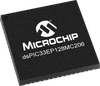
Description: Microchip’s dsPIC33E family of digital signal controllers (DSCs) features a 70 MIPS dsPIC® DSC core with integrated DSP and enhanced on-chip peripherals. These DSCs enable the design of high-performance, precision motor control systems that are more energy efficient, quieter in
- Pin Count: 64
- Clock Speed: 70 MHz
- MIPS: 70
- Operating Temperature: -40 to 150 C
-
Supplier: CSA Group
Description: ISO 11357-1:2016 specifies several differential scanning calorimetry (DSC) methods for the thermal analysis of polymers and polymer blends, such as - thermoplastics (polymers, moulding compounds and other moulding materials, with or without fillers, fibres or reinforcements), - thermosets
-
Description: IEC TR 63228:2019 summarises present perspectives on the performance evaluation of emerging PV technologies, specifically OPV, DSC and PSC devices. These devices present some challenges for accurate measurement under the existing IEC 60904 series of standards, which were developed in
-
Supplier: SPIE - Education
Description: measurement of different image quality aspects like OECF, Dynamic Range, Noise, Resolution, Color Reproduction; explanation of the available free and commercial software; and demonstration of illuminator, test chart, and software based measurements.
- Type: Course
- Technology / Subject Expertise: Electronics, Photonics / Optics, Signal Integrity / EMC
- Delivery: On-site / In Plant
- Features: Specialty / Other
-
Description: technical characteristics, methods of measurement and required test results.
-
Supplier: AENOR
Description: Technical characteristics and methods of measurement for equipment for generation, transmission and reception of Digital Selective Calling (DSC) in the maritime MF, MF/HF and/or VHF mobile service;Part 3: Class D DSC (Endorsed by Asociación Española de Normalización in July of
-
Supplier: AENOR
Description: Technical characteristics and methods of measurement for equipment for generation, transmission and reception of Digital Selective Calling (DSC) in the maritime MF, MF/HF and/or VHF mobile service;Part 6: Class M DSC (Endorsed by Asociación Española de Normalización in July of
-
Supplier: AENOR
Description: Technical characteristics and methods of measurement for equipment for generation, transmission and reception of Digital Selective Calling (DSC) in the maritime MF, MF/HF and/or VHF mobile service; Part 6: Class M DSC (Endorsed by Asociación Española de Normalización in December
-
Supplier: AENOR
Description: Technical characteristics and methods of measurement for equipment for generation, transmission and reception of Digital Selective Calling (DSC) in the maritime MF, MF/HF and/or VHF mobile service; Part 4: Class E DSC (Endorsed by Asociación Española de Normalización in December
-
Supplier: NETZSCH-Gerätebau GmbH
Description: DSC 204 F1 Phoenix®, DSC 200 F3 Maia®, DSC 404 F1 Pegasus®, STA 449 F1 Jupiter® with unique FRC correction. BeFlat® Correction of temperature and heating rates dependent base line deviations with the DSC 204 F1 Phoenix®, DSC 200 F3 Maia®, DSC 204 HP









Find Suppliers by Category Top
More Information Top
 Indicates content that may require registration and/or purchase.

-
Thermal Analysis of Polymers Fundamentals and Applications Complete Document
How to Perform DSC Measurements / 208 .
-
Organic tank safety project: Preliminary results of energetics and thermal behavior studies of model organic nitrate and/or nitrite mixtures and a simulated or...
The differencebetween the two instruments is that the DSC measures enthalpy changes, while the DTA observes temperature differences between the sample and an inert reference material.
-
Thermal Properties of Green Polymers and Biocomposites
By DSC measurement , a small broad peak due to phase transition from liquid crystal to liquid could be observed.
-
Thermal Analysis of Polymeric Materials
Some typical parameters for DSC measurements are listed at the top of Fig. 4.66.
-
https://uwspace.uwaterloo.ca/bitstream/handle/10012/890/mlkuntz2006.pdf?sequence=1
89 Table 4-3: Effect of base metal mass on DSC measurements in Type-I solid/liquid diffusion couple experiments.................................................................................................
-
PCM-Enhanced Building Components
The accuracy of DSC mea- surements of standard materials is discussed in detail by Richardson (1997) and Rudtsch (2002).
-
Amorphous Solid Dispersions
These thermal events can easily be obtained by differential scanning calorimetry ( DSC ) measurements .
-
Who is Who in Thermal Analysis and Calorimetry
80, 381–385 (2005); [3] Z. Cibulková, P.Šimon, P. Lehocký, J. Balko: Antioxidant activity of 6PPD derivatives in polyisoprene matrix studied by non-isothermal DSC measurements .
-
Polymer Blends Handbook
For this reason a TSC curve can be also directly compared to a corresponding differential scanning calorimetry ( DSC ) measurement .
-
Thermal analysis of Micro, Nano- and Non-Crystalline Materials
The dilemma of solid-state kinetics stems from the fact that we are able to control the temperature TW (in DTA or heat flux DSC measurement ) or the temperature TEH (in compensating DSC device), but we can never control the temperature field …