
Products & Services
See also: Categories | Featured Products | Technical Articles | More Information-
Supplier: Shimadzu Corporation
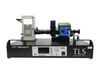
Description: Xenon lamp monochromatic light source set consists of a 150W xenon lamp (ozone-less type), and motorized compact monochromator SPG-120-REV. It generates monochromatic light, and can change the wavelength of monochromatic light with high speed.
- Wavelength Range: 240 to 900 nm
- Slit Width: 1,000 µm
- Focal Length: 122.6 mm
- Wavelength Resolution: 1 nm
-
Supplier: Knight Optical (UK) Ltd
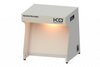
Description: Monochromatic lights have a low pressure sodium light source that emits monochromatic light in which rays have virtually the same wavelength. This light is a very effective way of viewing fringe patters on surfaces of optical flats (Newton rings)
-
Supplier: Knight Optical (UK) Ltd
Description: Monochromatic lights have a low pressure sodium light source that emits monochromatic light in which rays have virtually the same wavelength. This light is a very effective way of viewing fringe patters on surfaces of optical flats (Newton rings)
-
-
Description: that they be used to evaluate the luminous efficiency for the brightness of monochromatic lights. These functions could be used as the basis for further work to evaluate light sources with compound spectra. The spectral luminous efficiency function for a point
-
Supplier: Newport MKS
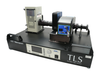
Description: Tuning Range The TLS130B-300X is capable of outputting white light or monochromatic light from 300-1800 nm with resolution as great as 0.7 nm (slit size dependent). Photodetectors with NIST traceable calibration are used to measure the output power from 300-1650 nm from each
- Lamp / Output Power: 300 watts
-
Supplier: Newport MKS
Description: Tuning Range The TLS130B-300X is capable of outputting white light or monochromatic light from 300-1800 nm with resolution as great as 0.7 nm (slit size dependent). Photodetectors with NIST traceable calibration are used to measure the output power from 300-1650 nm from each
- Lamp / Output Power: 250 watts
-
Description: properties of light sources based on resultant colour shifts of test objects, referred to as the "Test-colour Method". It is the fundamental method for appraisal of colour rendering properties of light sources, and is recommended for type testing as well as for testing
-
Description: IEC 62595-2-5:2021 specifies the measurement methods for measuring the optical characteristics of convex and concave cylindrical light sources. These non-planar light sources (NPLSs) can have either a continuous, distinct, segmented or block-wised light radiating
-
Supplier: Edmund Optics Inc.
Description: Ideal for Viewing Brewsters Fringes and Newtons Rings Greater Visibility than Helium Type Lighting Includes 110V US Plug Power Supply and Tilting Base (30° Tilt Forward) Green Monochromatic Lamps are an ideal light source for testing the flatness of polished optical surfaces.
- Window Type: Plane Windows
-
Supplier: Edmund Optics Inc.
Description: Ideal for Viewing Brewsters Fringes and Newtons Rings Greater Visibility than Helium Type Lighting Includes 110V US Plug Power Supply and Tilting Base (30° Tilt Forward) Green Monochromatic Lamps are an ideal light source for testing the flatness of polished optical surfaces.
- Window Type: Plane Windows
-
Supplier: Newport MKS
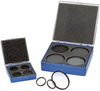
Description: homogenize light sources Superior transmission efficiency Available in kits of four diffusers 25 and 50 mm diameter sizes Features Smooth and Homogenize Light Sources Hot spots and uneven light distribution are common problems with most light sources,
- Diameter, Square Side, or Rectangular Length: 25.400000000000002 mm
- Rectangular Width: 50.800000000000004 mm
- Shape: Circular, Square
- Diffuser Type: Opal Diffusers
-
Supplier: Henkel Corporation - Industrial
Description: Acrylic liquid resin used for prototyping which cures with very short exposure to monochromatic light sources. LOCTITE® 3D 3840 is a clear, white, gray or black, UV light, low viscosity, room temperature-cure, acrylic compound used for prototyping via stereolithography.
- Industry: Optical Grade / Material
-
Description: IEC 62906-5-2:2016(E) specifies the standard measurement conditions and measurement methods for determining the monochromatic speckle contrast of laser display devices (LDDs). The LDDs may include hybrid types using both a laser or lasers, and spontaneous emission-based light
-
Supplier: CSA Group
Description: IEC 62906-5-2:2016(E) specifies the standard measurement conditions and measurement methods for determining the monochromatic speckle contrast of laser display devices (LDDs). The LDDs may include hybrid types using both a laser or lasers, and spontaneous emission-based light
-
Supplier: Edmund Optics Inc.
Description: size possible for polychromatic light between 750 and 1100nm. By utilizing our NIR doublets instead of standard doublets designed for the visible, RMS spot diameter can be reduced from 43μm to 22.5μm, for example, when using polychromatic light. Spot size will be smaller when focusing
- Focal Length: 40.00000000000001 mm
- Diameter / Length: 25 mm
- Center Thickness: 11 mm
- Edge Thickness: 11.09 mm
-
Supplier: Edmund Optics Inc.
Description: size possible for polychromatic light between 750 and 1100nm. By utilizing our NIR doublets instead of standard doublets designed for the visible, RMS spot diameter can be reduced from 43μm to 22.5μm, for example, when using polychromatic light. Spot size will be smaller when focusing
- Focal Length: 150.00000000000003 mm
- Diameter / Length: 25 mm
- Center Thickness: 6 mm
- Edge Thickness: 9 mm
-
Supplier: ASTM International
Description: These test methods cover procedures for measuring the diameter or thickness of round and flat wire (ribbon) used in electronic devices and lamps. Anvils shall be used in determining the thickness. The flatness and parallelism of the wire shall be checked using a monochromatic light
-
Supplier: ASTM International
Description: These test methods cover procedures for measuring the diameter or thickness of round and flat wire (ribbon) used in electronic devices and lamps. Anvils shall be used in determining the thickness. The flatness and parallelism of the wire shall be checked using a monochromatic light
-
Supplier: Newport MKS
Description: spectrum, producing the smallest spot size possible for polychromatic light sources between 750 to 1550 nm. Spherical and chromatic aberrations are minimized to provide superior performance. For most applications, diffraction-limited spot size can be achieved when using with
- Focal Length: 30.730000000000004 mm
- Diameter / Length: 12 mm
- Center Thickness: 7.000000000000001 mm
- Edge Thickness: 6 mm
-
Supplier: Excelitas Technologies Corp.
Description: the LX500 UV LED pot Curing System for calibration, and offers optional accessories, wide measurement range (1mW to 2000mW or 50mW/cm2 - 40 W/cm2), exceptional precision, and sensor optimization for monochromatic LED sources.
- Wavelength Range: 320 to 750 nm
- Power Range: 50 to 40,000 mW/cm²
- Accuracy: 10 %
- Resolution: 1 mW/cm²
-
Supplier: Hitachi High Technologies America, Inc.
Description: etc. The light source uses a WI lamp (visible range) and a D2 lamp (ultraviolet range) that switches wavelength depending on the measurement. The double beam system divides the monochromatic light so that the diffraction grates into the control and the sample with a
-
Supplier: Electro Optical Components, Inc.
Description: The wedge depolarizer is the alternative form which should be used for monochromatic light sources. Again, a thick plate is manufactured in which the optical axis is in the plane of the plate. In use, the optical axis is aligned at 45° to the axis of the incoming polarized
- Optical Polarizer: Depolarizer
- Features: Wedge Depolarizers
-
Supplier: Changchun Yutai Optics Co., Ltd.
Description: parallel beams, or converging parallel beams to a focal point. 4. Focusing collimation: plano convex lenses can be used to focus a beam of light to a precise point, or to collimate light from a point source into a parallel beam. 5. Beam collimation point source: when a
- Surface Flatness: λ/4
- Surface Quality: 40-20 Scratch / Dig
-
Supplier: Knight Optical (UK) Ltd
Description: Optical flats are single precision flat surfaces. They are used as reference surfaces to compare flatness of a substrate where flatness is unknown. When a high quality optical flat is placed on top of a polished substrate and used in conjunction with a monochromatic light source
- Diameter, Square Side, or Rectangular Length: 2 mm
- Thickness: 1 mm
-
Supplier: Knight Optical (UK) Ltd
Description: Optical flats are single precision flat surfaces. They are used as reference surfaces to compare flatness of a substrate where flatness is unknown. When a high quality optical flat is placed on top of a polished substrate and used in conjunction with a monochromatic light source
- Diameter, Square Side, or Rectangular Length: 2 mm
- Thickness: 1 mm
-
Supplier: Electro Optical Components, Inc.
Description: production of varying amounts of circular and elliptical polarization states at different wavelengths. The depolarization effect is poor for monochromatic light as even with a large number of plates in the stack there are only a limited number of polarization states produced. By
- Optical Polarizer: Depolarizer
- Features: Lyot Depolarizers
-
Supplier: Shanghai Optics
Description: the real world picture is actually much messier. All laser sources include glows, plasma, or lower levels of transitions, and this scattered light can interfere with a clear reading with light detection instrumentation. Most laser sources also exhibit wavelength shifts
-
Supplier: Shanghai Optics
Description: orient the curved surface toward your light source. Double convex (DCX) spherical lenses are symmetric lenses with two convex sides. They are ideal for imaging objects at close conjugates, and also have applications in image relay. Spherical aberration does increase as conjugates
- Lens Application: Infrared, Ultraviolet
- Features: Other
- Lens Type: Spherical Lens
-
Supplier: HORIBA Instruments, Inc.
Description: Our Real Time Interferometric Process Monitor provides high precision detection of film thickness and trench depth during the etching/coating process. Interference occurs when monochromatic light hits the sample surface, resulting in different optical path lengths due to film thickness
-
Supplier: SAE International
Description: use of time-resolved x-ray radiography to measure the density of the plasma in the spark gap during the glow discharge phase of a conventional transistorized coil ignition system. A focused monochromatic x-ray beam from the 7-BM beamline of the Advanced Photon Source at Argonne
-
Description: CIE 138-2000 ISBN 978 3 901906 02 2 This volume contains short Technical Reports prepared by various Technical Committees within Division 6. 138/1 Blue Light Photochemical Retinal Hazard The results of studies of acute photochemical retinal injury, frequently referred to as the "blue












![Real Time Interferometric Process Monitor [CCD] Laser Interference Camera -- LEM-CT-670-G50](https://partimages.globalspec.com/37/4787/5454787_medium.png "Real Time Interferometric Process Monitor [CCD] Laser Interference Camera -- LEM-CT-670-G50")

Find Suppliers by Category Top
Featured Products Top
-
 monochromatic light source and produce a sharp, thin line. Acylindrical lenses are often a good choice for use with lighting technology, laser scanners, optical metrology and spectroscopy. Two crossed acylinders can be used with the asymmetrical outputs of laser diodes to (read more)
Browse Optical Lenses Datasheets for Avantier Inc.
Conduct Research Top
-
Measuring Flatness with Knight Optical (UK) Ltd Monochromatic Lights
Light bands formed by using an optical flat and a. monochromatic light source represent an inexpensive yet accurate method of checking surface flatness. The monochromatic light on which the following diagramatic interpretations are based comes from a. helium filled tube source which eliminates all
-
Measuring Flatness Optically
Knight Optical monochromatic light units use a low pressure sodium light source which gives very economic. running costs and a long operating life.
-
Explaining Laser Marking Technology
, directional output of monochromatic (single. wavelength) light. This can be understood when one thinks of two light sources; the florescent light that is. probably above your desk right now and the laser pointer you got as a give-away at a tradeshow. Whereas. both sources emit light, the florescent bulb does
More Information Top
 Indicates content that may require registration and/or purchase.

-
Study on the Despeckle Methods in Angular Surface Plasmon Resonance Imaging Sensors
Since the angular SPR sensors require monochromatic light sources , lasers are often chosen because of their excellent monochromaticity, nice parallelism, and high intensity.
-
Fabrication Methods for Precision Optics
If the phase difference resulting from this opti- cal path difference (OPO) is exactly one wavelength of the monochromatic light source used, then constructive interference occurs and a light fringe is seen.
-
Optical Shop Testing 3rd Edition Complete Document
Monochromatic light source .
-
Photobiological Interactions of Blue Light and Photosynthetic Photon Flux: Effects of Monochromatic and Broad‐Spectrum Light Sources
For lettuce and rad- ish there were no significant interactions between broad-spectrum and monochromatic light sources with the same percent BL; however, for pepper, SL was decreased under the monochromatic sources (Fig. 4).
-
Demonstrational Optics
In turn, a su!ciently thin air film will cause highly visible interference fringes of equal inclination, if this air plate is illuminated by parallel rays from a quasi- monochromatic light source .
-
Springer Handbook of Experimental Fluid Mechanics
A monochromatic light source from a vertical slit is focused onto the cam- era plane by the main lens.
-
Optics for engineers
a radiates A 2.2 monochromatic light source ) Only 2 % of the total power by 500 nms with a power of 500 W. reach the eye as luminous flux.
-
Calibration and validation of confocal spectral imaging systems
The limiting spectral resolution of an instrument is typically measured at the factory by acquiring the spec- trum of a monochromatic light source with an entrance slit width of 10 m or smaller (or a pinhole instead of a slit in a…
-
Optical viewers for continuous-tone images recorded on thermoplastic film.
VIEWERS USING QUASI- MONOCHROMATIC LIGHT SOURCES .
-
Diffraction imaging characteristics of slit for ultra-short laser pulse
We also provide a quantitative criterion to measure the deviation in terms of far-field diffraction intensity distribution between broadband light source and the ideal monochromatic light source .