
Products & Services
See also: Categories | Featured Products | Technical Articles | More Information-
Supplier: Waters Corporation
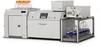
Description: Waters' Supercritical Fluid Extraction (SFE) Systems extract chemical compounds using supercritical carbon dioxide instead of an organic solvent. The supercritical fluid state occurs when a fluid is above its critical temperature (Tc) and critical pressure (Pc), when it is between the typical
-
Supplier: Ellsworth Adhesives
Description: Versum Materials, formerly Dynaloy, Dynasolve 750 Blue is a solvent that is used to dissolve cured epoxies, photoresist films, silicones, and urethanes. It can also be used for cleaning industrial machinery. 1 qt Bottle.
- Type: Cleaner / Cleaning Agent
-
Supplier: MacDermid Alpha Electronics Solutions
Description: Product Overview The UltraStrip product line represents our most advanced, high-performance photoresist strippers. Designed to strip fully aqueous dry film photoresists, the system features a unique blend of components that promotes a high strip rate, easily filterable particles, and
- Chemical / Composition: Tin Plating, Tin-lead Plating
-
-
Supplier: Ellsworth Adhesives
Description: Versum Materials, formerly Dynaloy, Dynasolve 711 Blue is a solvent that is used to dissolve cured epoxies, photoresist films, silicones, and urethanes. It can also be used for cleaning industrial machinery. It is aluminum-safe and will not cause discoloration. 1 gal Pail.
- Type: Cleaner / Cleaning Agent
-
Supplier: Ellsworth Adhesives
Description: Versum Materials, formerly Dynaloy, Dynasolve 750 Cleaner Blue is a solvent that is used to dissolve cured epoxies, photoresist films, silicones, and urethanes. It can also be used for cleaning industrial machinery. It is aluminum-safe and will not cause discoloration. 1 gal Can.
- Type: Cleaner / Cleaning Agent
-
Supplier: Thermon, Inc
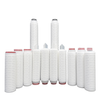
Description: applications include photoresists, compressed gas, venting, electronic grade solvents and hot deionized water (less than 80°C).
- Type: Cartridge
- Filtration Product: Chemicals
- Features: Other
- Filter Medium Material: PTFE / Teflon®
-
Supplier: Harbory Filtration
Description: resistance, oxidation resistance, anti-corrosion, excellent retention efficiency (0.003µm) and extremely extensive chemical compatibility. ATMC industrial filter cartridge series is suitable for the filtration of various acids, alkali, organic solvents and other chemicals in semiconductor
- Filtration Grade (Micron Rating): 0.1 to 0.45 µm
- Maximum Pressure: 21.75552590357955 to 58.0147357428788 psi
- Type: Cartridge
- Features: Other
-
Supplier: JST Manufacturing, Inc.
Description: then sprayed with a second solvent to make sure all metal stringers that bridge the edge of the photoresist profile to the device are removed. Once this cycle is complete, the wafers are thoroughly rinsed in a clean solvent (IPA or acetone) and then dried in JST's patented CLV
-
Supplier: International Polymer Solutions Inc.
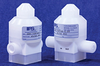
Description: Our IPS Suckback Valves are ideal for acid, solvent, photoresist solutions and other process dispensed chemistries. The IPS Suckback Valve will pull a vacuum and prevent excessive dripping from the dispensing nozzle. The IPS Suckback Valve is constructed of an“all wetted” PTFE media
- Valve Size: 0.125 to 0.375 inch
- Pressure Rating: 30 psi
- Media Temperature: 185 F
- Valve Type: Diaphragm Valves
-
Supplier: Sensirion
Description: Tailored to the integration in demanding coating systems, the SLQ-QT105 is a semicon grade-sensor solution for flow rates of up to 120 ml/min of hydrocarbon based liquids like photoresists and solvents. Based on Sensirion's proven thermal microsensor technology, it opens new
- Liquid Volumetric Flow Rate: 0 to 0.03168 GPM
- Operating Pressure: 174.04524 psi
- Operating Temperature: 68 to 77 F
- Mounting: In-line
-
Supplier: Golden Collar Technology Co., Ltd .
Description: is paramount when it comes to storing potentially hazardous materials. Our teflon tank features a robust, leak-proof design that secures contents effectively, protecting your workspace from spills and contamination. Chemical Industry: such as acids, alkalis, and organic solvents. Food and
- Use Temperature: -328 to 500 F
- Chemical System: Fluoropolymer (PTFE / PVDF)
- Industry: Medical / Food (FDA, USDA)
- Features: Other, Thermoset / Crosslinked
-
Supplier: Infinity Fluids Corp.
Description: Photoresist material Semiconductor processing equipment Supercritical fluid heating Solvent replacement Power generation systems Purification • Parts cleaning Biomass extraction Bio reclamation Safely heat Nitrogen systems Most economical and highest quality Measure process
- AC Voltage Required: 120 to 480 volts
- kWatts: 0.25 to 10 kW
- Watt Density: 25 W/in²
- Flange or Thread Diameter: 0.25 to 0.5 inch
-
Supplier: Shenzhen Jewellok Technology Co., Ltd.
Description: supply side of the system is designed to transport organic chemicals—such as photoresists, thinners, and cleaning solvents—from bulk storage tanks or drums to the production line. To prevent fire hazards common with organic materials, these systems often use explosion-proof components
- Body Material: Stainless Steel
-
Supplier: Shenzhen Jewellok Technology Co., Ltd.
Description: dispense exact volumes of chemicals. They are essential for applications requiring precise recipe control, such as photoresist coating or wafer cleaning. By automating the dispense cycle, CDUs eliminate the variability and safety risks associated with manual handling. Semi & Fully Automatic
- Body Material: Stainless Steel








Find Suppliers by Category Top
Featured Products Top
-
 Filtration: Used for filtration of photoresist liquids in lithography processes-. Photo Solvents: Compatible with (read more)
Browse Filter Housings Datasheets for Harbory Filtration -
— Clarification and microbial stabilization of wine, beer, and bottled water High-Purity Chemicals — Filtration of solvents, photoresists, and electronic (read more)
Browse Filter Elements Datasheets for Harbory Filtration -
um Key Features - 3 um clearance -- precision fit enables seal-free operation. No elastomer contact, no seal wear, no particle generation. - Chemical inertness -- resistant to acids, bases, and solvents used in semiconductor wet processing. No corrosion, no fluid (read more)
Browse Industrial Ceramic Materials Datasheets for Fountyl Technologies Pte. Ltd.
Conduct Research Top
-
Designing Atmospheric-Pressure Plasma Sources for Surface Engineering of Nanomaterials
for separation of. one particle type from a heterogeneous sample [8, 9, 11, 13,. 14, 16, 35]. 3 Methods. 3.1 Device fabrication. A silicon master stamp was fabricated on a o100> workinggrade. silicon substrate (University Wafer, South Boston, MA,. USA). The wafer was coated with AZ 9260 photoresist (AZ
More Information Top
 Indicates content that may require registration and/or purchase.

-
Introduction to Semiconductor Manufacturing Technology
Viscosity of the photoresist can be controlled by the solid content of the photoresist solution .
-
Entrenched Metal Liftoff Using A Novel Bilayer Process
The modified photoresist solutions are prepared by dissolving enough cyclic phosphonitrilic chloride trimer, PNCT, in commercially available photoresist solutions to achieve phosphorus concentrations of 10 to 12 weight percent in the resulting films.
-
MEMS Materials and Processes Handbook
In some cases, the photoresist can be more difficult to remove, such as after successive baking steps or etching steps, and for these cases the photoresist manufacturers provide specific photoresist solvents , usually called “strippers,” or “resist removers.” .
-
Fundamental Principles of Optical Lithography: The Science of Microfabrication
Example: The photoresist solvent remaining after prebake has a significant impact on dissolution rates.
-
http://dspace.mit.edu/bitstream/handle/1721.1/8694/49836726-MIT.pdf?sequence=2
The exponent n typically has values around 1.5~2.5 for photoresist solutions [Jenekhe, 1983].
-
Handbook of SOLVENTS
Uses: Solvent for nitrocellulose, ethylcellulose, oils, dyes, gums, coat- ings, specialty finishes, inks, cosmetics; dipped latex prods.; diluents; adhesives; intermediates; photoresist solvents ; screen printing of elec- tronic parts; antiskinning agent; dry cleaning fluids; solvent for elec- tronics, coatings, inks, cleaning agents, mold …
-
Chemistry and Lithography
Figure 11.24 shows the change of fluorescence intensity (normalized to the pure ACRAM spectrum) with the addition of photoresist solution formulated from poly(CBN-alt-MAH) and TPSHFA (4.41 Â 1027 M).
-
Novolak Based Thermally Resistant Positive Photoresist: Resin Design and Performance
Photoresist solutions were prepared either in Aspect Systems System 8 -SC solvent or in ethyl lactate, bp.
-
Chemical analysis of electron beam curing of positive photoresist
Initially the electron beam reaction with the photoactive compound, like the UV reaction, makes the photoresist soluble in developers.
-
Solvent development processing of chemically amplified resists: chemistry, physics, and polymer science considerations
As a developer it is very selective and generally needs fluorinated photoresists or the presence of silicone to render a photoresist soluble in scCO2.