
Products & Services
See also: Categories | Featured Products | Technical Articles | More Information-
Description: and PX recovery unit Lower metallurgy cost Lower operating costs Ultra-high paraxylene selectivity, superior yields, extremely long catalyst cycles The EM-2300 catalyst is at the heart of the unique performance and superior yields of the PxMax℠ process. The catalyst is
- Function: Catalyst
- Form & Features: Liquid / Solution
-
Description: reformate stream: highly selective and stable catalyst enabling the process to run at a very high benzene conversion to meet EPA Mobile Source Air Toxics (MSAT) regulations Low temperature liquid phase process Octane increase: 2-3 numbers of (research octane number + motor octane
- Function: Catalyst
- Form & Features: Liquid / Solution
-
Supplier: Technic, Inc.
Description: A sulfate based chemistry that utilizes a proprietary palladium complex to create a precision catalyst for selective plating of electroless nickel on copper traces and pads. The palladium complex controls the exchange reaction of Pd for Cu during catalyzation and improves the stability
- Function: Catalyst
- Applications: Electronics / Semiconductors
-
-
Description: ExxonMobil’s zeolite catalysts are the heart of the Badger Cumene process. Originally developed by Mobil Oil, the MCM-22 family of zeolite catalysts revolutionized the production of cumene. With their high activity and selectivity to cumene, ExxonMobil catalysts enable a simple,
- Function: Catalyst
- Form & Features: Liquid / Solution
-
Description: to EB reduces distillation column sizes High activity catalyst enables a smaller reactor volume and catalyst quantity High catalyst activity enables increased capacity High Reliability High purity ethylbenzene Minimal production downtime Stable yields through the catalyst
- Function: Catalyst
- Form & Features: Liquid / Solution
-
Supplier: Cleaver-Brooks
Description: of reduced agent systems are availalbe: Anhydrous, Ammonia, Aqueous Ammonia and Urea Single integrated control system operates the boiler, burner and SCR Catalyst bed geometry is optimized and the highest quality corrugated catalyst is used with vanadium, titanium or tungsten oxides as
-
Description: Selective Catalytic Reduction, or SCR, is a post-flue gas treatment that is capable of reducing NOx emissions from a wide variety of boiler systems. SCR is one of the most effective ways of reducing NOx in a flue gas stream, with reductions up to 95%. SCR uses ammonia as a reducing agent, which
-
Supplier: Branch Environmental Solutions
Description: Removal of Oxides of Nitrogen – N0x can be achieved by injecting Ammonia into the air and passing the resulting mixture over a catalyst. Selective Catalytic Reduction – SCR involves the use of a catalyst that is selective to promote the reaction of Ammonia and N0x to form
-
Supplier: INDECK Power Equipment Company
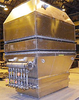
Description: • Designed to House the SCR Catalyst Modules in a Vertical Position • Catalyst Modules • Inlet/Outlet Transitions Ammonia Injection Grid • Ammonia Distribution Header • Individually Controlled Injection Lances • Inlet / Outlet Flue Transitions Ammonia Flow Control Unit • Redundant
-
Supplier: SAE International
Description: regulations are expected to be further reduced, packaging a large volume of SCR catalysts in diesel exhaust systems, along with DOC and particulate filter catalysts, will be challenging. One method to reduce the total volume of catalysts in diesel exhaust systems is to combine
-
Supplier: SAE International
Description: In recent years, catalyst systems such as a lean NOx trap (LNT) catalyst system and a urea selective catalytic reduction (SCR) system have been developed to obtain cleaner diesel emissions. At Nissan, we developed an emission control system for meeting Tier 2 Bin 5 requirements
-
Supplier: SAE International
Description: high over the highly aged catalyst at high temperatures. NO was oxidized to NO\u2082 at the outlet portion of the catalyst under standard SCR conditions at high temperatures, suggesting a balance between NO oxidation and SCR at limited NH\u2083 concentrations. NO conversion under
-
Supplier: SAE International
Description: Ammonia adsorption on the catalyst surface is a crucial step in the selective catalytic reduction of nitrogen oxides over zeolites with NH 3 as the reducing agent. In this study, two small pore zeolites with chabazite frameworks, H-SSZ-13 and Cu exchanged SSZ-13, are examined.
-
Supplier: ASTM International
Description: catalysts in the laboratory. 1.2 The two basic approaches to laboratory-scale simulation of commercial equilibrium catalysts described in this guide are as follows: 1.2.1 Cyclic Propylene Steaming (CPS) Methodin which the catalyst is impregnated with the desired metals via an
-
Supplier: MacDermid Alpha Electronics Solutions
Description: Product Overview Delivering consistent selectivity on a wide variety of materials and catalysts, our final finish solutions enable more complex designs on low-cost molding composites. This easy-to-control process offers steady plating rates and predictable bath performance. ENPLATE® LDS AU
- Chemical / Composition: Nickel Plating - Hard, Silver Plating, Tin Plating
-
Supplier: Cleaver-Brooks
Description: Superheat option available Dual burners for some applications Can accommodate selective catalytic reduction (SCR) and CO catalyst
- Maximum Temperature: 1,050 F
- Maximum Pressure: 1,500 psi
- Fuel Type / Heat Source: Gas (Natural / Propane)
- Type: Steam
-
Description: provides a lower center of gravity, which increases lateral stability and eliminates the need for wide, low profile tires. In compliance with iT4 emissions regulations, the DA30 engine utilizes Selective Catalyst Reduction (SCR) with Diesel Exhaust Fluid (DEF) to reduce emissions. To
- Horsepower: 375 HP
- Load Capacity: 61,279 lbs
- Operating Weight: 113,318 lbs
- Travel Speed: 34.199999999999996 miles/hr
-
Supplier: Gelest, Inc.
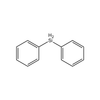
Description: cyclization of unsaturated ketones Reduces esters in the presence of zinc hydride catalyst Silylates 1,2-diols in presence of tris(pentafluorophenyl)borane Reduces α-halo ketones in presence of Mo(0) Used in enantioselective reduction of imines Reduces thio esters to ethers Selective
- Flash Point: 208.4 F
- Purity: 97 %
- Features: Metalloids (B, Si, Ge, etc.), Non-Metals (C, N, O, P, S)
-
Supplier: Gelest, Inc.
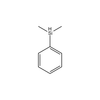
Description: brochure. Phenyldimethylsilane; Dimethylphenylsilane; Vapor pressure, 25 °C: 4 mm Reacts with alcohols in presence of Wilkinson’s catalyst Used to prepare α-phenyldimethylsilyl esters with high enantioselectivity Yields optically active reduction products with chiral Rh or Pd catalysts
- Flash Point: 100.4 F
- Purity: 97 %
- Features: Metalloids (B, Si, Ge, etc.), Non-Metals (C, N, O, P, S)
-
Description: compliance with iT4 emissions regulations, the DA40 engine utilizes Selective Catalyst Reduction (SCR) with Diesel Exhaust Fluid (DEF) to reduce emissions. To learn more about the technology strategy, review the Doosan Tier 4 resources.
- Horsepower: 500 HP
- Load Capacity: 88,185 lbs
- Operating Weight: 158,292 lbs
- Travel Speed: 34.199999999999996 miles/hr
-
Supplier: Gelest, Inc.
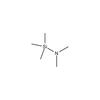
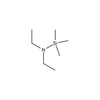
Description: Packaging Under Nitrogen Trimethylsilyl Blocking Agent Used as a protecting group for reactive hydrogens in alcohols, amines, thiols, and carboxylic acids. Organosilanes are hydrogen-like, can be introduced in high yield, and can be removed under selective conditions. They are stable over a
- Flash Point: -2.2 F
- Purity: 97 %
- Features: Metalloids (B, Si, Ge, etc.), Non-Metals (C, N, O, P, S)
-
Supplier: Gelest, Inc.
Description: 2204. Safety Packaging Under Nitrogen Trimethylsilyl Blocking Agent Used as a protecting group for reactive hydrogens in alcohols, amines, thiols, and carboxylic acids. Organosilanes are hydrogen-like, can be introduced in high yield, and can be removed under selective conditions. They are
- Flash Point: 50 F
- Purity: 97 %
- Features: Metalloids (B, Si, Ge, etc.), Non-Metals (C, N, O, P, S)






Find Suppliers by Category Top
Featured Products Top
-
 , and other products. Residue fluid catalytic cracking is the primary technology to upgrade to light products from heavy feed stocks. To ensure oil refineries work efficiently with reduced operating costs and remain competitive our expertise in designing highly efficient RFCC cyclone systems is needed (read more)
Browse Selective Catalytic Reduction (SCR) Systems Datasheets for Ducon Environmental Systems
Conduct Research Top
-
MIDW TM as a drop-in catalyst solution: Benefits of upgrading to a highly isomerization-deselective distillate dewaxing catalyst
ExxonMobil's highly isomerization-selective MIDW TM distillate dewaxing catalyst helps refiners, such as Silver Eagle Refining, increase profitability and lower operating costs by reducing LPG yields, improving diesel yields, lowering hydrogen consumption and improving distillate product quality.
More Information Top
 Indicates content that may require registration and/or purchase.

-
Tuning of the Engine Control Variables of an Automotive Turbocharged Diesel Engine via Model Based Optimization
Furthermore, the recourse to after treatment devices for particulate matter (e.g. Diesel Particulate Filter - DPF) or NOx (e.g. DeNox catalyst, Selective Catalyst Reducer - SCR), can address the control design toward the minimization of just one of the two pollutants.
-
Alstom Secures Contracts To Reduce Emissions At Power Plants In The USA, Saudi Arabia And Taiwan
Alstom's consortium partner, Cerrey SA de CV is responsible for the design, fabrication and delivery of 6x80 MW oil and gas-fired boilers and Alstom for the AQCS system, consisting of a Selective Catalyst Reducer and Alstom's patented NID flue gas desulphurization …
-
Investigation of the Acoustic Performance of After Treatment Devices
These devices include Diesel Particulate Filters, Diesel Oxidation Catalysts , and Selective Catalytic Reducers .
-
Special SCR-Dossier: SCR | Techniques of the Ingénieur
a catalyst and especially the catalytic selective (technique SCR reduction for Selective Catalytic Reduction the reaction rate.
-
Investigation of the Acoustic Performance of After Treatment Devices
One way of mitigating both exhaust emissions and noise is via the use of after treatment devices such as Catalytic Converters (CC), Selective Catalytic Reducers (SCR), Diesel Oxidation Catalysts (DOC), and Diesel Particulate Filters (DPF).
-
ZnO sensing structure for
detection
NH3 is used as a reducer in selective after-burning nitrogen oxides (NOx) in catalysts .
-
http://dspace.mit.edu/bitstream/handle/1721.1/47860/432313040-MIT.pdf?sequence=2
To this day, elimination of NOx particles in the exhaust system has been difficult, with only very recent success achieved using urea as a SCR ( selective catalytic reducer ) and unconfirmed rumors of a successful Nissan catalyst that does not require urea for …
-
http://www.jim.org.cn/fileup/PDF/2011-26-3-311.pdf
The catalytic activity of the catalyst on selective catalytic reduction (SCR) of NO with C3H6 as reducer was studied, and the influence of the reaction temperature, catalyst component, calcination temperature, reactant ratio and space velocity on the catalytic activity were investigated, respectively.
-
Mixed oxides as catalysts for the selective reduction of nitrobenzene
The activity of PbO/Mn304 catalysts , in the selective reduction ofnitrobenzene, with and with- out methane as an external reducer .