
Products & Services
See also: Categories | Featured Products | Technical Articles | More Information-
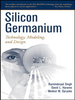
Description: and expert advice, Silicon Germanium covers all the key aspects of this technology and its applications. Beginning with a brief introduction to and historical perspective of IBM's SiGe technology, this comprehensive guide quickly moves on to: * Detail many of IBM's SiGe technology
-
Supplier: Accuris
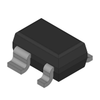
Description: MICROCIRCUIT, LINEAR, SILICON GERMANIUM (SiGe) BiCMOS, DIFFERENTIAL AMPLIFIER, MONOLITHIC SILICON
-
Supplier: Accuris
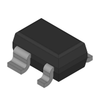
Description: MICROCIRCUIT, LINEAR, BiCMOS, DIFFERENTIAL AMPLIFIER, MONOLITHIC SILICON GERMANIUM (SiGe)
-
-
Supplier: Indium Corporation
Description: Germanium is a hard, brittle, grayish white element. It is transparent to infrared light, which makes it useful for optical materials. It is widely used as a semiconductor and an alloying agent. Silicon-germanium alloys are used to manufacture low-cost and high-speed integrated
- Purity: 99.999 %
- Melting Point / Range: 1,719.32 F
- Evaporation / Boiling Point: 5,126 F
- Electrical Resistivity: 40 ohm-cm
-
Supplier: Zygo Corporation
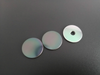
Description: Germanium windows, opaque in the UV and visible parts of the spectrum, have a broad transmission range and are well-suited for IR applications. Germanium is a very hard, high-density material - characteristics that are advantageous where robustness is needed. Germanium's high
- Window Material: Germanium
-
Supplier: Avantier Inc.
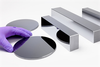
Description: prisms, windows, wafers, and custom-shaped substrates using materials such as UV grade fused silica, industrial grade fused silica, IR grade fused silica, filter glass, Germanium, Silicon, ZnSe, and more. Avantier employs the latest techniques and modern equipment to minimize waste and
- Materials: Germanium
-
Supplier: Indium Corporation
Description: agent. Silicon-germanium alloys are used for low-cost, high-speed integrated circuits as well as precision optical components, and germanium tetrachloride is an important dopant material in the manufacturing of optical fibers for telecommunications. A further use of
- Purity: 99.99 to 99.999 %
- Features: All Halogens, Chlorides, Metalloids (B, Si, Ge, etc.)
- State of Matter: Liquid / Solution
-
Supplier: Accuris
Description: STANDARD METHOD FOR MEASURING THE MINORITY- CARRIER LIFETIME IN BULK GERMANIUM AND SILICON (E1-1985) (R 1981)
-
Supplier: El-Cat, Inc.
Description: EL-CAT Inc. is a stocking distributor of Silicon Wafers, Compound Semiconductors and other Crystal Materials for use in electronics.
-
Supplier: El-Cat, Inc.
Description: EL-CAT Inc. is a stocking distributor of Silicon Wafers, Compound Semiconductors and other Crystal Materials for use in electronics.
-
Supplier: El-Cat, Inc.
Description: EL-CAT Inc. is a stocking distributor of Silicon Wafers, Compound Semiconductors and other Crystal Materials for use in electronics.
-
Supplier: El-Cat, Inc.
Description: EL-CAT Inc. is a stocking distributor of Silicon Wafers, Compound Semiconductors and other Crystal Materials for use in electronics.
-
Supplier: ASTM International
Description: 1.1 These test methods cover the measurement of minority carrier lifetime appropriate to carrier recombination processes in bulk specimens of extrinsic single-crystal germanium or silicon. 1.2 These test methods are based on the measurement of the decay of the specimen conductivity
-
Supplier: ASTM International
Description: This standard was transferred to SEMI (www.semi.org) May 2003 1.1 These test methods cover the measurement of minority carrier lifetime appropriate to carrier recombination processes in bulk specimens of extrinsic single-crystal germanium or silicon. 1.2 These test methods are based on
-
Supplier: Changchun Yutai Optics Co., Ltd.
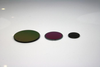
Description: Silicon crystals are ideal for IR applications with good transmittance from 1.2 to 7.0μm. Silicon has a low 2.329 g/cm3 density which is half the density of Germanium, making it ideal for weight sensitive applications. Silicon's price is much better compared with
- Features: Other
-
Supplier: Zygo Corporation
Description: Silicon windows have good transmission in the range from 1.2 to 7.0 µm, with little or no distortion of the transmitted signal. Silicon has an advantage over other IR materials due to its low density (about half that of Zinc Selenide or Germanium), making it ideal for optical
- Features: Specialty / Other
-
Supplier: Edmund Optics Inc.
Description: that of germanium or zinc selenide), silicon is ideal for weight sensitive applications, especially those in the 3 - 5µm region. Density is 2.329 g/cm3 and Knoop Hardness is 1150, making it harder and less brittle than germanium.
- Diameter, Square Side, or Rectangular Length: 50 mm
- Thickness: 2 mm
- Parallelism or Wedge Angle: 3 arcmin
- Surface Quality: 60-40 Scratch / Dig
-
Supplier: Edmund Optics Inc.
Description: that of germanium or zinc selenide), silicon is ideal for weight sensitive applications, especially those in the 3 - 5µm region. Density is 2.329 g/cm3 and Knoop Hardness is 1150, making it harder and less brittle than germanium.
- Diameter, Square Side, or Rectangular Length: 50 mm
- Thickness: 1 mm
- Parallelism or Wedge Angle: 3 arcmin
- Surface Quality: 60-40 Scratch / Dig
-
Supplier: Edmund Optics Inc.
Description: that of germanium or zinc selenide), silicon is ideal for weight sensitive applications, especially those in the 3 - 5µm region. Density is 2.329 g/cm3 and Knoop Hardness is 1150, making it harder and less brittle than germanium.
- Diameter, Square Side, or Rectangular Length: 25 mm
- Thickness: 1 mm
- Parallelism or Wedge Angle: 3 arcmin
- Surface Quality: 60-40 Scratch / Dig
-
Supplier: Edmund Optics Inc.
Description: that of germanium or zinc selenide), silicon is ideal for weight sensitive applications, especially those in the 3 - 5µm region. Density is 2.329 g/cm3 and Knoop Hardness is 1150, making it harder and less brittle than germanium.
- Diameter, Square Side, or Rectangular Length: 25 mm
- Thickness: 2 mm
- Parallelism or Wedge Angle: 3 arcmin
- Surface Quality: 60-40 Scratch / Dig
-
Supplier: Newport MKS
Description: The 10SI20 is an uncoated, 25.4 mm in diameter and 2.0 mm thick Silicon window. Silicon has good transmission range from 1.2 to 7.0 μm. With its low density (2.329g/cm3) silicon windows are ideal for application which are weight sensitive. With Knoop hardness value of 1100,
- Diameter, Square Side, or Rectangular Length: 25.400000000000002 mm
- Thickness: 2 mm
- Parallelism or Wedge Angle: 3 arcmin
- Surface Flatness: λ/20
-
Supplier: Knight Optical (UK) Ltd
Description: Silicon (Si) is one of the hardest minerals and optical materials available for use in the NIR (1µm) to about 6µm. Optical quality Silicon is usually doped (5 to 40 ohm cm) to prevent absorption bands within the transmission waveband. Silicon has a lower refractive index than
- Diameter, Square Side, or Rectangular Length: 0.20000000000000004 mm
- Surface Quality: 60-40 Scratch / Dig
- Window Shape: Circular
- Features: Specialty / Other
-
Supplier: Knight Optical (UK) Ltd
Description: Silicon (Si) is one of the hardest minerals and optical materials available for use in the NIR (1µm) to about 6µm. Optical quality Silicon is usually doped (5 to 40 ohm cm) to prevent absorption bands within the transmission waveband. Silicon has a lower refractive index than
- Diameter, Square Side, or Rectangular Length: 0.20000000000000004 mm
- Surface Quality: 60-40 Scratch / Dig
- Window Shape: Circular
- Features: Specialty / Other
-
Supplier: Knight Optical (UK) Ltd
Description: Silicon (Si) is one of the hardest minerals and optical materials available for use in the NIR (1µm) to about 6µm. Optical quality Silicon is usually doped (5 to 40 ohm cm) to prevent absorption bands within the transmission waveband. Silicon has a lower refractive index than
- Diameter, Square Side, or Rectangular Length: 0.20000000000000004 mm
- Surface Quality: 60-40 Scratch / Dig
- Window Shape: Circular
- Features: Specialty / Other
-
Supplier: Knight Optical (UK) Ltd
Description: Silicon (Si) is one of the hardest minerals and optical materials available for use in the NIR (1µm) to about 6µm. Optical quality Silicon is usually doped (5 to 40 ohm cm) to prevent absorption bands within the transmission waveband. Silicon has a lower refractive index than
- Diameter, Square Side, or Rectangular Length: 0.20000000000000004 mm
- Surface Quality: 60-40 Scratch / Dig
- Window Shape: Circular
- Features: Specialty / Other
-
Bipolar RF Transistors - Discrete Semiconductor Products - Transistors - Bipolar (BJT) -- BFU768F115
Description: NPN WIDEBAND SILICON GERMANIUM R
- VCEO: 2.8 volts
- Output Power: 0.22 watts
- Packing Method: Bulk Pack
- Features: General Purpose BJT, Other
-
Supplier: Lingto Electronic Limited
Description: NPN WIDEBAND SILICON GERMANIUM R
-
Supplier: Rochester Electronics
Description: Silicon Germanium GPS Low Noise Amplifier
- Features: Other
- Standards: RoHS Compliant
-
Supplier: Radwell International
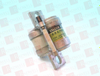
Description: DISCONTINUED BY MANUFACTURER, FUSE, 235 AMP, SEMI CONDUCTOR, FOR GERMANIUM AND SILICON RECTIFIERS. FREE 2 YEAR RADWELL WARRANTY
- Current Rating: 235 amps
-
Supplier: MOK Optics Co., Ltd.
Description: MOK Optics bi-convex lenses are popular for many finite imaging applications, our biconvex lenses are fabricated from N-BK7, UV fused silica, N-SF11, Germanium, Silicon etc.
- Diameter / Length: 3 to 250.00000000000003 mm
- Diameter: 3 to 250.00000000000003 mm
- Surface Flatness: λ/8
- Surface Quality: 10-5 Scratch / Dig
-
Supplier: MOK Optics Co., Ltd.
Description: MOK Optics plano-convex lenses have a positive focal length and can be used to focus collimated light, Our plano-convex lenses are fabricated from N-BK7, UV fused silica, N-SF11, Germanium, Silicon etc.
- Diameter / Length: 3 to 250.00000000000003 mm
- Diameter: 3 to 250.00000000000003 mm
- Surface Flatness: λ/8
- Surface Quality: 10-5 Scratch / Dig
-
Supplier: ASTM International
Description: feasibility and precision have been evaluated only for silicon and germanium. 1.2 This test method may be used on epitaxial films, substrates, diffused layers, or ion-implanted layers, or any combination of these. 1.3 This test method is comparative in that the resistivity profile of
-
Supplier: MOK Optics Co., Ltd.
Description: The Biconcave Lenses are often used to expand light beams or to increase focal lengths in optical systems, and are normally used in combination with other lenses. Our biconcave lenses are fabricated from N-BK7, UV fused silica, N-SF11, Germanium, Silicon etc.
- Diameter / Length: 3 to 250.00000000000003 mm
- Diameter: 3 to 250.00000000000003 mm
- Surface Flatness: λ/8
- Surface Quality: 10-5 Scratch / Dig
-
Supplier: Semtech Corp.
Description: Semtech offers a portfolio of fully integrated Silicon Germanium (SiGe) BiCMOS and pure CMOS limiting post amplifiers. Applications include Ethernet, Fiber Channel, SONET/SDH and burst mode drivers for PON/FTTH.
- Supply Voltage (VS): 3.3 to 5 volts
- Gain-Bandwidth Product (GBW): 0.125 to 14.7 MHz
- Package Type: MSOP, QSOP
- Features: Other
-
Supplier: Materion Corporation
Description: Visi-Lid™, an optical assembly, passes light at specified wavelengths. In its simplest form, the assembly consists of an A/R coated and glass metalized window of sapphire, silicon or germanium with a solder frame tack welded to the metalized portion. More complex assemblies require the
- Lens Features: Antireflection Coating
- Materials: Germanium, Sapphire, UV Grade Fused Silica











Find Suppliers by Category Top
Featured Products Top
-
 Comparison of silicon lenses and germanium lenses Silicon lens: suitable for NIR and MIR, high hardness, good thermal stability, low cost. Germanium lens: suitable for MIR and FIR, high refractive index, easy to process, but high cost (read more)
Browse Optical Lenses Datasheets for Changchun Yutai Optics Co., Ltd. -
How to select the material of dove prisms based on the working wavelength? UV: Fused Sillica(SiO2), CaF2. VIS: BK7(n=1.52), K9. IR: Silicon, Germanium, ZnSe. (read more)
Browse Optical Prisms Datasheets for Changchun Yutai Optics Co., Ltd. -
selection starts with the spectral band—SWIR, MWIR, LWIR, or NIR—since this determines detector compatibility and application fit. Substrate matters just as much: fused silica, sapphire, germanium, silicon, and CaF2 each bring different transmission and durability tradeoffs suited to different (read more)
Browse Optical Lens Assemblies Datasheets for Avantier Inc. -
, Silicon, Germanium, ZnSe, ZnS (for MWIR/LWIR), or customer-supplied material Coating Type Hard-coated multilayer dielectric interference coatings (Ion-Assisted Deposition / IBS); Soft-coated options available for prototyping (read more)
Browse Optical Filters Datasheets for Avantier Inc. -
the filter's ability to resist laser damage. Substrate Selection: Silicon (Si): suitable for 1-7μm, low cost but brittle. Germanium (Ge): suitable for 2-16μm, impervious to visible light, needs to be protected from moisture. Zinc Selenide (ZnSe): wide transmittance range (0.5-20μm), but high price. (read more)
Browse Optical Filters Datasheets for Changchun Yutai Optics Co., Ltd. -
Φ1-500mm Φ1-500mm 1-300mm Φ1-500mm Φ1-500mm Silicon (Si) 1.2 – 8 Φ1-400mm (read more)
Browse Optical Prisms Datasheets for Avantier Inc. -
imaging and sterilization systems. Infrared Domes – Designed for thermal imaging, heat-seeking missiles, and infrared sensors, using materials such as: Sapphire Germanium Zinc Selenide (ZnSe) Silicon Infrared (read more)
Browse Optical Lenses Datasheets for Avantier Inc.
Conduct Research Top
-
Properties of Silicon Germanium and SiGe: Carbon
Properties of Silicon Germanium and SiGe: Carbon. Liberally illustrated and fully indexed, this book distils the expertise of some 40 invited authors to comprehensively review the whole range of properties as well as SiGe:C, self-assembled nanostructures, quantum effects and device trends.
-
Custom-Made Germanium and Silicon Optics Meet the Spec for High-Tech Surveillance Systems
component supplier has increased its custom capabilities for its sought-after Germanium and Silicon optics.
-
EETimes.com | Electronics Industry News for EEs & Engineering Managers
Nanostructures lead way to improved data transmission A research team comprised of Spanish, Russian and Ukrainian scientists has developed a way to control the formation of silicon germanium (SiGe) nanostructures, which could improve data transmission in fibre optics and electronic circuits
-
Smart Computing Article - Memories Are Made Of This
living creatures. It allows us to learn, to make comparisons, to develop and maintain relationships. Memory, as it exists within a computer, cannot be discussed in such poetic terms. Computer memory is any area where data is stored on a (a tiny board made of silicon and germanium) rather than on some
-
An Improved Wire Grid Polarizer For Thermal Infrared Applications
and have a contrast ratio better than 40 dB. Transmission and reflectance measurements were made using a Fourier Transform Infrared (FTIR) spectrometer with instrument accuracy verified using silicon and germanium reference standards. Results were compared to RCWA modeling of the wire grid. polarizer (WGP
-
EETimes.com | Electronics Industry News for EEs & Engineering Managers
silicon germanium (SiGe) process technology into volume production. Samsung speeds up move to 0.12-micron process Samsung Semiconductor will push its planned shrink to the 0.12-micron process for 256- and 512-Mbit memory parts ahead two quarters in a bid to dominate next year's Windows XP-driven PC
-
EETimes.com | Electronics Industry News for EEs & Engineering Managers
will use its budget to ramp up its new 300mm fab, start the move to 0.11-micron processing, bring on a new Generation 5 LCD fab, jump into new silicon-germanium chips, and enter the specialty network DRAM market on the side of Fast Cycle RAM. Cymer's 'Raptor' technology attacks power issues
-
EETimes.com | Electronics Industry News for EEs & Engineering Managers
into the radio-frequency (RF) and silicon-germanium (SiGe) chip sectors. During a press briefing at Intel's headquarters earlier this week, the company outlined its major push into 0.13-micron technology (see ). As part of the briefing, Intel also discussed its technology driver strategy, dubbed
More Information Top
 Indicates content that may require registration and/or purchase.

-
ESD: RF Technology and Circuits
… load cancellation methods, distributed loads, emitter degeneration, buffering and ballasting; examines ESD protection and design of active and passive elements in RF complementary metal-oxide-semiconductor (CMOS), RF laterally-diffused metal oxide semiconductor (LDMOS), RF BiCMOS Silicon Germanium (SiGe), RF BiCMOS Silicon …
-
Compact thermoelectric converter development program: Phase IIB. Final report, January 1--December 31, 1967
The design takes maximum advantage of the high efficiency per- formance of silicon germanium .
-
ESD Physics and Devices
Addresses the physics of ESD protection in CMOS, silicon on insulator (SOI), and Silicon Germanium (SiGe), and future technologies from FinFETs to Carbon nano-tubes.
-
http://dspace.mit.edu/bitstream/handle/1721.1/71279/795574009-MIT.pdf?sequence=2
CMOS Silicon Germanium Photodiodes................................................................215 5.5.1.
-
http://repositories.lib.utexas.edu/bitstream/handle/2152/18388/donnellyj17008.pdf?sequence=2
Figure 2.3 (a) Equilibrium strain free silicon germanium , Si1-xGex, and silicon lattices.
-
Theoretical Modeling of Inorganic Nanostructures
Fig. 5.1 Models of two possible silicon ( germanium ) single-crystal structures possessing lattices with cubic diamond-type (a) and hexagonal wurtzite-type (c) morphology showing the two pairs of interpenetrating fcc and hcp unit cells [5].
-
Semiconductor-On-Insulator Materials for Nanoelectronics Applications
Vincent, B., Damlencourt, J.-F., Delaye, V., et al.: Stacking fault generation during relaxation of silicon germanium on insulator layers obtained by the Ge condensation technique.
-
Springer Handbook of Electronic and Photonic Materials
His research has included pioneering work on molecular-beam epitaxy (MBE) and chemical vapor deposition (CVD) for the development of new nano and quantum devices based on ZnO, silicon and silicon germanium .