
Products & Services
See also: Categories | Featured Products | Technical Articles | More Information-
Supplier: SiTime Corporation
Description: 24-Hour Holdover: Ensuring Reliable Access to Critical Network Infrastructure Holdover capability is essential for maintaining service continuity during GNSS signal loss or reference clock failure. A highly stable local oscillator keeps the system synchronized with the network until the
-
Supplier: Newark, An Avnet Company
Description: CLOCK SYNCHRONIZER/JITTER CLEANER, VQFN; Frequency:2.2GHz; PLL Type:Clock Synchronizer; No. of Pins:48Pins; PLL Case Style:VQFN; Supply Voltage Min:3V; Supply Voltage Max:3.6V; Operating Temperature Min:-40°C; Operating Temperature RoHS Compliant: Yes
-
Supplier: Accuris
Description: A Precision Clock Synchronization Protocol for Networked Measurement and Control Systems Amendment 3: Precision Time Protocol (PTP) Enhancements for Best Master Clock Algorithm (BMCA) Mechanisms
-
-
Description: The design, installation, and monitoring of time synchronization systems in power utility substations is covered. This includes time sources such as Global Positioning Satellite (GPS) and time distribution systems such as Inter-Range Instrumentation Group Format B (IRIG-B),
-
Supplier: iba America LLC
Description: Time synchronization for distributed systems ibaClock High precision time server Time sources: GPS signal or IRIG-B Fiber optic connection to ibaPDA systems via ibaFOB-D cards Synchronization of ibaPDA systems with sample accuracy Can be used as IEEE 1588 time server or
-
Supplier: Accuris
Description: Local and Metropolitan Area Networks\x97Timing and Synchronization for Time-Sensitive Applications Amendment 3: Hot Standby and Clock Drift Error Reduction
-
Supplier: Microchip Technology, Inc.
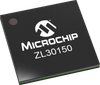
Description: wander and jitter filtering and clock rate translations required for a synchronous 10GBASE-W/10GBASE-R system. The ZL30154 includes 2 programmable digital PLLs synchronizing to any clock rate from 1 Hz to 750 MHz. It includes 4 programmable synthesizers that can generate any
-
Supplier: Microchip Technology, Inc.
Description: wander and jitter filtering and clock rate translations required for a synchronous 10GBASE-W/10GBASE-R system. The programmable digital PLL synchronizes to any clock rate from 1 Hz to 750 MHz. The ZL30153 includes 2 programmable synthesizers that can generate any clock
-
Description: There is a desire for some applications to relate the time code time address to clock system time and to use this time code as a clock time reference. This guideline is specifically applicable to video systems operating at a frame rate of 29.97 Hz
-
Supplier: Microchip Technology, Inc.
Description: clocks. Click here for secure documentation Additional Features Four independent clock channels Frequency and Phase Sync over Packet Networks Frequency accuracy performance for WCDMA-FDD, GSM, LTE-FDD and femtocell applications Frequency performance for ITU-T G.823 and G.824
-
Supplier: Microchip Technology, Inc.
Description: any Telecom or SyncE frequency independent of the input frequency rate Two general purpose synthesizers generate a wide range of digital bus clocks Programmable digital PLLs synchronizes to any Telecom (N * 8 KHz) or any Synchronous Ethernet (SyncE) frequencies Flexible two-stage
-
Supplier: Accuris
Description: a Precision Clock Synchronization Protocol for Networked Measurement and Control Systems Amendment 1: Precision Time Protocol (PTP) Mapping for Transport over the Optical Transport Network (OTN)
-
Description: IEC 61588:2021 defines a network protocol, the Precision Time Protocol (PTP), enabling accurate and precise synchronization of the real-time clocks of devices in networked distributed systems. The protocol is applicable to systems where devices communicate via networks,
-
Description: The design, installation, and monitoring of time synchronization systems in power utility substations is covered. This includes time sources such as Global Positioning Satellite (GPS) and time distribution systems such as Inter-Range Instrumentation Group Format B (IRIG-B),
-
Supplier: SiTime Corporation
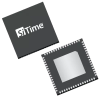
Description: The SiT95316 network synchronizer offers programmable quad fractional frequency translation with flexible input to output frequency translation options. The high performance DPLLs support up to 4 differential or 8 single-ended input clocks and provide 12 clock outputs. The clock
-
Supplier: SiTime Corporation
Description: The SiT95317 network synchronizer offers programmable quad fractional frequency translation with flexible input to output frequency translation options. The high performance DPLLs support up to 4 differential or 8 single-ended input clocks and provide 8 clock outputs. The clock
-
Supplier: SiTime Corporation
Description: The Cascade™ SiT95148 is a single-chip MEMS network synchronizer optimized for IEEE 1588 and time synchronization applications. The device comes with 4 independent time domains, 1 mHz to 4 kHz programmable loop bandwidth, low wander mode and fastest hitless switching. Its low noise
-
Description: This standard defines a protocol that provides precise synchronization of clocks in packet-based networked systems. Synchronization of clocks can be achieved in heterogeneous systems that include clocks of different inherent precision, resolution, and stability. The protocol
-
Supplier: Integrated Device Technology
Description: The 82P33910-1 Synchronization System for IEEE 1588 is comprised of software and hardware designed to meet the needs of IEEE 1588 slave clock and master clock applications. The system includes Precision Time Protocol ( PTP ) stack software (Stack) and clock recovery servo
- Supply Voltage: 1.8 volts
- Frequency: 0.000001 to 650 MHz
- Operating Temperature: 0 to 70 C
- Bus Interface: LVDS, LVPECL
-
Supplier: Integrated Device Technology
Description: The 82P33724 Port Synchronizer for IEEE 1588 and Synchronous Ethernet provides tools to manage timing references, clock conversion and timing paths for IEEE 1588 and Synchronous Ethernet (SyncE). The device supports up to three independent timing paths for: IEEE 1588 clock generation;
- Supply Voltage: 1.8 volts
- Frequency: 0.000001 to 650 MHz
- Operating Temperature: 0 to 70 C
- Bus Interface: LVDS, LVPECL
-
Supplier: Integrated Device Technology
Description: The 82P33810 Synchronization Management Unit ( SMU ) provides tools to manage timing references, clock sources and timing paths for IEEE 1588 and Synchronous Ethernet (SyncE) based clocks. The device supports up to three independent timing paths that control: IEEE 1588 clock
- Supply Voltage: 1.8 volts
- Frequency: 0.000001 to 650 MHz
- Operating Temperature: 0 to 70 C
- Bus Interface: LVDS, LVPECL
-
Supplier: Integrated Device Technology
Description: clock generation; and general purpose frequency translation. The device outputs low-jitter clocks that can directly synchronize 40GBASE -R, 10GBASE -R and 10GBASE -W and lower-rate Ethernet interfaces; as well as CPRI / OBSAI , SONET / SDH and PDH interfaces and IEEE 1588
- Supply Voltage: 1.8 volts
- Frequency: 0.000001 to 650 MHz
- Operating Temperature: 0 to 70 C
- Bus Interface: LVDS, LVPECL
-
Supplier: Precise Time and Frequency, Inc.
Description: Synchronization, and Time Keeping Mobile Monitoring and Control Devices Description The VF-5203A optionally combines the precision of GPS disciplined timing (<20 ns), Time Code input, or stand-alone time code Master generator. Available oscillator options include TCXO, OCXO or a
- Time Accuracy: 20 ns
- Outputs: 0.1MHz, 10MHz, 1MHz, 1pps, 5MHz
- Clock Method: Atomic Clock, Crystal, External Signal
- Features: Other Application, Other Interface, Other Output
-
Supplier: SAE International
Description: time. Time-Triggered Ethernet formally defines the relationship between the synchronized time and the time-triggered transfer. Time-Triggered Ethernet covers only the network aspects for mixed time-criticality systems 2x. Time-Triggered Ethernet does
-
Supplier: Win Source Electronics
Description: Manufacturer: Renesas Electronics America Win Source Part Number: 907721-670M-03ILFT Series: ClockBlocks™ Operating Temperature Range: -40°C ~ 85°C Features: Clock Synchronizer, Zero Delay Buffer IC 210MHz 1 16-SOIC (0.154", 3.90mm Width) Package: 16-SOIC (0.154", 3.90mm Width) Package: Reel
- Operating Temperature: -40 to 85 C
- Device Type: Clock Generator
- Features: Other
- Package Type: Surface Mount Technology (SMT)
-
Supplier: Win Source Electronics
Description: Manufacturer: IDT, Integrated Device Technology Inc Win Source Part Number: 1133970-843002AKI-41LF Packaging: Tray Type: Clock Generator, Clock Synchronizer, Frequency Translator, Jitter Attenuator, Multiplexer Mounting Style: SMD Frequency - Max: 700MHz Input: HCSL, LVCMOS, LVDS,
- Supply Voltage: 3.135 to 3.465 volts
- Output Frequency: 700 MHz
- Operating Temperature: -40 to 85 C
- Device Type: Clock Generator
-
Supplier: Kernco, Inc.
Description: Kernco's recent atomic clock development programs have focused on a new application of an existing technology known as Coherent Population Trapping (CPT). CPT is a quantum mechanical process that directly exploits the coherence of a laser pumping source. The Coherent Population Trapping
- Number of outputs: 1
- Frequency: 10,000,000 Hz
- Outputs: 10MHz
- Clock Method: Atomic Clock
-
Supplier: Kernco, Inc.
Description: Kernco's recent atomic clock development programs have focused on a new application of an existing technology known as Coherent Population Trapping (CPT). CPT is a quantum mechanical process that directly exploits the coherence of a laser pumping source. The Coherent Population Trapping
- Number of outputs: 1
- Frequency: 10,000,000 Hz
- Time Accuracy: 0.007 ns
- Outputs: 10MHz, 5MHz
-
Supplier: Visual Sound, Inc.
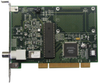
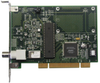
Description: ESE The PC-471PCI is a PCI Bus interface card for PC computers which receives SMPTE / EBU or ESE timecodes and synchronizes the PC clock via the included software.
-
Supplier: ERSAELECTRONICS PTE. LTD.
Description: REAL TIME CLOCK Product overview: DP8573AN from Texas Instruments is a Clock and Timing IC for clock generation, timing distribution, synchronization, RF systems, communication hardware, and digital boards. It is useful for engineers and buyers comparing datasheets,
- Operating Temperature: -40 C
- Features: Other
-
Supplier: Visual Sound, Inc.
Description: ESE The PC-273PCI is a PCI Bus interface card for PC computers which receives various IRIG and ASCII timecodes and synchronizes the PC clock via the included software.
-
Supplier: Rochester Electronics
Description: CDC7005 High Performance, Low Phase Noise, Low Skew Clock Synchronizer that Synchronizes Ref Clock to VCXO
- Device Type: Real Time Clock
-
Data Acquisition Systems and Instruments - Modular Real-Time Data Acquisition System -- ADwin-PRO-IISupplier: CAS DataLoggers
Description: Flexible and Expandable The ADwin-PRO-II Modular Real-Time Data Acquisition System is the successor of ADwin- Pro product family. The new T12 processor provides much faster operation and transmits data 10 times faster with the new Pro II bus. The PRO-II backplane support both the new
- Analog Input Channels: 32 #
- Digital I/O Channels: 32 #
- Resolution: 18 bits
- RAM / On-board Memory: 256 MB
-
Supplier: CSA Group
Description: the nominal voltage is DC 1,5 V. Analogue quartz clock movements can refer to it. This International Standard does not apply to the following quartz clocks: - clocks for particular applications such as clocks used in aircraft, ship, vehicle, and facilities; -
-
Supplier: CIQTEK Co., Ltd
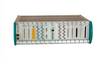
Description: CIQTEK SCS1800 synchronous control system is based on high-precision network clock and time synchronization technology to realize the distribution of multi-node clock signals and sub-nanosecond synchronization control. It can be widely used in computing, industrial automation
- Maximum Input Channels: 18
- Form Factor: Fixed/Rack mount
- Features: Other, Other Interface
- Generator Type: Synchronized Multiple Outputs











Find Suppliers by Category Top
Featured Products Top
-
 40 percent, undermining performance per watt (PPW), a key measure of data center efficiency. Every second an expensive GPU sits idle is power spent for zero revenue. Poor synchronization across an AI cluster, compounded by rising power and thermal stress, directly caps GPU utilization. So (read more)
Browse IC Clocks Datasheets for SiTime Corporation -
equipment. Precision timing provides the heartbeat for AI infrastructure. It delivers the necessary synchronization across different AI workloads for maximum AI server efficiency. Precision timing is essential for the high-speed networking equipment required to deliver massive amounts of data (read more)
Browse IC Clocks Datasheets for SiTime Corporation -
requires small size, low jitter and low power oscillators; a SmartNIC requires both ultra-stable oscillators and clocks that are resilient to temperature variations for optimized synchronization performance. Keep Reading (read more)
Browse Network Synchronization Products Datasheets for SiTime Corporation -
. PLLs & Clock Management: 4 PLLs ensure precise clock synchronization and jitter filtering for real-time operations (read more)
Browse Field-Programmable Gate Arrays (FPGA) Datasheets for Win Source Electronics -
and sends it with low, consistent latency over a GigE link to receiving software or hardware. The product supports the IEEE 1588 Precision Time Protocol to synchronize image capture functions and other system elements, enabling the exact triggering of image acquisition. Power over Ethernet (PoE) and (read more)
Browse Video Processor Boards Datasheets for Pleora Technologies Inc. -
system operations. To help combat threats, new PNT architectures will need ultra-stable clocks. The new SiTime Endura Epoch™ MEMS oven-controlled oscillator (OCXO) offers you a novel ruggedized precision timing solution for PNT systems that need to (read more)
Browse Oscillators Datasheets for SiTime Corporation -
ability to synchronize input timestamp and output trigger with the system clock enables better machine precision, improves troubleshooting, and enhances overall system reliability. The I/O blocks can be configured via a browser through the module’s secure web server, enabling a safer (read more)
Browse I/O Modules and Instruments Datasheets for Allen-Bradley / Rockwell Automation -
Background: One of the challenges to satisfy ultra-low power circuit design in Internet of Things application. Wireless nodes common in IoT applications use 32.768KHz oscillator to synchronize the clock with each other RF module. Due to always on, the power consumption (read more)
Browse Oscillators Datasheets for Interquip Electronics Co., Ltd. -
ADRV9009-ZU11EG’s can be synchronized together enabling a complete solution for complex multi-stream applications ensuring end-to-end deterministic latency. The ADRV9009 Transceivers include integrated LO and phase synchronization. Overall system frequency & phase synchronization is maintained with a clock (read more)
Browse Electronic Development Boards Datasheets for Richardson RFPD -
. Analog and Timer Functions The STM32F103C8T6 contains two 12-bit successive-approximation ADCs with a conversion time as short as 1 μs under the specified clock configuration. In the 48-pin device, up to 10 analog input channels are (read more)
Browse Microcontrollers (MCU) Datasheets for ERSAELECTRONICS PTE. LTD.
Conduct Research Top
-
Synchronizing Differential Clock Sources for Bit Error Ratio Test (BERT)
modern devices have differential inputs. By offering differential clock and data (inputs and outputs), the OmniBER 725 can test these devices quicker and with greater reliability. Both inputs of a device can be tested at the same time, (rather than having to test each. input separately) removing
-
Synchronizing Position Synchronized Output (PSO) with Mode-Locked Lasers
Many lasers are limited to firing pulses based on an internal clock source and cannot be asynchronously triggered from an external. signal such as from Aerotech's Position Synchronized Output (PSO) feature. One approach to working with this laser type is to. set the pulse width of the PSO output
-
IEEE-1588 Precise Time Protocol (.pdf)
This paper the IEEE-1588 Precision Time Protocol as the basis for real time applications in an automation network. Using IEEE1588, it is possible for the first time to synchronize, in the sub-microsecond range, the local clocks in sensors, actuators, and other terminal devices using the same
-
Industrial Networking White Paper: IEEE-1588 Precise Time Protocol (.pdf)
This paper the IEEE-1588 Precision Time Protocol as the basis for real time applications in an automation network. Using IEEE1588, it is possible for the first time to synchronize, in the sub-microsecond range, the local clocks in sensors, actuators, and other terminal devices using the same
-
Multiplexing LED Drive and 4x4 Keypad Sampling
of the overall circuit. Typically applications having LEDs and keypads also keep track of real-time, in order to synchronize certain related events. An Industrial Clock/Timer example has been used in this application note as a demonstration of these functions. The software overhead to keep track of real time
-
Designing Power Supplies for Global Applications (.pdf)
integrated circuits (ICs). For example, some ICs can deliver pulse widths as narrow as 150 ns when synchronization to an external clock is not required. Synchronization may require another 100 to 150 ns, or a total of at least 250 ns even when operating at the minimum pulse-width capability of the IC
More Information Top
 Indicates content that may require registration and/or purchase.

-
Low-cost clock synchronization
If, on the other hand, events can be causally related im- plicity through the passage of real time or if properties (ii) or (iii) are desired, then real- time synchronized clocks are required.
-
Trustworthy Computing and Services
1000 times synchronization clock offset is 0.0022 .
-
Orbit determination and time synchronization for a GEO/IGSO satellite navigation constellation with regional tracking network
ple, using MPOD orbits and time synchronization clock measurements would result in about 3 m errors in URE, even though clock measurements are generally more precise than the clock estimates.
-
CR4 - Thread: What’s Wrong With This Radiolocation Interpretation For Einstein’s SR?
However, in his 1905 paper he assumed--to justify use of time synchronized clocks to measure time between any two EM events--that signal propagation times are also equal for non-simultaneous events.
-
Towards a radio-controlled time synchronized wireless sensor network: A work in-progress paper
These networks can benefit from time synchronized clocks on distributed nodes.
-
One improved time synchronization based on Ant Colony Optimization and TPSN mechanism
As Fig.5 shows, the red line is ACO-TS time synchronization clock offset error distributing, green “*” are the data created by traditional TPSN in 20 cycles.
-
Distributed large-scale network modeling with paramics implementation
There are two types of message will be transferred, one is the synchronized time clock information, and the other is the vehicle transfer information.