
-
Supplier: Accuris
Description: Pulps - Laboratory Wet Disintegration
-
Supplier: Accuris
Description: Pulps - Laboratory wet disintegration
-
Supplier: Accuris
Description: Pulps - Laboratory wet disintegration - Part 1: Disintegration of chemical pulps
-
-
Description: ISO 5263-1:2004 specifies an apparatus and the procedure for the laboratory-wet disintegration of chemical pulps. This apparatus and procedure are required for preparation of the test portion in a number of other International Standards dealing with pulps. In principle, this method is
-
Supplier: CSA Group
Description: ISO 5263-1:2004 specifies an apparatus and the procedure for the laboratory-wet disintegration of chemical pulps. This apparatus and procedure are required for preparation of the test portion in a number of other International Standards dealing with pulps. In principle, this method is
-
Supplier: Accuris
Description: Pulps Laboratory wet disintegration Part 2: Disintegration of mechanical pulps at 20 \xb0C
-
Description: ISO 5263-3:2004 specifies an apparatus and the procedures for the laboratory wet disintegration of mechanical pulps that exhibit latency. This apparatus and procedure are required for preparation of the test portion in a number of other International Standards dealing with pulps. ISO
-
Supplier: CSA Group
Description: ISO 5263-3:2004 specifies an apparatus and the procedures for the laboratory wet disintegration of mechanical pulps that exhibit latency. This apparatus and procedure are required for preparation of the test portion in a number of other International Standards dealing with pulps. ISO
-
Supplier: CSA Group
Description: ISO 5263-2:2004 specifies an apparatus and the procedures for the laboratory-wet disintegration of mechanical pulps that do not exhibit latency or pulps where latency has already been removed. This apparatus and procedure are required for preparation of the test portion in a number of other
-
Description: ISO 5263-2:2004 specifies an apparatus and the procedures for the laboratory-wet disintegration of mechanical pulps that do not exhibit latency or pulps where latency has already been removed. This apparatus and procedure are required for preparation of the test portion in a number of other
-
Supplier: Bepex International LLC
Description: items with minimum downtime The RD Disintegrator Machine is capable of wet and dry grinding, shredding of difficult-to-grind materials, dispersing, pulping, chipping, and separation of hard-to-grind fractions. Similar to our other Disintegrator models, numerous screen and hammer
- Feed: Continuous, Dry, Wet
- Type: Hammer / Cage Mill
- Features: Other
- Applications: Wood / Pulp & Paper
-
Supplier: Bepex International LLC
Description: and ACME threads simplify maintenance and cleaning The RH Disintegrators can be operated in a continuous mode for mixing of liquid and easy-to-wet powder streams, or in a batch mode with recirculation for more intense mixing and other difficult applications. The two residence time
- Feed: Batch, Continuous, Dry, Wet
- Applications: Food Processing / Grain, Sanitary
- Type: Hammer / Cage Mill
-
Supplier: Bepex International LLC
Description: RA and RP Series disintegrator machines are widely used for fine pulping of many food products. A versatile disintegrator machine capable of grinding, shredding, delumping, or pulping of wet and dry feeds Several hammer styles and screen sizes offer multiple configurations
- Feed: Batch, Dry, Wet
- Applications: Chemicals / Fertilizers, Food Processing / Grain, Pharmaceutical / Cosmetics, Sanitary
- Type: Hammer / Cage Mill
-
Supplier: Bepex International LLC
Description: RA and RP Series disintegrator machines are widely used for fine pulping of many food products. A versatile disintegrator machine capable of grinding, shredding, delumping, or pulping of wet and dry feeds Several hammer styles and screen sizes offer multiple configurations
- Feed: Batch, Dry, Wet
- Applications: Chemicals / Fertilizers, Food Processing / Grain, Pharmaceutical / Cosmetics, Sanitary
- Type: Hammer / Cage Mill
-
Supplier: AENOR
Description: Pulps - Laboratory wet disintegration - Part 1: Disintegration of chemical pulps (ISO 5263-1:2004)
-
Supplier: AENOR
Description: PULPS. LABORATORY WET DISINTEGRATION. (ISO 5263:1995).
-
Supplier: AENOR
Description: Pulps - Laboratory wet disintegration - Part 3: Disintegration of mechanical pulps at = 85°C (ISO 5263-3:2023)
-
Supplier: AENOR
Description: Pulps - Laboratory wet disintegration - Part 2: Disintegration of mechanical pulps at 20 degrees C (ISO 5263-2:2004)
-
Supplier: Cole-Parmer
Description: • Rapidly homogenizes, disperses, and emulsifies small-volume samples in aqueous media • Homogenize sample volumes from 0.5 to 50 mL • Adjust speed from 4500 to 30,000 rpm • All wetted materials are 316 stainless steel Liquid media is drawn into and repeatedly cycled throguh the stator. The
- Features: Homogenizer
-
Supplier: Cole-Parmer
Description: • Rapidly homogenizes, disperses, and emulsifies small-volume samples in aqueous media • Homogenize sample volumes from 0.5 to 50 mL • Adjust speed from 4500 to 30,000 rpm • All wetted materials are 316 stainless steel Liquid media is drawn into and repeatedly cycled throguh the stator. The
- Features: Homogenizer
-
Supplier: Charles Ross & Son Company
Description: Powders like fumed silica, calcium carbonate, titanium dioxide, gums, thickeners and many pigments are difficult to wet out. Even with a strong vortex in an open vessel, they resist wetting out, and often float on the surface for hours. Our new SLIM technology enables you to wet out
- Motor Speed: 1,200 to 3,600 rpm
- Motor Power: 1.5 to 100 HP
- Applications / Industry: Adhesives Processing, Chemical Processing, Cosmetics Processing, Food and Beverage Processing, Paint / Coating Processing, Pharmaceutical Processing
- Operating Condition: Batch Operation
-
Supplier: Charles Ross & Son Company
Description: Powders like fumed silica, calcium carbonate, titanium dioxide, gums, thickeners and many pigments are difficult to wet out. Even with a strong vortex in an open vessel, they resist wetting out, and often float on the surface for hours. Our new SLIM technology enables you to wet out
- Motor Speed: 1,200 to 3,600 rpm
- Motor Power: 1.5 to 100 HP
- Applications / Industry: Adhesives Processing, Chemical Processing, Cosmetics Processing, Food and Beverage Processing, Paint / Coating Processing, Pharmaceutical Processing
- Operating Condition: Batch Operation
-
Supplier: Charles Ross & Son Company
Description: The Inline Model High Shear Rotor-Stator mixer design consists of a single, dual or four stage rotor that turns at high speed within a stationary stator. As the rotating blades pass the stator, they mechanically shear the contents. The Inline model is a good choice for process lines that require
- Motor Speed: 10,000 rpm
- Motor Power: 1 HP
- Applications / Industry: Adhesives Processing, Chemical Processing, Cosmetics Processing, Food and Beverage Processing, Paint / Coating Processing, Pharmaceutical Processing
- Operating Condition: Batch Operation
-
Supplier: Charles Ross & Son Company
Description: The Inline Model High Shear Rotor-Stator mixer design consists of a single, dual or four stage rotor that turns at high speed within a stationary stator. As the rotating blades pass the stator, they mechanically shear the contents. The Inline model is a good choice for process lines that require
- Capacity: 8.822916053964162 to 238.61977509584895 cubic feet
- Motor Power: 1.5 to 100 HP
- Applications / Industry: Adhesives Processing, Chemical Processing, Cosmetics Processing, Food and Beverage Processing, Paint / Coating Processing, Pharmaceutical Processing
- Operating Condition: Batch Operation
-
Supplier: ASTM International
Description: of which disintegrate when tested in accordance with the 1977 edition. Wicking insulations are materials that wet through and through when partially (50 to 75 %) immersed in water for a short period of time (10 min or less). 1.3 These procedures are intended primarily as a preproduction test
-
Supplier: FX PCB Co., Ltd.
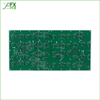
Description: Description OSP Printed Circuit Boards Manufacturer As a Manufacturer of PCB boards in China, FX PCB can produce OSP Printed circuit boards, ENIG PCB, HAL Leadfree boards and etc. We will introduce you to the OSP PCB boards below: OSP, “organic solderability preservatives,” is a bare finish on the




Find Suppliers by Category Top
Conduct Research Top
-
Water Dispersed Particle Ducts Pesticide Dispersal Degree Low Field NMR Analysis and Evaluation
Water decentralizers are granular preparations that can quickly disintegrate and disperse into suspension after water adding water. At that time, it was called a dry current or dry suspension at that time in the United States. In fact, strictly speaking, there are differences between the two. Water
-
Tableting Process Uses Dry Gelatin, Eliminates Preprocessing Steps
. "Tableting processes are too complex and some of them, such as wet granulation, are so dirty that they require a significant amount of cleanup time, " he says. Dry gelatin is the key to the process, Nguyen says, since its binding, cohesive and hydrophilic properties allow it to function as diluent, binder
-
Ensuring Better Control of Granulation
). Summers, M.P. Granulation, In: Pharmaceutics, the Science of Dosage Form Design Churchill Livingstone. New York. 616-628 (1988). Das, S, Jarowski, C. Effect of granulating method on particle size distribution of granules and disintegrated tablets. Drug Dev. Ind. Pharm. 479 (1979). 5. Yliruusi, J
More Information Top
 Indicates content that may require registration and/or purchase.

-
Surface selective removal of xylan from refined never-dried birch kraft pulp
The xylanase-treated (XT pulp) and refer- ence (R pulp) wet lap pulps were reslushed with a wet disintegrator according to standard ISO 5263-1.
-
Effect of tempo and periodate-chlorite oxidized nanofibrils on ground calcium carbonate flocculation and retention in sheet forming and on the physical propert...
These were obtained from a fine paper mill at 30 % consistency and disintegrated according to SFS-EN ISO 5263-1 in deionized water using a wet disintegrator (Lorentzen & Wettre) for 30,000 revolutions.
-
Evaluation of damage caused by stalk borers, Sesamia spp. (Lepidoptera: Noctuidae), on sugarcane quality in Iran
ICUMSA (International Commission for Uniform Methods of Sugar Analysis) (1994) Method GS5/7-1, The determination of pol (polarization), brix and fibre in cane and bagasse by the wet disintegrator method official.
-
The influence of the ethanol pumping of wheat straw and of the beating of pulp on the resulting paper sheets
Next, the cooked material was defiberilated in a wet disintegrator and the screenings were separated by sieving through a screen of 1 mm mesh size.
-
Cane fibre: its significance and methods of determination.
Data obtained by the wet disintegrator method and the hydraulic press method of fibre detn. in cane are compared.
-
The Australian system for cane quality determination under Indonesian conditions.
Direct analysis of cane was carried out by the wet disintegrator and hydraulic press methods; also, first expressed juice was analysed and fibre was determined by the washing method.
-
Juice cells in sugarcane and their role in extraction of juice.
Samples were mixed with water and vibrated in a mechanical vibrator for 30 sec, and total pol was determined in a wet disintegrator .
-
Biobleaching of pulp from agricultural residues with enzymes
Prior to bleaching (whether or not a biological pretreatment was applied), the pulp, at 18% consistency, was ground in a wet disintegrator at 6500 rpm for 60 rain.
-
Characterization of paper sheets from agricultural residues
Next, the cooked material was ground in a wet disintegrator and uncooked residues were separated by sieving through a screen of i mm mesh size.