Bumpers Information
Last revised: January 17, 2025
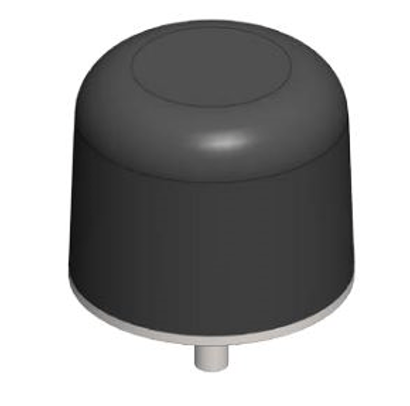
Bumpers are basic safety protection items usually made from vulcanized rubber or similar synthetic elastomeric materials. They are called bumpers because they deflect and protect from bumps when a moving machine collides with another vehicle or a stationary object.
Applications
Bumpers are used for edge protection, cushioning, and impact absorption. Bumpers can also reduce vibration and movement in equipment and provide protection for people from bumping into pipes, columns, and other hard objects. Personal safety bumpers are usually brightly colored with reds and yellows, from their natural dark colors, to enhance the visual safety cues.
Specifications
Common bumper materials include:
- natural rubber
- synthetic rubber
- silicone
- polysulfides
- urethane
- polyurethane
- butyl
- Hypalon
- Neoprene
Metal bumpers are also available. Common bumper shapes are cylindrical, hemispherical, hexagonal, oval, rectangular, roll stock, and square. But since they are made from easily shaped and molded materials, they can be formed into just about any shape needed. Bumper colors include black, brown, and clear. But they can be colored by various techniques from dyes, paints, and skins. Another consideration in some circumstances, the proteins in natural rubber can induce allergic reactions unless the amount of water extractable protein is low in the mix. Because bumpers need to be compatible with chemicals they may come into contact with, an industrial elastomeric product manufacturer may need to consult a compatibility chart.
Types
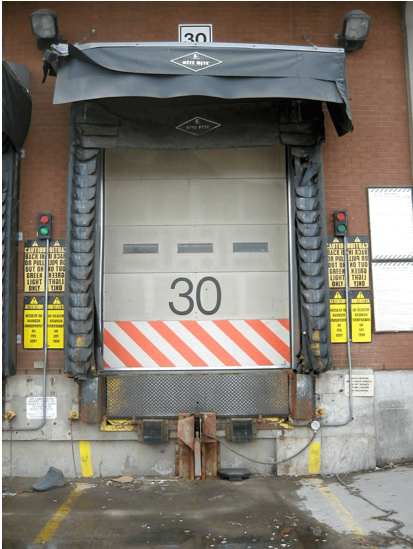
One of the common places to find industrial bumpers is on a truck loading dock, where they are used to protect the sidewall of the dock from a truck’s back bumper. These are usually just large cubes of rubber or synthetic equivalent sealed onto a steel backing plate. The dock bumper’s backing plate is then bolted into the concrete wall below the dock’s top. Another common place to find bumpers in commercial or industrial settings is the one used for doors. They include floor and wall mounted door stops with rubber bumpers as well as the rubber bumpers on the bottom half of the doors where carts and pallets hit the doors while being pushed by a worker.
Automobile bumpers have been a feature on cars for almost as long as cars were sold to the public. They were invented in 1901 in the United Kingdom. They used to be simple items made of chromed steel, maybe with a couple of black neoprene bullets sticking out, or a rubber strip on the leading edge of the bumper. Now auto bumpers are complicated devices made of multiple materials including rubber, plastic, Styrofoam, and aluminum. They are covered with a fascia of soft but rigid plastic that wraps all around. Early bumpers sometimes had the tail and parking lights built into them. Then, when bumpers became regulated in the 1970s, they lost the taillights and were forced away from the car body by being bolted onto energy absorbing shocks. Now, the modern composite bumper and its polycarbonate plastic fascia may encompass the whole front and rear ends of the car and all the lights too.
The newer auto bumpers usually have a honeycomb pattern of crushable cells underneath, made from hard plastic. These cells force the energy of the collision into plastically destroying the crushable cells. Modern automobile bumpers are a trade-off between making them soft and flexible to mitigate injury to a pedestrian or an animal but still have no damage for a low-speed collision. While the early bumpers were solid and strong, they didn’t really offer much in the way of high-speed collision protection, since they merely transmitted the energy of the collision into the frame and the insides of the vehicle. Modern bumpers get damaged easier. But as they give way, they absorb a large amount of that negative collision energy as the bumpers deform and break apart. Today’s car bumpers are made to withstand a 2.5mph/4kph collision against a hard barrier without any damage. But given the size and complexity of a modern auto bumper, when they are damaged, their replacement and/or repair cost is very high.
Even aircraft have bumpers. They are installed on the bottom of their tail sections. These bumpers cushion the fuselage if the aircraft’s tail comes into contact with the ground during high angle take-offs or landings. These can be simple permanently affixed rubber bumpers for smaller propeller planes, or be retractable devices like aircraft landing gear on larger jet airliners and military air ships.
Standards
Bumpers meet a variety of certifications and approvals. For bumpers used on road vehicles, the International Organization for Standardization (ISO) publishes ISO 2958 (exterior protection for passenger cars) and the Society of Automotive Engineers (SAE) publishes SAE J2319 (low-speed impact bumper system test procedure for passenger vehicles). The SAE publishes SAE ARP1107B (tail bumpers for piloted aircraft) and ASTM International (formerly called the American Society for Testing and Materials (ASTM)) publishes ASTM F1917 (standard consumer safety performance specification for infant bedding and related accessories).
Bumpers FAQs
How do different bumper materials impact their performance and durability in engineering designs?
The impact of different bumper materials on their performance and durability in engineering designs can be understood through several key factors:
Material Composition and Weight
Traditional bumpers are often made from polypropylene with talc powder, which typically have a wall thickness of about 3 mm and weigh 4-5 kg. However, advancements in materials have allowed for the use of high-strength polypropylene with reduced thickness, leading to weight savings of 10-15% per part.
Fiber-reinforced plastics, including glass and carbon fibers, are being developed to improve stiffness and heat resistance. These materials require specific processing conditions, such as higher injection temperatures and pressures, to optimize performance.
Impact Resistance and Energy Absorption
Modern bumpers are designed to absorb collision energy by deforming and breaking apart, which helps to mitigate damage during low-speed impacts. This is achieved through designs like honeycomb patterns of crushable cells made from hard plastic.
The development of new materials, such as a tough version of ABS (Acrylonitrile Butadiene Styrene), aims to balance mechanical properties like toughness and stiffness, which are crucial for impact resistance.
Durability and Environmental Resistance
Engineering plastics used in bumpers must resist UV radiation, abrasion, moisture, and chemical agents to maintain durability over time. These properties are essential for ensuring that bumpers can withstand various environmental conditions without degrading.
Standards and Testing
Bumpers must meet specific standards and certifications, such as ISO 2958 and SAE J2319, which outline requirements for exterior protection and low-speed impact testing for passenger vehicles.
These factors highlight the importance of selecting appropriate materials for bumpers to optimize their performance and durability in engineering applications.
What are the advantages of using fiber-reinforced plastics in bumper designs?
The advantages of using fiber-reinforced plastics in bumper designs can be understood through several key aspects:
Improved Stiffness and Heat Resistance
Fiber-reinforced plastics, which include both glass and carbon fibers, enhance the stiffness and heat resistance of bumpers. This is particularly beneficial in maintaining the structural integrity of bumpers under various thermal conditions.
Weight Reduction
The incorporation of fibers into plastics allows for the reduction of material thickness while maintaining strength, leading to significant weight savings. This is crucial for automotive applications where reducing weight can contribute to improved fuel efficiency.
Optimized Processing Conditions
The addition of fibers affects the melt flow of plastics, necessitating higher injection temperatures and pressures. However, using systems like hot runner systems can optimize the melt flow, ensuring efficient manufacturing processes.
These factors highlight the benefits of using fiber-reinforced plastics in bumper designs, particularly in terms of enhancing performance characteristics while also contributing to weight reduction and efficient manufacturing.
What are the challenges in processing fiber-reinforced plastics?
The challenges in processing fiber-reinforced plastics, particularly in the context of bumper designs, can be understood through several key aspects:
Melt Flow and Processing Conditions
The addition of fibers, such as glass or carbon, into plastics affects the melt flow characteristics. This requires adjustments in processing conditions, including higher injection temperatures and pressures, to ensure proper material flow and distribution during manufacturing.
Optimizing Manufacturing Systems
To address the challenges posed by altered melt flow, systems like hot runner systems are employed. These systems help optimize the melt flow, ensuring efficient and consistent manufacturing processes.
Balancing Mechanical Properties
Achieving the right balance between toughness and stiffness is crucial. For example, in the development of a tough version of ABS, researchers had to fine-tune the processing conditions to achieve the desired mechanical properties, which is a common challenge in fiber-reinforced composites.
These challenges highlight the complexity involved in processing fiber-reinforced plastics, requiring careful consideration of material properties and processing techniques to optimize performance in engineering applications.
What are the benefits of using high-strength polypropylene in bumper designs?
The benefits of using high-strength polypropylene in bumper designs can be understood through several key aspects:
Weight Reduction
High-strength polypropylene allows for a reduction in material thickness while maintaining structural integrity. For example, using a 2.5 mm design instead of the traditional 3 mm can reduce the weight of a bumper by 0.8 kg, or 10-15% per part. This weight reduction is crucial for improving fuel efficiency in automotive applications.
Material Efficiency
The ability to use thinner materials without compromising strength means that less material is needed overall, which can lead to cost savings in production and material usage.
Performance Optimization
High-strength polypropylene provides a balance of mechanical properties that are essential for bumper performance, such as impact resistance and energy absorption. This ensures that bumpers can effectively absorb collision energy, reducing damage during low-speed impacts..
These benefits highlight the advantages of using high-strength polypropylene in bumper designs, particularly in terms of weight reduction, material efficiency, and performance optimization.
What is the impact resistance of modern bumpers?
The impact resistance of modern bumpers is a crucial aspect of their design, and it involves several key factors:
Energy Absorption and Deformation
Modern bumpers are designed to absorb collision energy by deforming and breaking apart. This is achieved through designs like honeycomb patterns of crushable cells made from hard plastic. These cells are engineered to plastically destroy themselves during a collision, thereby absorbing a significant amount of the impact energy.
Material Composition
The choice of materials plays a vital role in impact resistance. For instance, high-strength polypropylene and fiber-reinforced plastics are used to enhance the mechanical properties of bumpers, such as toughness and stiffness, which are essential for effective energy absorption during impacts.
Standards and Testing
Bumpers must meet specific standards and certifications, such as ISO 2958 and SAE J2319, which outline requirements for exterior protection and low-speed impact testing for passenger vehicles. These standards ensure that bumpers are capable of withstanding certain impact conditions without significant damage.
Trade-offs in Design
Modern bumpers are a trade-off between being soft and flexible to mitigate injury to pedestrians or animals and being robust enough to withstand low-speed collisions without damage. While they may get damaged more easily than older designs, this damage is part of their function to absorb and dissipate collision energy.
These factors highlight the importance of material selection, design, and compliance with standards in optimizing the impact resistance of modern bumpers.
What are the environmental considerations in bumper material selection?
When selecting materials for bumpers, environmental considerations are increasingly important. Here are some key factors to consider:
Material Efficiency and Weight Reduction
Using high-strength polypropylene allows for thinner designs, reducing the overall material usage and weight of the bumper. This not only leads to cost savings but also contributes to improved fuel efficiency in vehicles, which can reduce emissions over the vehicle's lifetime.
Recyclability and Material Composition
The choice of materials such as fiber-reinforced plastics and advanced polymers like ABS (Acrylonitrile Butadiene Styrene) can impact the recyclability of bumpers. Developing materials that maintain performance while being easier to recycle can help reduce environmental impact.
Durability and Longevity
Selecting materials that resist UV radiation, abrasion, moisture, and chemical agents ensures that bumpers remain durable over time, reducing the need for frequent replacements and minimizing waste.
Processing and Manufacturing
The manufacturing process itself can have environmental implications. For example, the use of hot runner systems in processing fiber-reinforced plastics can optimize melt flow and reduce energy consumption during production.
These considerations highlight the importance of selecting materials that not only meet performance requirements but also align with environmental sustainability goals.
Bumpers Media Gallery
References
Engineering360—Pressure Sensitive Safety Edges and Safety Bumpers Information
GlobalSpec—Vandar® High-Impact Strength Polyester for Sporting Goods
GlobalSpec—Tough, Green Version of ABS Is Developed at Oak Ridge
GlobalSpec—China Focuses on Lightweight Materials to Meet Automotive Fuel Economy Standards
Image credit: