
Drawer Slides Information
Last revised: January 27, 2025
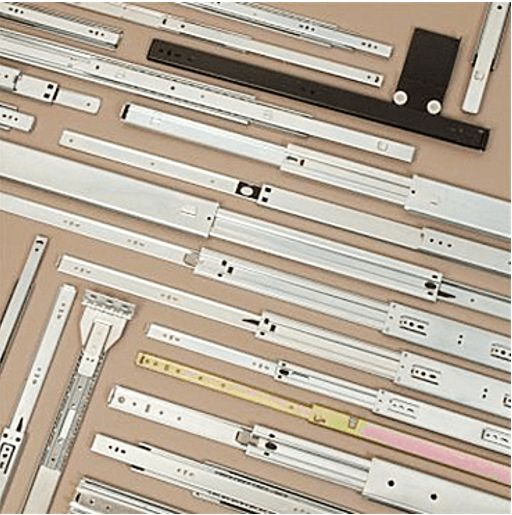
Drawer slides use guides, bearings, or rollers to support drawers and facilitate their motion. They provide smooth action and high lateral stability. There are many different types of drawer slides. Examples include:
- heavy duty drawer slides
- ball bearing drawer slides
- full extension drawer slides
- plastic drawer slides
Features
A heavy duty drawer slide is made of stainless steel, plated cold-rolled steel, or hard anodized aluminum. Its load carrying capacity ranges from 200 to 230 lbs. A heavy duty drawer slide or industrial drawer slide is also made of steel or aluminum materials. Cross-section type and load-carrying capacities vary by product. A full extension drawer slide is made of chromate steel with precision ball bearings. A full extension drawer slide is a telescopic full extension slide with cushioned in and out stops and positive hold-in detent. A ball bearing drawer slide is made of zinc-plated steel and is non-handed with head screws. Front and rear mounting brackets may be included. A plastic drawer slide is self-lubricating and designed to align drawers on wooden tracks. Other types of drawer slides are also available.
Specifications
Selecting drawer slides requires an analysis of product specifications. Most drawer slides glide on high-quality metal sliders that are equipped with stainless steel bearings. Drawer slide hardware consists of:
- sockets
- hinges
- self-closing mechanisms
A stainless steel T-handle lock allows users to open and close a drawer slide with relative ease. A drawer guide provides for the smooth opening and closing of drawers. Drawer guides are the metal tracks to which drawer slides are attached. Full-extension ball bearing drawer slides are available in sizes ranging from 16 in. to 24 in. and have a load bearing capability of 100 lbs. A plastic drawer slide is suitable for light-duty applications and has a load-bearing capacity of 50 lbs. Other specifications for drawer slides include length, width, and depth.
Drawer Slides FAQs
How do the materials used in drawer slides impact their performance and durability?
The materials used in drawer slides significantly impact their performance and durability in several ways:
Corrosion Resistance
Stainless steel and aluminum slides offer high resistance to corrosion, making them suitable for environments with moisture or humidity, such as refrigerators and freezers. Stainless steel, particularly austenitic steel, is highly formable and has high corrosion resistance due to its chromium content, which ranges from 10% to 30%.
Aluminum slides, like the super heavy-duty AL4120, provide excellent corrosion resistance and can support high load ratings, up to 1,212 lbs.
Load Capacity
Heavy-duty drawer slides are typically made from materials like stainless steel, plated cold-rolled steel, or hard anodized aluminum, which can support significant loads ranging from 200 to 230 lbs.
The choice of material affects the slide's ability to bear weight, with higher load-bearing materials generally being more costly.
Environmental Suitability
For outdoor applications, corrosion-resistant materials such as stainless steel and aluminum are recommended to maintain smooth movement despite exposure to moisture and debris.
Testing and Standards
Drawer slides are tested for their performance under various conditions, including dynamic and static load tests. The materials used can influence the results of these tests, as they determine the slide's ability to withstand repeated use and environmental factors.
How do finishes on drawer slides affect their performance?
The finishes on drawer slides can significantly affect their performance in several ways:
Different finishes provide varying levels of corrosion resistance. For example, stainless steel and aluminum slides are known for their high resistance to corrosion, making them suitable for environments with moisture or humidity, such as refrigerators and freezers.
Finishes are tested in salt spray chambers to evaluate their corrosion resistance. A basic clear zinc-plated slide can withstand 12 hours in the chamber without corrosion, while an electro-white slide can last up to 500 hours.
The finish on a drawer slide can enhance its durability by protecting the underlying material from environmental factors that could cause wear and tear over time. This is particularly important for slides used in outdoor or harsh environments.
Finishes can also impact the aesthetic appeal of the drawer slides, which might be important in applications where the slides are visible. Additionally, certain finishes might offer smoother operation or reduced friction, contributing to the overall functionality of the slide.
Drawer slides are tested under various conditions, and the finish can influence the results of these tests. For instance, the American Society for Testing and Materials (ASTM) standards are used to evaluate the performance of different finishes.
What are the differences between austenitic and ferritic stainless steel finishes?
The differences between austenitic and ferritic stainless steel finishes can be understood in terms of their composition, corrosion resistance, and applications:
Composition
Austenitic Stainless Steel: This type of stainless steel is characterized by its non-magnetic, chromium-nickel alloy composition. It typically contains higher levels of chromium and nickel, which contribute to its superior corrosion resistance and formability.
Ferritic Stainless Steel: Ferritic stainless steels contain little to no nickel and are composed primarily of chromium. This makes them less expensive but also less corrosion-resistant compared to austenitic stainless steels.
Corrosion Resistance
Austenitic Stainless Steel: Known for its high corrosion resistance, especially in wet environments, austenitic stainless steel is suitable for applications where exposure to moisture is a concern.
Ferritic Stainless Steel: While ferritic stainless steels offer sufficient corrosion resistance for dry applications, they are generally less resistant to corrosion than austenitic grades.
Applications and Properties
Austenitic Stainless Steel: Due to its high formability and toughness, austenitic stainless steel is often used in applications such as auto trim and industrial hardware. It is also optimal for welding.
Ferritic Stainless Steel: Ferritic stainless steels are easy to form and are used in applications where high corrosion resistance is not critical. They are suitable for dry environments and are often chosen for their cost-effectiveness.
How do different environments affect the choice of drawer slide finishes?
The choice of drawer slide finishes is significantly influenced by the environment in which they will be used. Here are some key considerations:
Corrosion Resistance:
In environments with high moisture or humidity, such as refrigerators, freezers, or outdoor settings, corrosion-resistant finishes are crucial. Stainless steel and aluminum slides are highly recommended due to their superior corrosion resistance. Stainless steel slides, particularly those made from austenitic steel, offer high corrosion resistance due to their chromium content, which ranges from 10% to 30%.
Finishes are tested for corrosion resistance using salt spray chambers. The duration a finish can withstand in these chambers without showing signs of corrosion is a measure of its effectiveness. For example, a basic clear zinc-plated slide can withstand 12 hours, while an electro-white slide can last up to 500 hours.
For outdoor applications, where exposure to moisture and debris is common, finishes that enhance corrosion resistance are essential to maintain smooth operation. Stainless steel and aluminum slides are suitable for such environments.
In addition to environmental factors, the aesthetic appeal and functional performance of the finish might also be considered, especially in applications where the slides are visible or where reduced friction is desired.
How do load capacity requirements influence the choice of drawer slide materials and finishes?
The load capacity requirements significantly influence the choice of drawer slide materials and finishes in several ways:
Material Selection
Heavy-Duty Requirements: For applications requiring high load capacities, materials such as stainless steel, plated cold-rolled steel, or hard anodized aluminum are commonly used. These materials can support significant loads, typically ranging from 200 to 230 lbs for heavy-duty drawer slides.
Cost Considerations: Generally, the higher the load-bearing ability of the material, the greater the cost. Therefore, it's important to balance the load capacity needs with budget constraints.
Finish Selection
Corrosion Resistance: In environments where corrosion is a concern, finishes that enhance corrosion resistance are crucial. For example, stainless steel and aluminum slides are recommended for their superior corrosion resistance, which is essential for maintaining load capacity over time in harsh environments.
Testing and Standards: Finishes are tested for their ability to withstand corrosion, which can affect the longevity and performance of the drawer slides under load. For instance, a basic clear zinc-plated slide can withstand 12 hours in a salt spray chamber, while an electro-white slide can last up to 500 hours.
Outdoor Applications: For outdoor use, where exposure to moisture and debris is common, corrosion-resistant materials and finishes are necessary to maintain smooth operation and load capacity.
What are the specific applications for different types of drawer slides?
The specific applications for different types of drawer slides can vary based on their design, material, and features. Here are some common types of drawer slides and their typical applications:
Heavy-Duty Drawer Slides
Applications: These are used in industrial settings where high load capacities are required. They are suitable for applications such as tool storage, industrial machinery, and heavy equipment drawers.
Materials: Typically made from stainless steel, plated cold-rolled steel, or hard anodized aluminum, supporting loads from 200 to 230 lbs.
Ball Bearing Drawer Slides
Applications: Commonly used in office furniture, kitchen cabinets, and residential furniture where smooth and quiet operation is desired.
Features: Made of zinc-plated steel, these slides are non-handed and may include mounting brackets.
Full Extension Drawer Slides
Applications: Ideal for applications where full access to the drawer contents is necessary, such as in kitchen cabinets, office furniture, and toolboxes.
Features: These slides are telescopic with cushioned stops and a positive hold-in detent, often made of chromate steel with precision ball bearings.
Plastic Drawer Slides
Applications: Used in lightweight applications such as small furniture pieces or where cost is a significant factor.
Features: Self-lubricating and designed to align drawers on wooden tracks.
Corrosion-Resistant Slides
Applications: Suitable for environments with high moisture or humidity, such as refrigerators, freezers, or outdoor settings.
Materials: Stainless steel and aluminum slides are recommended for their superior corrosion resistance.
Each type of drawer slide is designed to meet specific needs based on load capacity, environmental conditions, and desired features. Selecting the appropriate type depends on the specific requirements of the application.
Drawer Slides Media Gallery
References
GlobalSpec— Finding the Optimal Metal Tubing for Medical and Critical Applications
Image credit:


