Aircraft and Rotorcraft System Identification: Engineering Methods with Flight-Test Examples
The goal of this chapter is to help the reader develop a basic understanding of CIFER software. This material does not serve as a user's manual. The student version of CIFER and a user's primer is available without charge via the AIAA website or by contacting the leading author. Information on the professional version of CIFER is available from the Web site http://uarc.ucsc.edu/flight-control/cifer or by contacting the leading author. The following topics are covered in this chapter: 1) overview of the structure of CIFER software, 2) user interface, 3) frequency-response naming conventions, and 4) support utilities. Key attention is paid to explaining the relationship between the structure of CIFER and the various components in the system identification flowchart of Fig. 2.1.
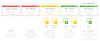
At the highest level, CIFER is an integrated set of system-identification programs and utilities linked to relational databases. Figure 4.1 shows the six core CIFER programs that carry out the basic computations of the frequency-response identification method of Fig. 2.1. These programs are for conditioning the data and performing FFTs (FRESPID), multi-input conditioning (MISOSA), window combination (COMPOSITE), transfer-function model identification (NAVFIT), state-space model identification (DERIVID), and verification (VERIFY). In conjunction with these programs, there is a comprehensive set of utilities that perform many types of related and useful tasks, such as searching/ deleting/compressing elements of the database, creating plots, receiving input from and sending output to...