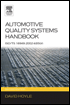
Automotive Quality Systems Handbook, Second Edition
Chapter 2: Perceptions of ISO 9000 and Its Derivatives

By three methods we may learn wisdom: first, by reflection, which is noblest; second, by imitation, which is easiest; and third, by experience, which is the bitterest.

Confucius

Introduction

Since the publication of the ISO 9000 family of standards in 1987 a new industry has grown in its shadow. This industry is characterized by: Standards Bodies, Accreditation Bodies, Certification Bodies, Consulting Practices, Training Providers, Software Providers and a whole raft of publications, magazines, Web sites and schemes all in the name of quality! But has ISO 9000 and its derivates, such as ISO/TS 16949 fulfilled their promise? There are those with vested interests that would argue that it has improved the efficiency and effectiveness of organizations. Equally others would argue that it has done tremendous damage to industry. One of the problems in assessing the validity of the pros and cons of the debate is the very term ISO 9000 because it means different things to different people.

Perceptions that have been confirmed time and again by consultants, other organizations and frequent audits from the certification bodies over the last 20 years makes these perceptions extremely difficult to change. If ISO 9000 is perceived rightly or wrongly, as a badge on the wall or a set of documents, then that is what it is. If this was not the intent of ISO 9000 then clearly we have to do something about it. But why should these perceptions be changed? After all, can over 500,000 organizations have got it wrong?

UNLIMITED FREE
ACCESS
TO THE WORLD'S BEST IDEAS

SUBMIT
Already a GlobalSpec user? Log in.

This is embarrasing...

An error occurred while processing the form. Please try again in a few minutes.

Customize Your GlobalSpec Experience

Category: Quality Registrars and Registration Services
Finish!
Privacy Policy

This is embarrasing...

An error occurred while processing the form. Please try again in a few minutes.