Best Practice in Inventory Management, Second Edition
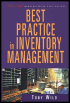
Use this reference to learn to implement a variety of processes vital to inventory structure and control.
 TABLE OF CONTENTS
 Why we need professional inventory management
Structure of the book
Focus on developing theory that works in practice
Everyone is an inventory controller, at home and at work. We all keep food, clothes, domestic items, paper, pens and many other goods. We also have shortages and emergency purchases. Some people regularly have to throw out the contents of the refrigerator because they have been there a while and changed in character. So inventory control is a natural occupation that everyone undertakes, some more successfully than others.
There are many other activities that people do, such as sport, carpentry, music and medicine, and for these it is generally accepted that a level of technical expertise is needed. In carpentry and music there are people who become highly skilled through their natural talents. Success appears to come from a mixture of talent, determination, practice and knowledge. In medicine, particularly in surgery, we are more likely to rely on those who have studied the subject and have a deep knowledge of both theory and practice. Lawyers cannot function without knowledge; often a commonsense approach does not work for them.
As with any profession, inventory control (or the subject of Professional Inventory Management) has a body of techniques and knowledge which differentiates the professional from the do-it-yourself (DIY) enthusiast. This expertise is the result of 100 years of development and refining. Now there are professional inventory managers with recognized qualifications, including Diploma in Production and Inventory Management (DPIM) and Certificate in Operations Management (COM).