Best Practice in Inventory Management, Second Edition
Use this reference to learn to implement a variety of processes vital to inventory structure and control.
 TABLE OF CONTENTS
 Set the direction
Identify objectives and targets
Manage stock value
How to value and depreciate inventory
Nowadays the inventory controller has extra responsibilities. The job has grown out from storekeeping to become a management discipline of maintaining the inventory to meet company policy. Gradually this responsibility has broadened to include all stock whether inside or outside the stores. The place of inventory management in the organization has altered as responsibilities have changed. This is illustrated in Figure 5.1.
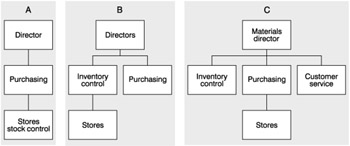
The original role of stock control was part of the physical stores control shown in the structure in Figure 5.1A and its position in an organization was lowly, working for either purchasing, finance or, in manufacturing companies, for production. In this structure stock acquisition was initiated by buying and sales pressure, and there was no clear responsibility for, or focus on, inventory control. The tightening of company objectives changed the approach and separated stores and stock control activities. Inventory management is now accepted as an operational activity and works alongside purchasing, as illustrated in Figure 5.1B.
Inventory management is a senior management activity.
This arrangement has gradually evolved into structure C as pressure increases for better performance. The central role of inventory management has been recognized in many businesses, both in distribution and manufacturing, and material management or logistics directors have been appointed to co-ordinate various aspects of inventory management into one supply activity. Stock control encompasses:
purchasing...