Best Practice in Inventory Management, Second Edition
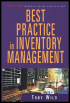
Use this reference to learn to implement a variety of processes vital to inventory structure and control.
 TABLE OF CONTENTS
 Identifying dependent demand
The MRP process
Benefits of using MRP
Structured demand and bills of materials
Triggering orders - projected available
Meeting demand - available to promise
When there is a clear picture of the demand for a particular item then stock can be minimized. No stockholding would be needed if demand were known precisely and far enough in advance because supply could be matched exactly with demand.
For items outside the range stocked, the customer orders and receives the supply after a lead time. There may be some transient stock because the supplier is asked to deliver in advance of the time that the customer requires it. The greater the confidence in supply, the shorter time items can spend in stores.
Treat demand as dependent to reduce inventory.
The situation with non-stock supply is mirrored for raw materials in manufacturing and for production components in assembly. Stock is required to feed the process, and firm plans exist for usage rate just as for scheduled customer orders and non-stock supplies. The approach to these types of inventory is to treat them as dependent demand rather than the independent demand as discussed in the previous chapters. The contrasts between dependent and independent demand are shown in Table 12.1. The essential feature of dependent demand is that it is calculated from the demand of the next item up the supply chain; the aim is to have stock when it is to be used and no stock the rest of...