Practical Production Control: A Survival Guide for Planners and Schedulers

Understanding Variability

When you set about acquiring a tool, you must also take a hard look at your sources of variability. What types of variance you have, and what you think you will have in the future, will dictate in part what kind of tool you should consider. The degree of variability in the system will also dictate the level of results you can expect. There are two types of variability to worry about: variations and variance. Both can cause production control nightmares. While there are mathematical definitions of these two words, we will focus on the everyday interpretation.

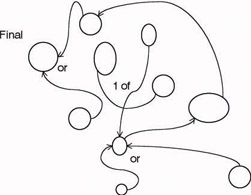
Variation refers to the different types of things to consider (see Figure 10-1). It is always easier when there is just one of each type of thing one kind of printed circuit board, one kind of battery, one type of drilling operation, one type of bolt, and one type of wrench to use. It is easier to plan if there is just one type of order stream hitting a group of resources; for example, three hundred of the same assembly each and every day. It becomes difficult if the quantities or the batch size vary. It also becomes difficult if the products vary. If both vary, the problem becomes more than twice as hard.


Figure 10-1. Variation Many Relationships.

Variety and the resulting complexity is not a linear, or one-to-one, relation- ship. It is like building something out of building blocks. If all of the blocks are...

UNLIMITED FREE
ACCESS
TO THE WORLD'S BEST IDEAS

SUBMIT
Already a GlobalSpec user? Log in.

This is embarrasing...

An error occurred while processing the form. Please try again in a few minutes.

Customize Your GlobalSpec Experience

Category: Dosing Pumps
Finish!
Privacy Policy

This is embarrasing...

An error occurred while processing the form. Please try again in a few minutes.