Refining Processes Handbook
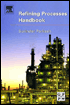
Filled with handy process flow diagrams, this comprehensive reference covers the technologies and operations of petroleum refineries and provides material on operating a jointly owned and operated refinery.
 TABLE OF CONTENTS
 Distillate hydrocracking is a refining process for conversion of heavy gas oils and heavy diesels or similar boiling-range heavy distillates into light distillates (naphtha, kerosene, diesel, etc.) or base stocks for lubricating oil manufacture. The process consists of causing feed to react with hydrogen in the presence of a catalyst under specified operating conditions: temperature, pressure, and space velocity.
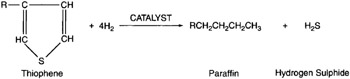
The feedstock is desulfurized by the hydrogenation of the sulfur containing compounds to form hydrocarbon and hydrogen sulfide. The H 2S is removed from the reactor effluent leaving only the hydrocarbon product. The heat of reaction for desulfurization is about 60 Btu/scf of hydrogen consumed:
Nitrogen is removed from feedstock by the hydrogenation of nitrogen-containing compounds to form ammonia and hydrocarbons. Ammonia is later removed from the reactor effluent, leaving only the hydrocarbons in the product. The heat of reaction of the denitrification reactions is about 67 75 Btu/scf of hydrogen consumed, but the amount of nitrogen in the feed is generally very small, on the order of a few parts per million, and hence its contribution to overall heat of reaction is negligible:

The hydrogenation of olefins is one of the most rapid reaction taking place, and therefore almost all olefins are saturated. The heat of reaction is about 140 Btu/scf of hydrogen consumed. Olefin content is generally small for straight-run products, but for stocks derived from secondary/thermal processes such as coking, visbreaking, or resid hydrocracking (H-OIL [*] etc.), it can contribute...