Tolley's Practical Risk Assessment Handbook, 5th Edition
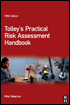
Containing numerous checklists, forms and worked examples for a variety of hazards and industries, this book demystifies the risk assessment process and how it relates to UK legislation.
 TABLE OF CONTENTS
 Before carrying out assessments under the COSHH Regulations it is necessary to have an understanding of how hazardous substances can harm the body.
Hazardous substances may be present in different forms such as:
Solids
Dusts
Smoke
Fumes
Liquid
Mists and aerosols
Vapour
Gas.
These can cause harm to the body by three main entry routes:
Inhalation The hazardous substance may damage the lungs or some other part of the respiratory system. Inhalation also allows substances to enter the bloodstream and thus affect other parts of the body.
Ingestion Accidental ingestion is always possible, especially if containers are not correctly labelled. Eating, drinking and smoking in the workplace introduce risks of small quantities of hazardous substances being inadvertently ingested.
The skin Substances can damage the skin (or eyes) through their corrosive or irritant effects. Some solvents can enter the body by absorption through the skin. Entry through cracks or cuts in the skin must also be considered.
The detailed consideration of how hazardous substances can harm the body is a matter for more specialist text books. However, the list below illustrates the wide range of problems which may be caused.
Respiratory problems
Pneumoconiosis e.g. asbestosis, silicosis, byssinosis, siderosis;
Respiratory irritation caused by inhaling acid or alkali gases or mists;
Asthma sensitisation of the respiratory system can be caused by many substances, e.g. isocyanates, flour, grain, hay, animal fur, wood dusts;