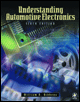
Understanding Automotive Electronics, Sixth Edition
Picture yourself in the not-too-distant future driving your new car along a rural interstate highway on a business trip. You are traveling along one of the new automated highways in which individual cars are controlled electronically to maintain a fixed spacing in a lane at a preferred speed. Typically, these cars are traveling at 70 mph and are spaced about 25 ft apart. The cars are computer controlled via a digital communication link, including a cable buried in the center of the cruise lane and follow one another in a pattern known as platooning. Your car will automatically remain in this cruise control lane until you approach your destination exit.
You press a button on the steering column and an image of a road map appears faintly visible (so as not to obscure the road ahead) on the windshield in front of you. This map shows your present position and the position of the destination city. The distance to your destination and the approximate arrival time are displayed on the digital instrument cluster.
You are talking on your cellular phone to your office about some changes in a contract that you hope to negotiate. You are wearing a lightweight headset that enables you to use the cell phone hands free to drive. Dialing is accomplished by voice command using voice recognition software in your cell phone controller. After the instructions for the contract changes are completed, a printer in your car generates a copy of the latest contract version.