Unmanned Aviation: A Brief History of Unmanned Aerial Vehicles
Unmanned aviation originated in the same era as manned aviation. A number of the early pioneers of flight, including Orville Wright and Glen Curtiss, contributed to the development of both. World War I was responsible for encouraging the growth of both manned and unmanned aviation, but certainly not in equal proportions. Between 1914 and 1918, manned aircraft progressed from a few hundred machines flying stunts to tens of thousands with a military purpose, whereas unmanned aircraft barely moved from the lab bench to limited production. Developments in the two fields diverged even more rapidly following World War I for a variety of reasons.
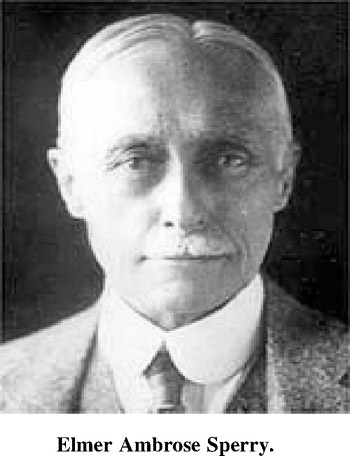
The most important reason was insufficient technology. The development of unmanned aircraft hinged on the confluence of three critical technologies, in addition to that of flight itself: 1) automatic stabilization, 2) remote control, and 3) autonomous navigation. Elmer Ambrose Sperry was the first person to attempt to address all three in a single unmanned aircraft design.

Born in 1860, Elmer Sperry became a first-rank inventor in an age of great inventors and also possessed a keen business sense. His early work involved arc lamps and this may have brought him into initial contact with Peter Cooper Hewitt, a contemporary inventor of electrical lighting and fellow New Yorker. Neither Hewitt nor Sperry evidenced any interest in aviation until Sperry's work with gyroscopes for maritime applications led him to attempt to develop a gyrostabilizer for airplanes in 1909. Although Sperry's intent was to improve the safety of flight...