Videoconferencing for the Real World: Implementing Effective Visual Communication Systems
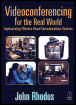
This text provides easy-to-follow guidelines for deploying a cost-effective videoconferencing solution tailored to an organization's specific needs.
 TABLE OF CONTENTS
 The videoconferencing systems currently available can be divided into four general categories: Desktop, Set-top, Rollabout, and Room Systems. Videophones and portable systems hold great promise, but do not yet answer many real business communication needs in a cost-effective way.
Here s an overview of the four basic types of practical systems, followed by an in-depth look at the ergonomic and technical considerations involved in their deployment. The divisions between these categories are widely accepted today, but evolving technology and dynamic market forces continue to blur the lines between them. For example, there are super-powerful desktop systems; set-tops that embody the features and functions of rollabouts; rollabouts with heavy-duty room capabilities; and cameras that can fit many set-top features into the palm of your hand. It would appear that the process of Hegelian synthesis (thesis, antithesis, synthesis) is as active in communications systems markets as in the world of geopolitics with one new synthesis of existing technologies giving birth to its opposite, and to a constant churning process of innovation and electronic Darwinism. The examples given are current as of this writing but time marches on, and the standards-based systems that you can buy when you read this will probably be cheaper, smaller, and better than the ones described. Based on their track records, any current system from PictureTel, Polycom, Sony, Tandberg, VTEL, VCON, or Zydacron should provide solid performance and value for several years after installation.
Desktop videoconferencing systems usually consist of a PC with a...