The Wireless Internet Explained
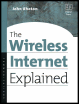
Learn to understand technologies and standards of wireless computing as they relate to the Internet.
 TABLE OF CONTENTS
 The ultimate goal of most wireless technology is to support increased mobility of the work force. What this necessarily implies is that the end users must carry with them some kind of portable terminal from which they can access the unwired network. This is the common requirement that has driven the emerging market of mobile devices.
However, the uniformity stops there. Form factors, cost considerations, and the diversity of users' needs and preferences have given rise to a wide range of gadgets, making the selection, implementation, and support of mobile platforms a huge challenge to the enterprise.
This chapter begins with an overview of the different types of mobile devices on the market. This includes phones, handheld devices, and a variety of consumer appliances that are increasingly being equipped with wireless technology. We will cover the differences between these device types and mention some of the main platforms that are currently available.
The discussion will then focus on the types of applications that are relevant to a mobile environment, including personal information management and entertainment. It will elaborate on some of the issues of mobility, including the need to cater to many different machine interfaces and the requirement of synchronizing replicated data.
In a wireless environment, the paradigm for user interaction will increasingly become multi-modal. One of the machine interfaces that is of particular importance in a mobile environment is speech processing, including both automated speech recognition and text-to-speech rendering.
Mobile devices incorporate a whole new set of challenges...