Drilling Fluids Processing Handbook

Chapter 5: Tank Arrangement

Mark C. Morgan

Derrick Equipment Co.

OVERVIEW

The purpose of a drilling rig surface fluid processing system is to provide a sufficient volume of properly treated drilling fluid for drilling operations. The active system should have enough volume of properly conditioned drilling fluid above the suction and equalization lines to keep the well bore full during wet trips.

The surface system needs to have the capability to keep up with the volume-building needs while drilling; otherwise, advanced planning and premixing of reserve mud should be considered. This should be planned for the worst case, which would be a bigger-diameter hole in which high penetration rates are common. For example for a 14 3/4-inch hole section drilling at an average rate of 200 ft/hr and with a solids-removal efficiency of 80%, the solids-removal system will be removing approximately 34 barrels of drilled solids per hour plus the associated drilling fluid coating these solids. More than likely, 2 barrels of drilling fluid would be discarded per barrel of solids. If this is the case, the volume of drilling fluid in the active system will decrease by 102 barrels per hour. If the rig cannot mix drilling fluid fast enough to keep up with these losses, reserve mud and or premixed drilling fluid should be available to blend into the active system to maintain the proper volume.

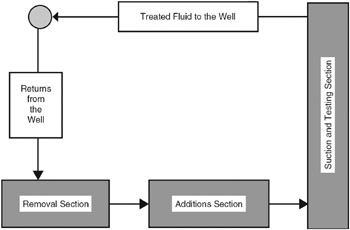
The surface system should consist of three clearly identifiable sections (Figure 5.1):

  • Suction and testing section

  • Additions section

  • Removal section


Figure 5.1: Surface...

UNLIMITED FREE
ACCESS
TO THE WORLD'S BEST IDEAS

SUBMIT
Already a GlobalSpec user? Log in.

This is embarrasing...

An error occurred while processing the form. Please try again in a few minutes.

Customize Your GlobalSpec Experience

Category: Shale Shakers
Finish!
Privacy Policy

This is embarrasing...

An error occurred while processing the form. Please try again in a few minutes.