Drilling Fluids Processing Handbook

Bill Rehm
Drilling Consultant
Jerry Haston
Drilling Consultant
Underbalanced drilling (UBD) is defined as deliberately drilling into a formation in which the formation pressure, or pore pressure, is greater than the pressure exerted by the annular fluid or gas column (IBD HSE Forum, IADC 2002). In this respect, balanced pressure drilling is a subcategory of underbalanced drilling because the annular pressure may fall below the formation pressure during pipe movement. Underbalanced drilling is used to avoid or limit lost circulation and as a method to protect reservoirs, prevent differential sticking, and increase the drilling rate.
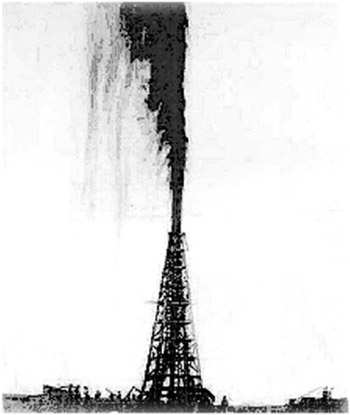
Drilling with a hydrostatic pressure that is less than formation pressure may create a condition similar to a kick, or well-control condition. Controlling these pressures and maintaining a safe environment require special surface pressure control equipment and a properly trained crew (Figure 19.1). The type of equipment required depends on primarily the lithology, permeability, and pressure of the formations that are to be drilled.
UBD systems require surface handling equipment similar to that used on wells that are drilled overbalanced, in addition to specialized equipment. Regardless of the relationship between fluid and formation pressures, the drilling fluid must remove the cuttings from the bottom of the hole and carry them to the surface. At the surface, there must be adequate equipment to remove the solids from the fluid before it is circulated back down the drill string. In cases where the fluid is not recirculated, such as air...