The SR-71, a long-range, supersonic aircraft, is one of the most successful designs in the history of aviation and, more broadly, in the history of mechanical design. The aircraft was fitted with cameras to take pictures of a situation or other targets, where, for example, a potential enemy was doing something "of interest." Although now decommissioned, it is credited with preventing at least two wars because the quality and timeliness of the information provided were major factors in helping politicians develop the appropriate negotiation strategies. (See Figure 14-3.) It flew over 17,000 sorties and 3,500 mission sorties and had no failures during its operation from 1972 to 1988.
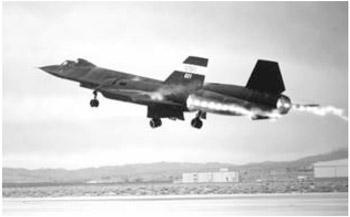 Figure 14-3: SR-71B at takeoff (Courtesy NASA).
 In almost every discipline (mechanical, electrical, materials, thermodynamics, aerodynamics, electromechanical control, production, schedule, cost, and performance), the SR-71 conception and delivery shattered the boundaries of the day. Each of these boundaries would have been listed as a bright red, potentially certain and catastrophic failure on a traditional risk chart. In today's environment it is doubtful the program would have survived the first milestone or the preliminary design review (PDR) stage. (Milestones and PDRs are common government-mandated program reviews in the defense industry.) And yet the SR-71 was successfully developed.
The SR-71 and similar projects, in both commercial and DoD segments, push the limits of common project management metrics. The metrics are typically designed to keep everything within the specified parameters and to provide predictable results. These...

 TABLE OF CONTENTS