Intelligent Innovation: Four Steps to Achieving a Competitive Edge
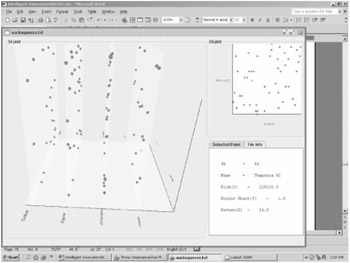
The 3DRM risk enterprise portfolio graph, shown in Figure 14-4, is helpful as a general reference for any project or program manager during any phase of the project. Once fully developed and linked to the organization, each risk item can become a significant factor in fostering innovation and intelligent risk and discouraging unnecessary risk. When linked to the Strategic Balancing method, the four engine stages can be influenced positively to achieve specific goals of the organization's vision and mission.
Another step in advanced portfolio management is postulated in this section. Since we know that market value is related to innovation, innovation is related to risk tolerance, risk tolerance is related to investment, and investment requires a portfolio view, we can also surmise that the return on the portfolio can be managed toward specific goals. It may be possible to increase portfolio yield (and, ultimately, stock price) by investing in a portfolio of high-risk ventures that have low covariance or high variance. That model would suggest a conglomerate with a centralized R&D management system that pools early-stage high-risk resources for disparate industries a very unlikely and ungainly animal. However, continuing on this possibility, suppose this odd monolith could choose to support a higher percentage of high-risk projects in an effort to boost future performance. Now suppose it chooses to lower covariance not by technology but by phase. It could choose to separate projects by phase and fund only the highest-risk/highest-return projects in...