The Repair of Vehicle Bodies, Fifth Edition
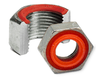
In the manufacture of motor vehicles, the development of new and more effective fastenings is almost a branch of engineering in itself. However, the traditional nut and bolt is still in use, and for many applications it is difficult to imagine how it can be replaced. Indeed, there are instances of a return to nuts and bolts from newer methods of fastening; some British and many continental cars now have bolt-on wings or body panels where previously welding was employed or the structure was integral. The bolt has not changed much in design since it was first developed, apart from the use of special materials for certain applications and also greater standardization of threads. Nuts, however, are produced in a variety of special types; for example, high-tensile steel bolts having greater strength than hitherto use special shake-proof nuts which form a very efficient fastening.
Solid rivets have also been used since the early days of motor vehicle manufacture to form a permanent joint, but nowadays riveted joints are being replaced by welding.
In the field of mechanical fasteners, the modern motor vehicle uses special types of spring-clip fasteners in ever-increasing quantities. The most usual form of such fastenings is the simple spring clip made of tempered strip or wire; polythene, nylon and other plastics fastenings have been used. Another method is that of fastening panels together using adhesives; this is proving to be very successful in certain types of construction.
The strength...